

Period Mahogany Dining Room Chairs
Period mahogany dining room chairs bring substantial timber frames and formal presence to a table, uniting centuries of craftsmanship.
Period Mahogany Dining Room Chairs
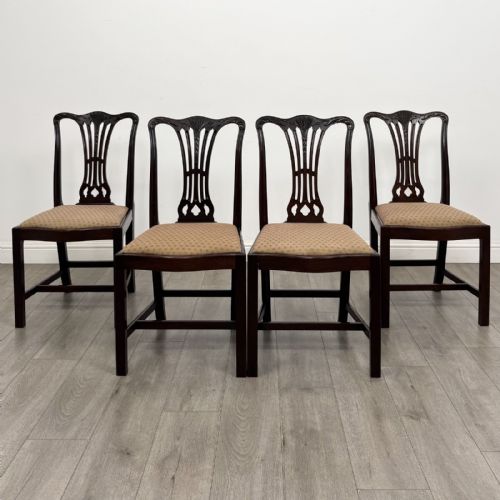
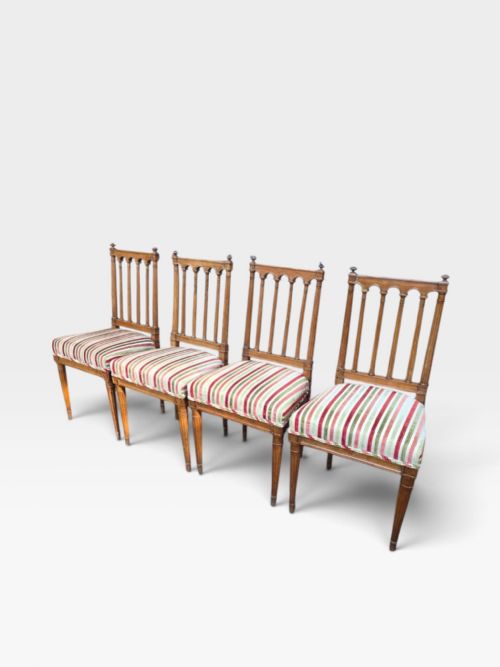
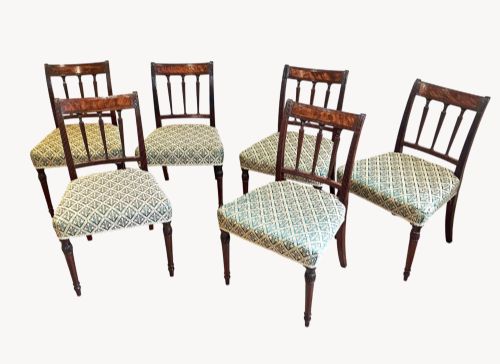
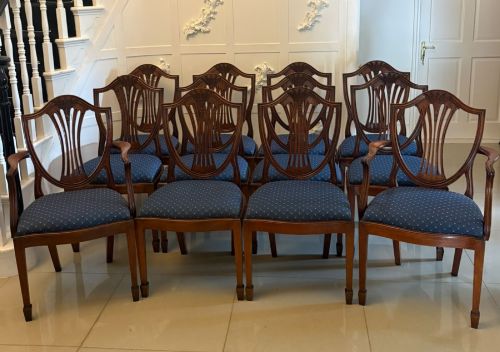
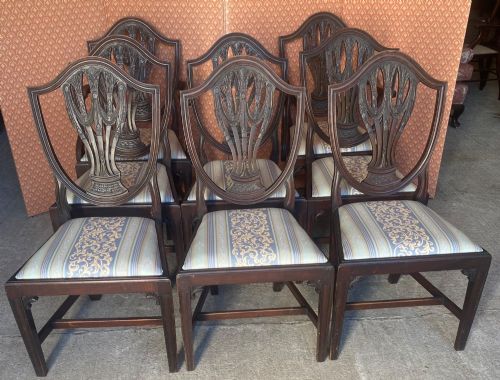
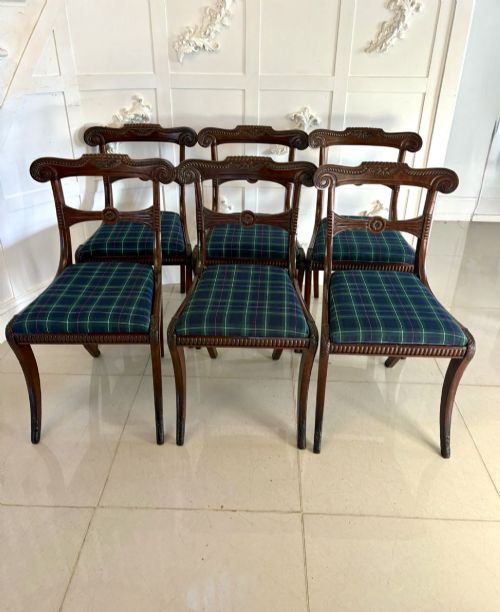
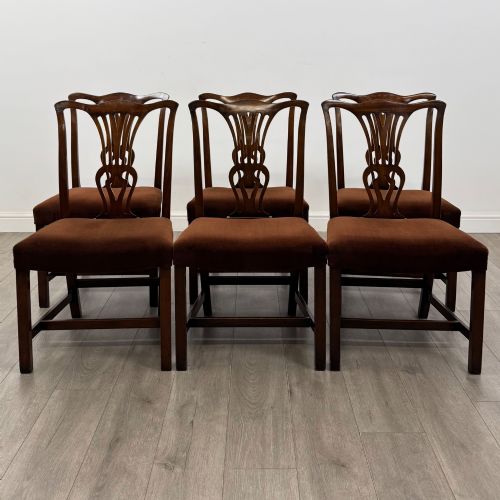
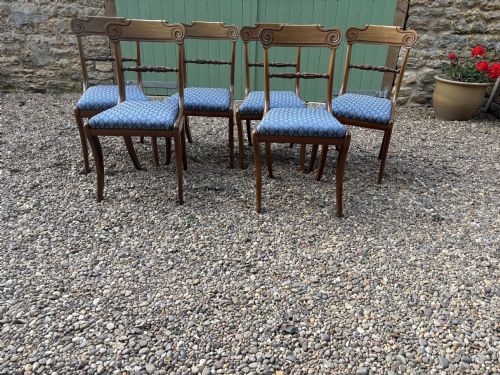
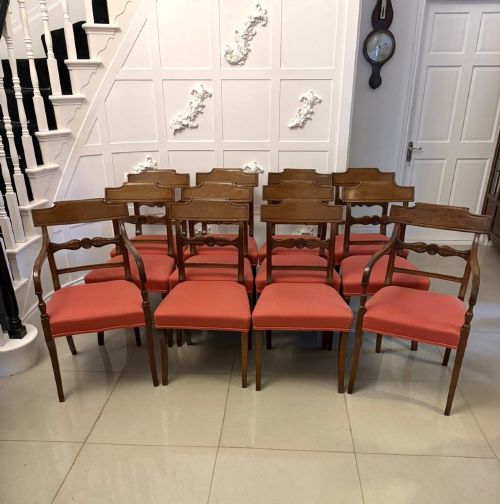
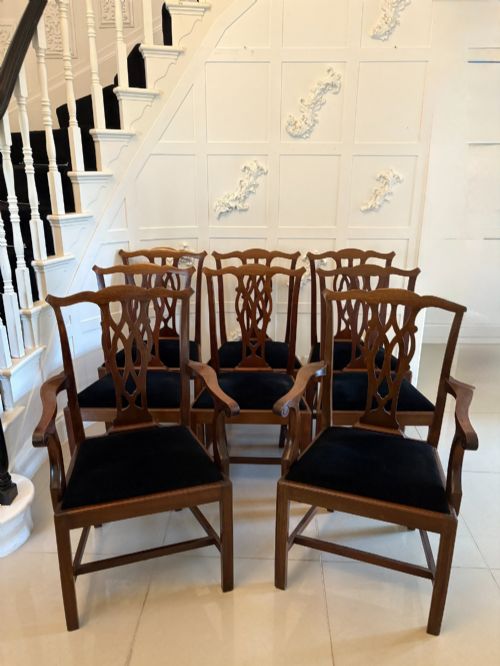
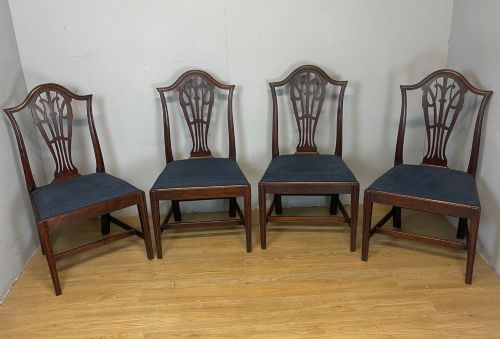
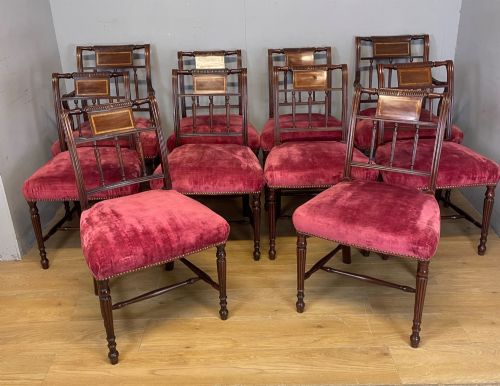
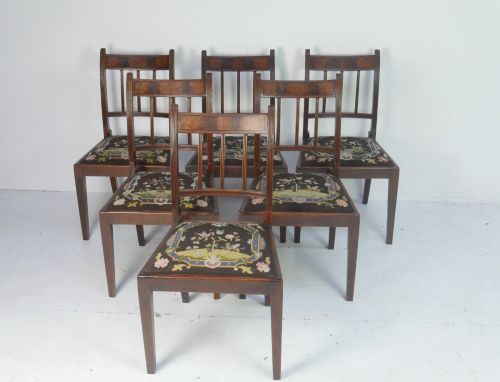
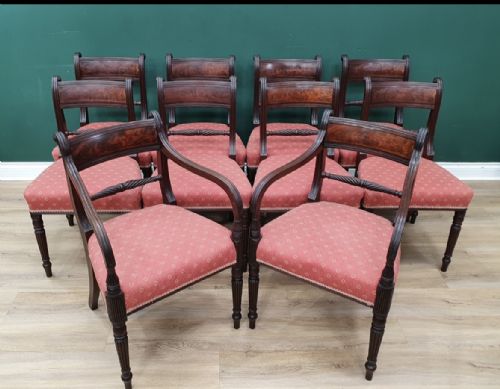
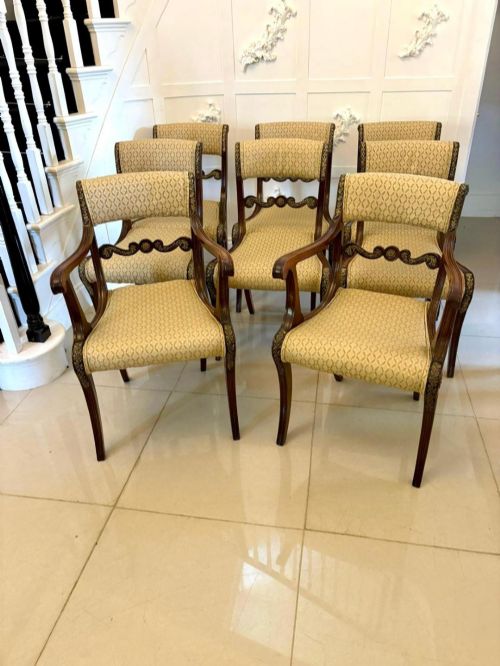
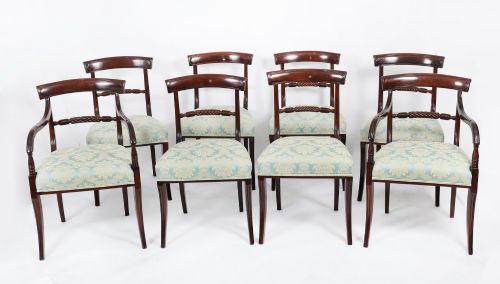
Period mahogany dining room chairs encompass dining chairs, armchairs, and side chairs shaped by Georgian, Regency, and Victorian hands. Buyers searching this phrase encounter timber seating spanning from the eighteenth century into the twentieth century. Sets ranging from four to twelve pieces dominate the selection, often including paired carvers for the table ends.
The aesthetic vocabulary stretches across George III, Hepplewhite, William IV, and Edwardian revivals. Pieces demonstrate distinct regional characteristics, such as Scottish variations or English urban workshops. The form serves a practical domestic function while displaying the prevailing decorative style of its decade.
Materials and construction methods
Makers relied primarily on dense mahogany timber, selected for its strength and rich grain. Frames were joined using traditional woodworking joints designed to withstand regular domestic use around a dining table. Brass accents and detailed carving added ornamentation to the structural wood.
Seating portions were upholstered using various fabrics, including textile, velvet, leather, and patterned upholstery fabric. Support systems beneath the fabric utilised traditional webbing and stuffing techniques to form firm, supportive pads for diners.
Period Mahogany Dining Room Chairs Retail Price Guide 2026
Typical asking prices for period mahogany dining room chairs among the pieces listed under this phrase on Sellingantiques today, from the lower quarter to the upper quarter. They describe what is for sale here now, not the wider market.
Current listings feature mahogany dining chairs spanning the Georgian, Regency, Victorian, and Edwardian periods, alongside revival styles.
Distinctions in quality and execution
The hierarchy of quality rests upon the crispness of the timber carving and the architectural proportions of the frame. Superior sets exhibit thoughtful timber selection, matching grain patterns across multiple chairs, and precise joinery that maintains stability without excessive reinforcement.
Workmanship shows in the subtlety of reeded legs, shield backs, or bar backs. Finer examples retain an integrity of surface finish and original structural components, whereas lesser iterations show blunt detailing and clumsy timber repair.
Maple and Co·Lamb of Manchester
The Period Mahogany Dining Room Chairs Glossary
- Carver
- An armchair designed with elbow supports, traditionally placed at the head and foot of a dining table.
- Bar back
- A horizontal wooden slat or rail forming the upper portion of a chair back, frequently seen on Regency examples.
- Balloon back
- A rounded, curved chair back resembling a balloon, characteristic of Victorian seating design.
- Reeded
- A decorative moulding consisting of parallel convex strips carved directly into the timber leg or rail.
Period Mahogany Dining Room Chairs: Frequently Asked Questions
How many chairs came in a standard set?
Historic dining sets varied according to the scale of the household and the dining room. Many surviving suites comprise six or eight chairs, while larger formal dining rooms accommodated sets of ten, twelve, or more.
Larger configurations frequently incorporated two carvers alongside a greater number of single side chairs to seat a company around a substantial table.
What is the difference between single chairs and carvers?
Single chairs are built without arms, allowing several to sit neatly along the straight sides of a dining table. Carvers feature integrated armrests designed for the host and hostess.
Dining sets historically paired a matching majority of single chairs with a pair of carvers for the head and foot of the table.
Can I use antique chairs for everyday dining?
Solid mahogany frames offer robust structural integrity suitable for regular daily use. Proper construction from dense timber allows these seats to endure modern domestic routines.
Routine care of the upholstery and periodic checks of the joinery help maintain the stability of chairs intended for active dining spaces.