

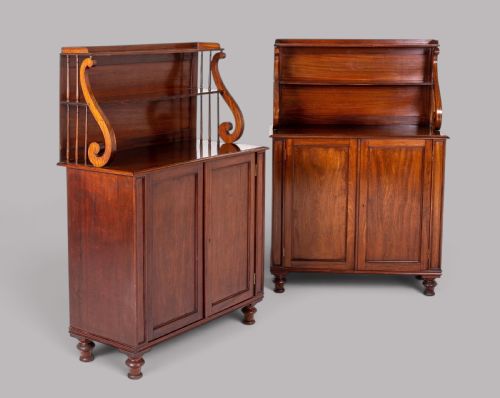
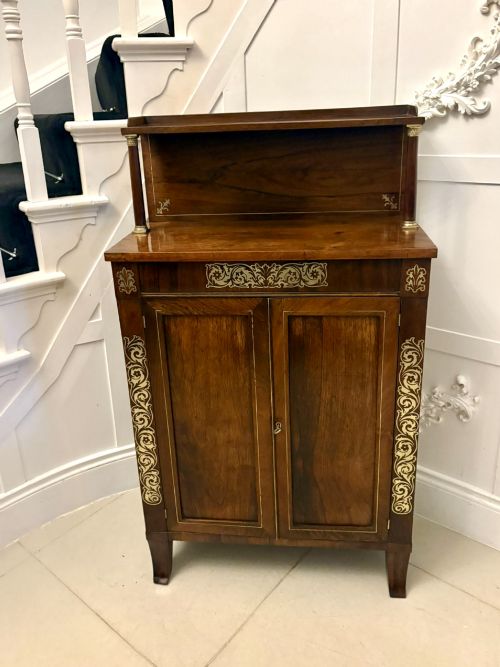
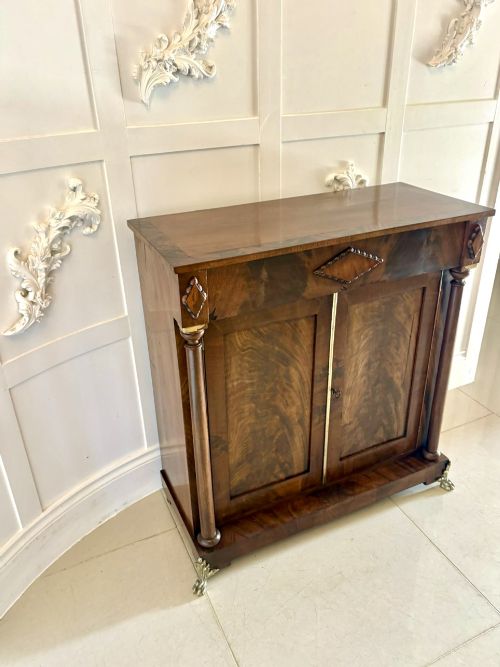
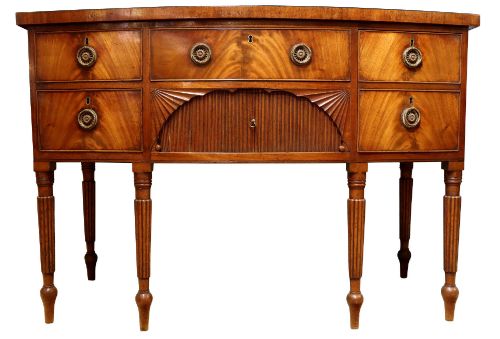
Period Mahogany Credenza
A period mahogany credenza brings warmth and architectural presence to a room, offering generous storage through refined timber work.
Period Mahogany Credenza
A period mahogany credenza encompasses substantial sideboards, chiffoniers, and low cabinets built from dense, rich timber. These forms emerge principally from the Regency, Georgian, and 18th-century eras, reflecting the formal dining and drawing room requirements of their time.
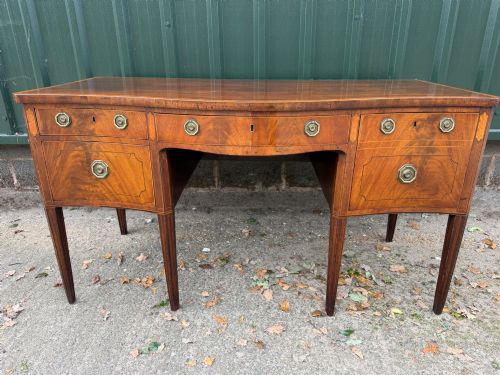
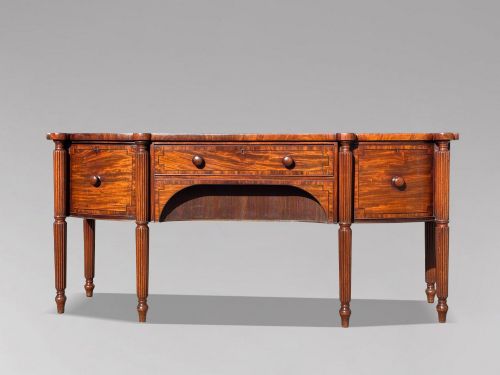
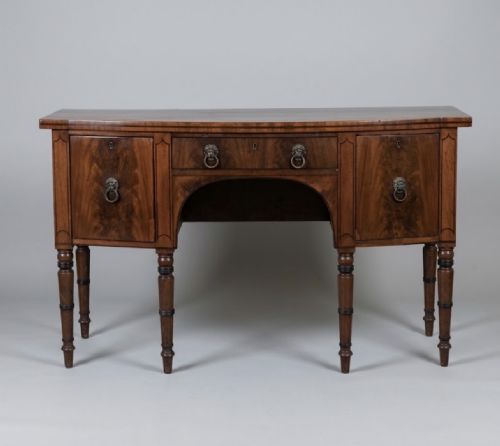
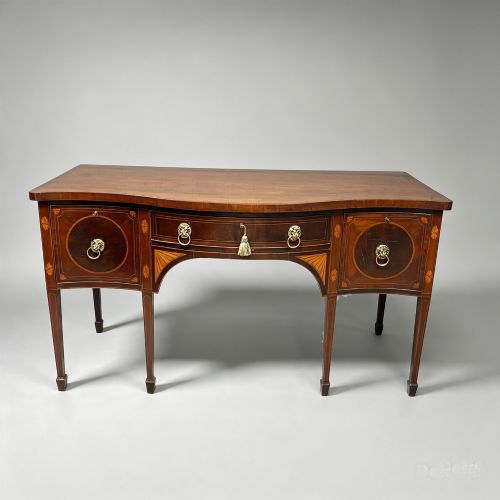
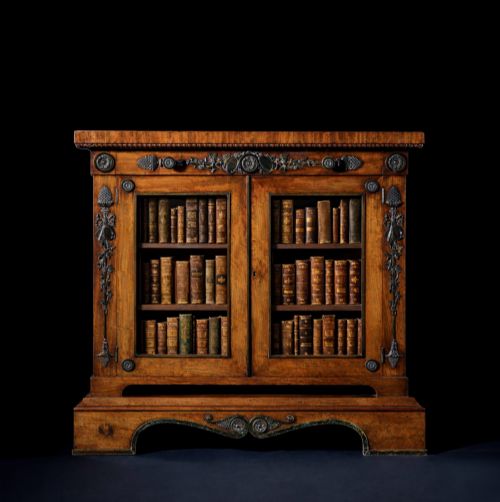
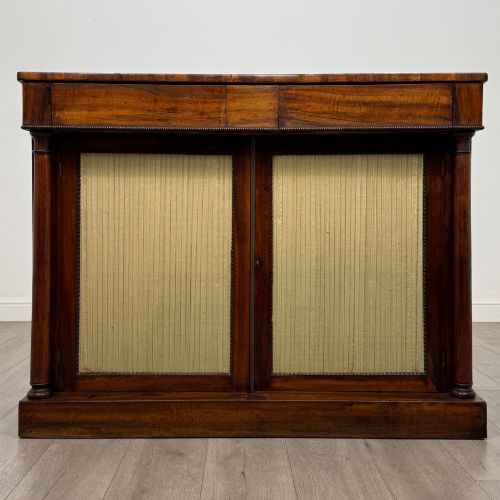
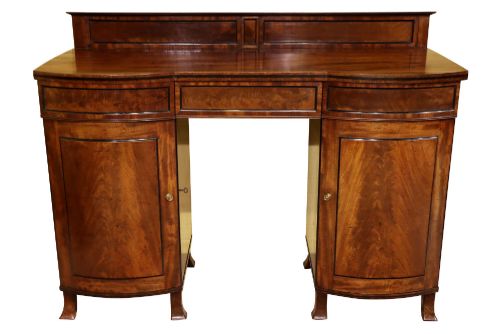
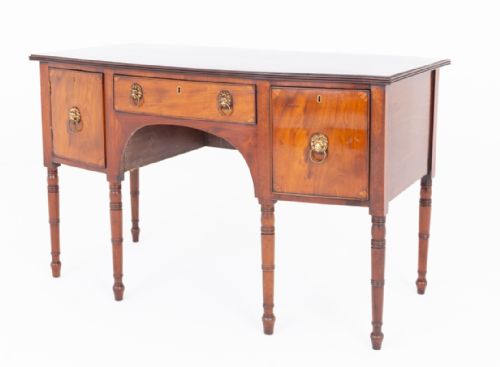
The versions most commonly met on this page are Regency and George III sideboard designs featuring bow fronts, brass grilles, or silk-panelled doors. Makers configured these pieces as servers, pedestals, or enclosed cabinets to hold dining silver and linen.
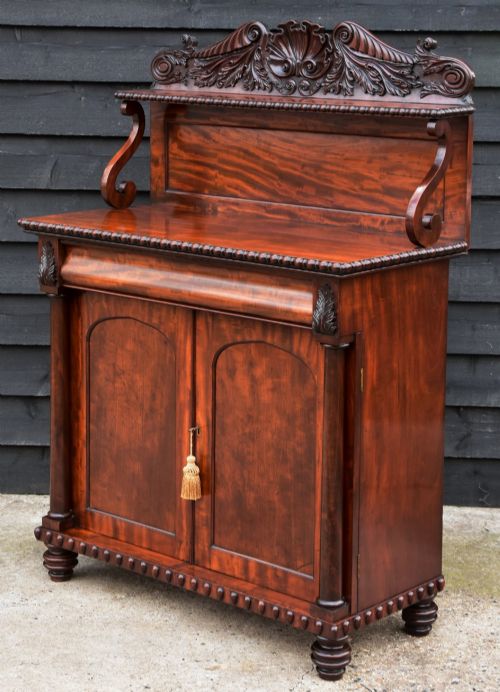
Beyond the standard dining room sideboard, the selection includes smaller chiffoniers and low linen presses adapted for domestic storage. Each piece demonstrates the heavy reliance on figured grain and clean architectural lines characteristic of these periods.
How they were made
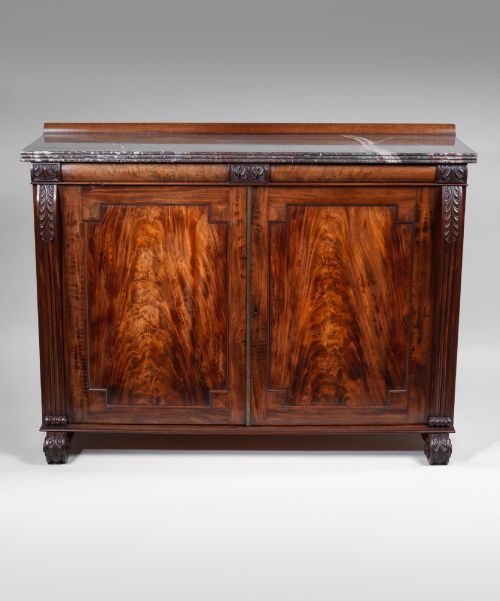
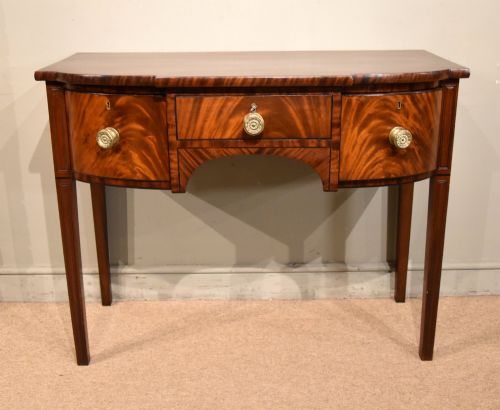
Cabinet makers constructed these pieces using solid mahogany and applied flame mahogany veneer to create deep, rippling patterns across large surface areas. They often enhanced the primary timber with satinwood inlay and mounted brass grilles or hardware.
Internal elements frequently incorporate secondary timbers, while specialised doors utilise pleated silk panels or glazed sections to soften the heavy wooden facades. Structural integrity relies on traditional joinery tailored to curved bow fronts and serpentine shapes.
Period Mahogany Credenza Retail Price Guide 2026
Typical asking prices for period mahogany credenza among the pieces listed under this phrase on Sellingantiques today, from the lower quarter to the upper quarter. They describe what is for sale here now, not the wider market.
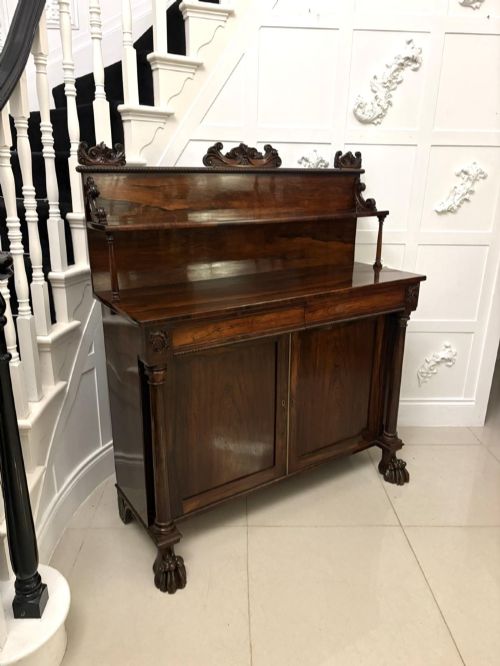
One unexpected Regency piece even carries a Harrods retailer stamp alongside its classical Egyptian Revival mounts.
What varies in quality
The standard of timber selection marks the primary difference across these pieces, with highly figured flame mahogany and matched grain patterns indicating superior workshop output. Subtle inlay work and precise bronze or brass mounts elevate the visual weight of the design.
Proportion and scale dictate the success of the piece, as smaller chiffoniers or refined bowfront sideboards require delicate handling of complex curves. The integration of functional elements, such as silk-backed grilles or well-fitted drawers, separates standard production from exceptional examples.
Gillows·Harrods
The Period Mahogany Credenza Glossary
- Chiffonier
- A low cabinet or sideboard, often featuring shelves or enclosed cupboards beneath, developed during the Regency period for the drawing room. It provides compact display and storage space.
- Bowfront
- A curved cabinet front that swells outward in the centre, creating a convex profile. This shape requires advanced woodworking skill to veneer and fit properly.
- Flame mahogany
- A veneer cut from the fork of the mahogany tree where the branch meets the trunk, producing a distinctive, fiery pattern. It was utilised on principal doors and drawer fronts for dramatic visual impact.
- Serpentine
- A furniture front shaped with a central convex curve flanked by two concave curves, following a gentle wave-like line. This intricate geometry defines high-status Georgian and Sheraton pieces.
- Linen press
- A tall or low cabinet originally designed for storing bed linen on sliding trays inside. In later periods, these evolved into versatile multi-purpose storage units.
Period Mahogany Credenza: Frequently Asked Questions
What is a period mahogany credenza used for today?
These pieces serve as substantial storage units and display surfaces in dining rooms, living spaces, or hallways. Their interior shelving and cupboards accommodate modern tableware, linens, or media equipment.
The finished top surface provides an ideal platform for lamps, decorative objects, or serving food and drinks during gatherings.
How do I tell Regency pieces from Georgian ones?
Regency furniture, dating from the early nineteenth century, often displays bolder classical motifs, such as brass grilles, Egyptian revival details, or faux rosewood finishes. The lines tend to be heavily architectural and draw inspiration from ancient Greece and Rome.
Georgian pieces, spanning the eighteenth century, lean towards lighter Sheraton or Chippendale proportions with refined inlay and understated elegance.
How do I care for mahogany veneer surfaces?
Maintain the timber by keeping the piece away from direct sunlight and sudden temperature changes, which can dry out or crack the antique veneer. Regular dusting with a soft, dry cloth prevents particulate accumulation.
Apply a microcrystalline wax occasionally to nourish the wood and protect the polish without building up greasy residues.
What is the difference between a sideboard and a chiffonier?
A sideboard is typically a longer, lower piece designed primarily for dining rooms to hold serving dishes, cutlery, and bottles. It often incorporates multiple drawers and pedestals.
A chiffonier is generally smaller and more compact, frequently featuring a raised shelf back or enclosed cabinet doors, intended for use in sitting rooms or drawing rooms.