



Period Footstool
A period footstool brings grounded character to a room, offering tactile timber frames and upholstered seating shaped by centuries of changing design.
Period Footstool
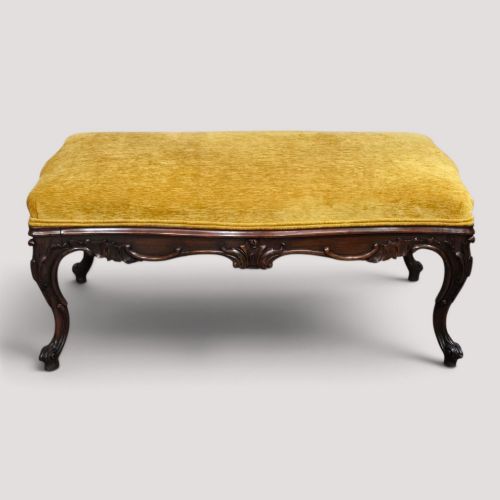
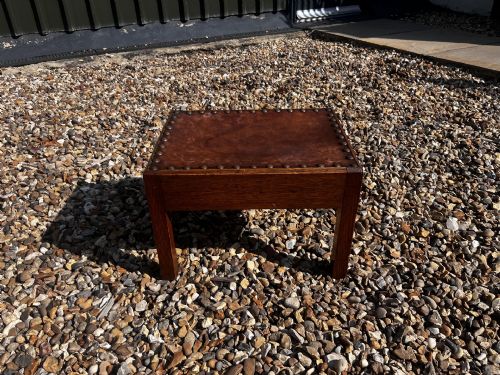
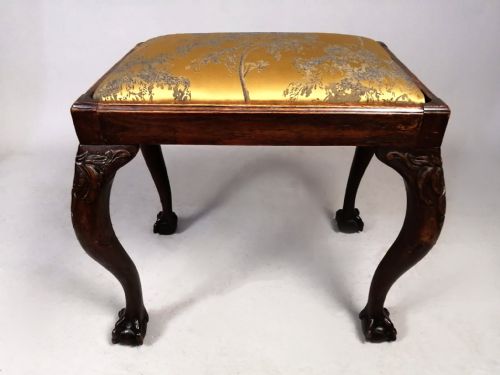
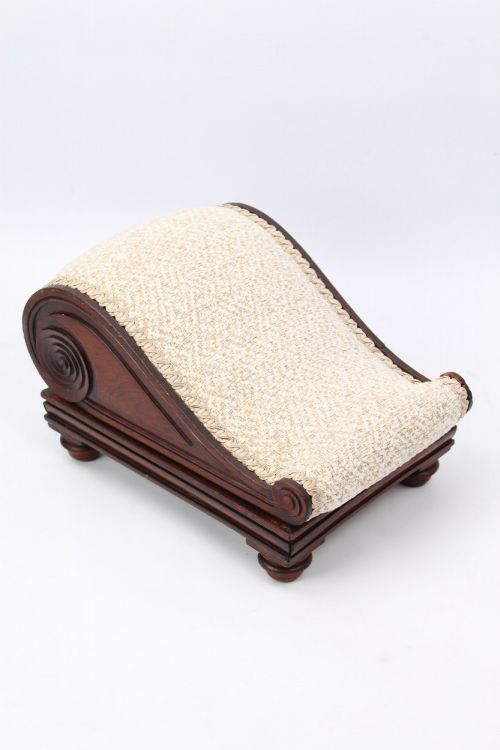
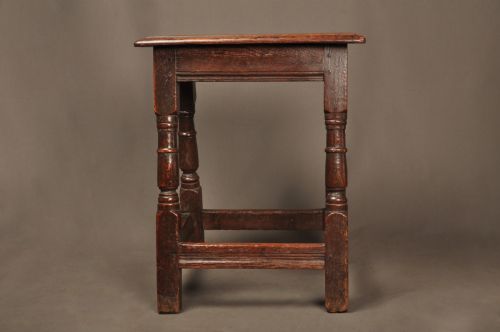
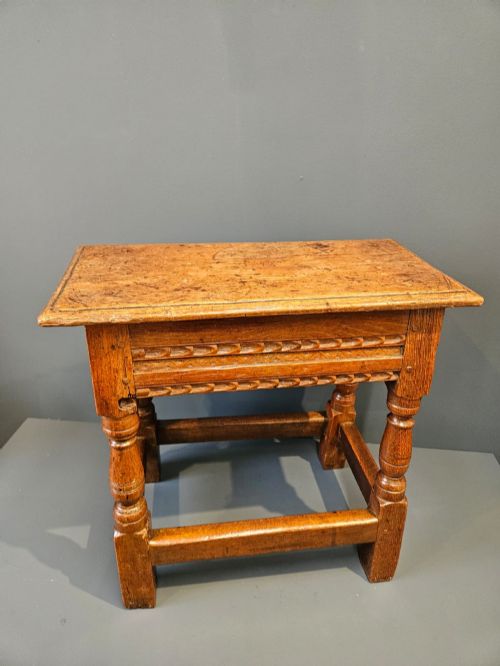
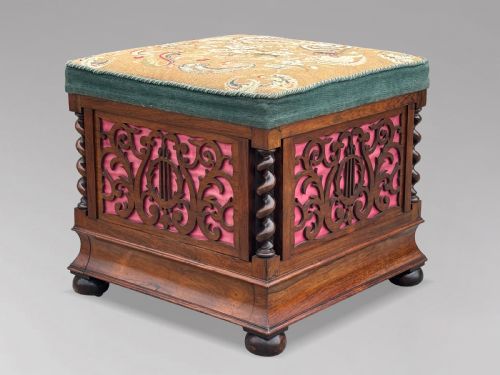
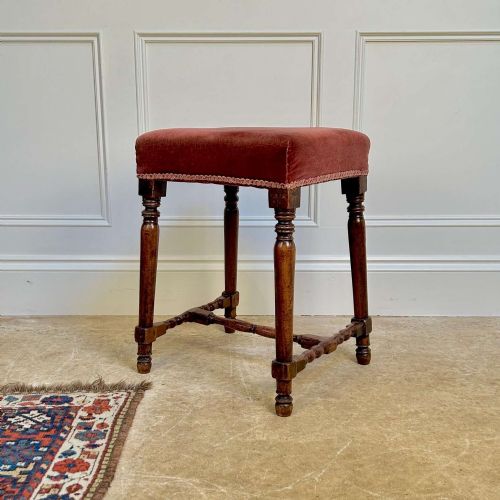
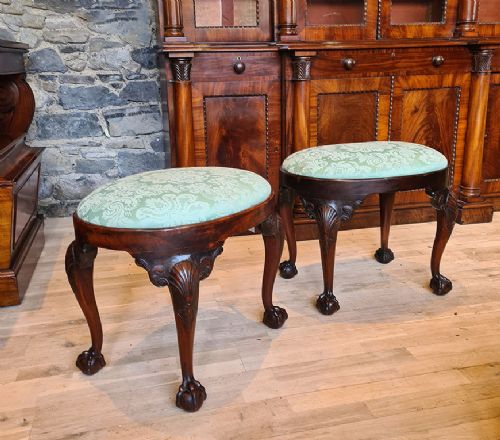
When you search for a period footstool, you encounter a diverse array of low seating forms ranging from austere seventeenth-century joint stools to opulent nineteenth-century ottomans. The examples seen here span multiple eras, encompassing heavy oak frames from the sixteen-hundreds alongside refined mahogany and rosewood creations from the Regency and Victorian epochs.
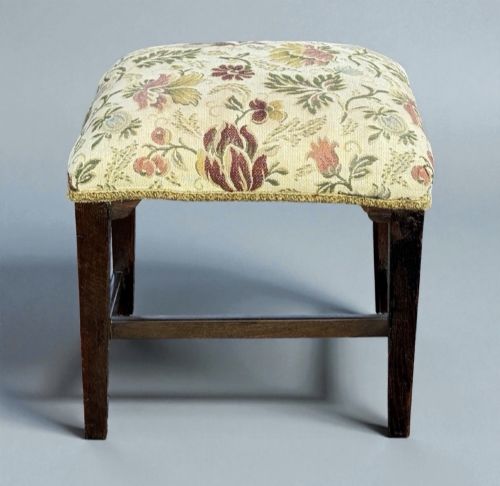
The most common iterations on this page are sturdy oak joint stools and upholstered mahogany or rosewood footstools designed for drawing rooms and dressing areas. Makers across the seventeenth, eighteenth, and nineteenth centuries produced these pieces as versatile household furnishings, utilising durable timbers and various textile coverings to suit domestic needs.
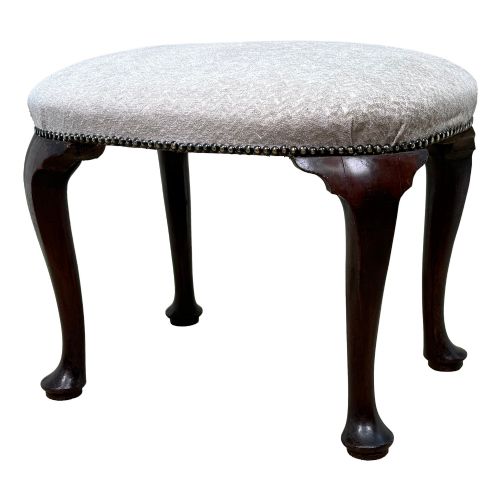
Originating largely from British workshops, though occasionally featuring Irish or continental execution, these pieces reflect distinct stylistic shifts from Jacobean austerity to the elaborate curves of the George II period and the later revival designs of the Victorian era. Buyers find sturdy structural forms and decorative footrests ready for modern integration.
How they were made
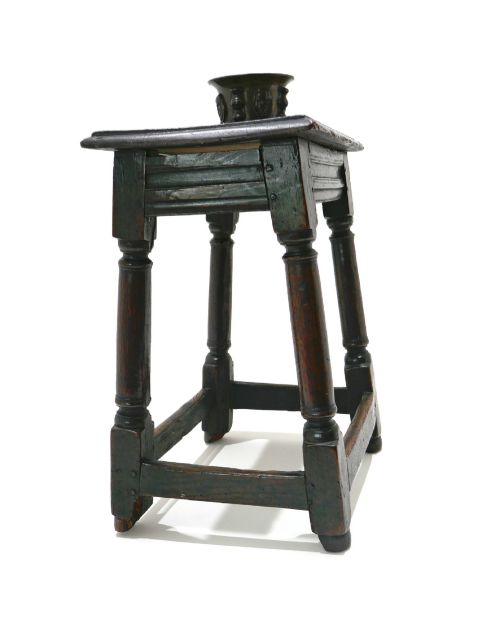
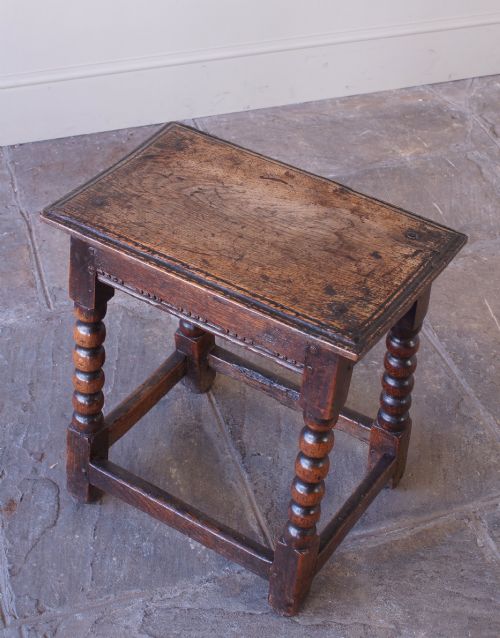
The construction of these stools relies heavily on durable hardwoods, predominantly oak for the earlier pieces and mahogany, walnut, or rosewood for later Georgian and Regency examples. Timber selection dictated the joinery methods employed, with seventeenth-century joint stools utilising pegged mortise and tenon joints to achieve rigid stability.
Upholstered variants incorporate traditional textile coverings such as tapestry, leather, and woven fabrics fixed over padded seat foundations. Brass hardware frequently appears on nineteenth-century ottomans and storage pieces, adding functional detail to rosewood and mahogany frameworks.
Period Footstool Retail Price Guide 2026
Typical asking prices for period footstool among the pieces listed under this phrase on Sellingantiques today, from the lower quarter to the upper quarter. They describe what is for sale here now, not the wider market.
Listings feature oak, walnut, mahogany, and rosewood across periods spanning the seventeenth through the nineteenth centuries.
What varies in quality
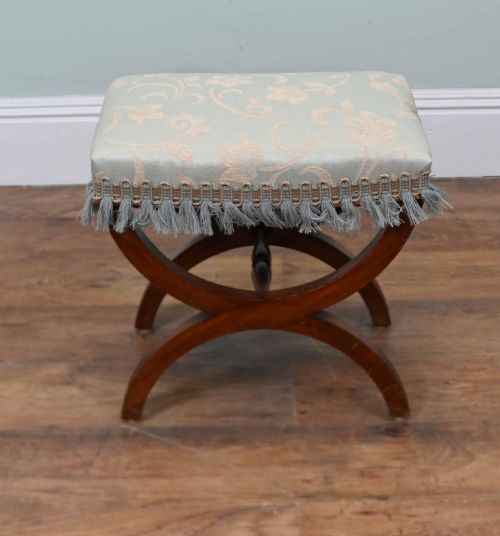
The distinction between ordinary examples and exceptional pieces rests upon the crispness of the timber carving and the integrity of the original construction. Superior seventeenth-century oak joint stools display well-defined turnings and minimal timber replacement, while finer Regency and Victorian stools exhibit refined veneers and sophisticated frame geometry such as scroll tops or "X" frames.
Upholstery treatment also defines the hierarchy, with surviving period tapestry or leather seats commanding attention alongside expertly executed mahogany frames by notable makers. The overall balance of proportions and the sympathetic retention of surface patination separate the standard utility stool from the masterwork.
Arthur Simpson Of Kendal·Mathew Gregson·I.M. Gillows Of Lancaster
The Period Footstool Glossary
- Joint stool
- A sturdy wooden stool constructed using pegged mortise and tenon joinery rather than traditional glue. These seventeenth-century forms served multiple domestic purposes.
- Ottoman
- A low upholstered seat or box bench often featuring internal storage. Regency and Victorian examples frequently utilise rosewood or mahogany frames.
- Tapestry
- A heavy hand-woven textile frequently employed for historical seat covers. Floral trellis patterns appear commonly on nineteenth-century footstool upholstery.
- "X" framed stool
- A seating form featuring intersecting diagonal supports derived from classical design. Regency makers reinterpreted this ancient structural layout in mahogany.
- Box stool
- A seating piece incorporating an enclosed compartment beneath the lid. These functional objects combine storage with low upholstered seating.
Period Footstool: Frequently Asked Questions
What is a joint stool?
A joint stool is an early wooden seating form built with pegged joints rather than glued connections. These robust pieces date primarily to the seventeenth century and served various domestic functions.
Their straightforward construction ensured longevity, allowing many examples to survive in daily use for hundreds of years.
Where were footstools placed?
Historically, these low seats sat before armchairs in parlours and drawing rooms to support the feet of seated occupants. Dressing rooms also utilised them for daily routines.
Their compact scale allowed them to be easily tucked away or moved around the room as needed for comfort.
Are original textiles common?
Surviving original upholstery remains uncommon due to the perishable nature of fabrics over centuries of use. Most period pieces feature later re-upholstery that respects historical styles.
When genuine period tapestry or leather does survive in good condition, it significantly adds to the character of the piece.