
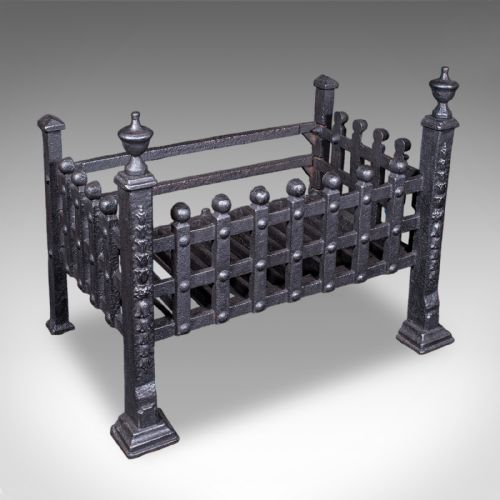


Period Fire Grate
A period fire grate anchors a room with genuine weight, bringing architectural warmth and proper period proportion to an idle hearth.
Period Fire Grate
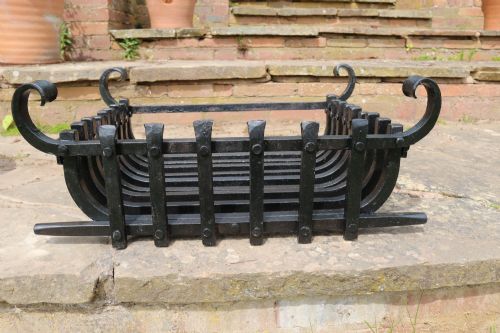
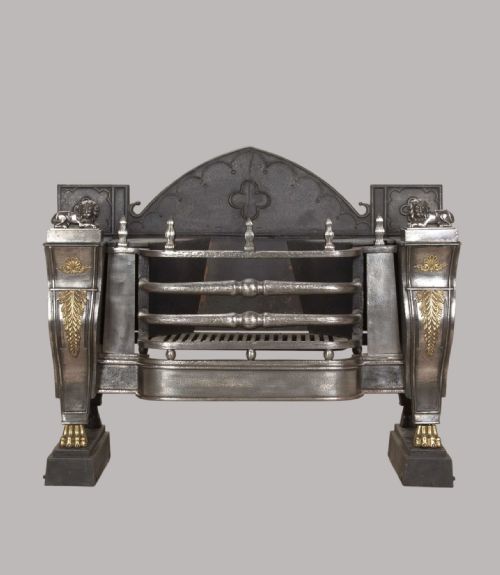
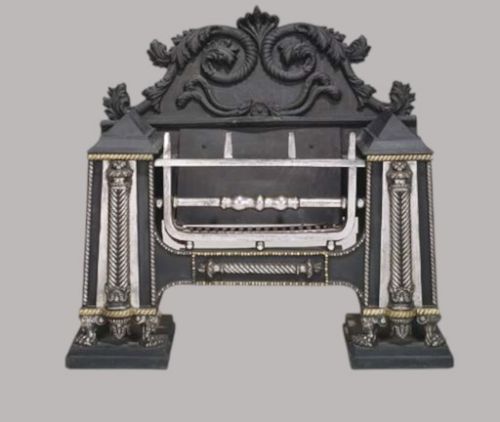
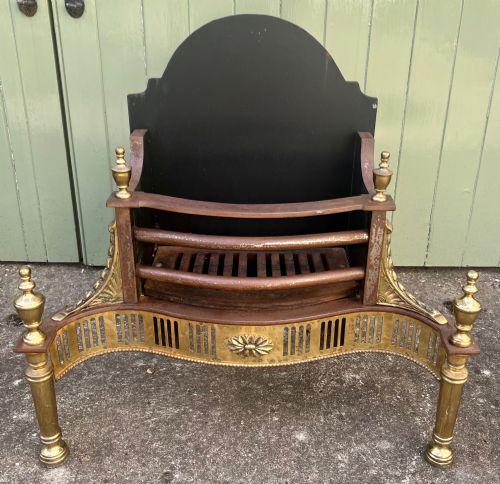
A period fire grate is a functional iron or brass basket designed to hold coal or logs within an open hearth, encompassing forms from hob grates to register grates. Buyers searching for a period fire grate frequently encounter robust Victorian designs and refined Georgian examples featuring classical proportions.
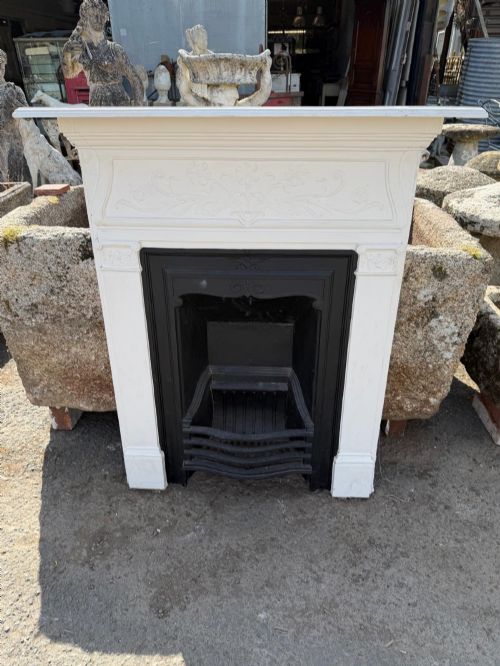
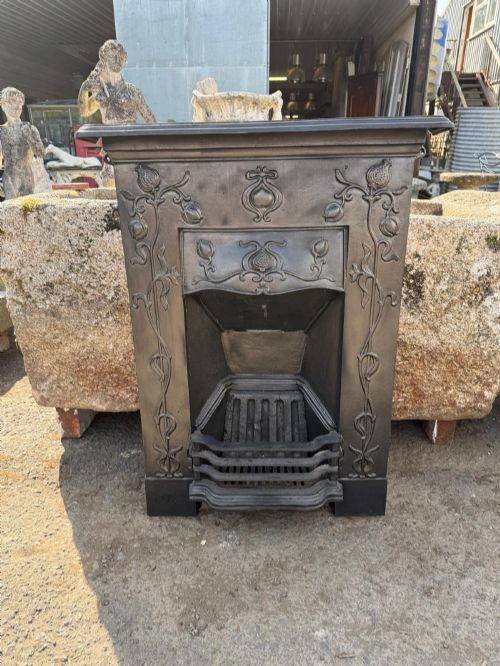
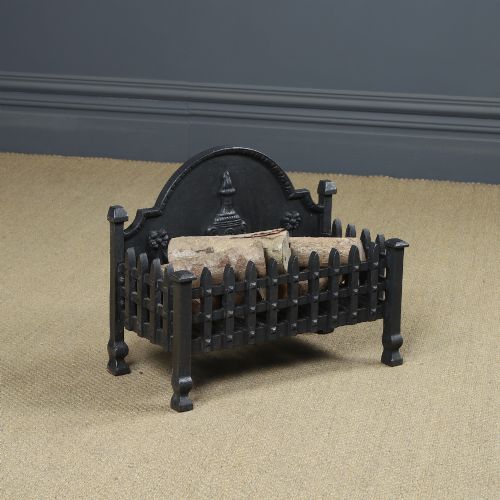
The inventory includes freestanding fire baskets, combination fireplaces, and heavy cast iron fire backs paired with andirons. These pieces emerge from periods spanning the Georgian era through the Arts and Crafts movement, maintaining the exact utility intended by their makers.
Materials and construction
Foundries utilised heavy cast iron for fire backs and structural frames, often combining it with wrought iron bars to withstand intense heat. Brass components appear on finer grates, particularly on front bars, finials, and associated andirons.
Makers shaped the metal through casting and hand-wrought assembly, integrating firebrick linings to protect the surrounding ironwork. Surface finishes rely on the natural dark properties of iron alongside polished or lacquered brass elements.
Early ironfounders occasionally cast unexpected faces and mythical creatures directly into heavy fire backs to peer through the smoke.
Assessing quality and design
Quality rests in the crispness of the casting and the integration of decorative motifs such as Adam style neoclassical swags or Arts and Crafts hand-forged detail. Finer examples display balanced proportions between the basket and the supporting legs or andirons.
Thicker metal sections and substantial fire backs distinguish superior pieces from standard utilitarian grates. The survival of original brass fittings and integrated dampers in register grates elevates the integrity of an assembly.
The Period Fire Grate Glossary
- Hob grate
- A cast iron fireplace design featuring raised side platforms flanking the central fire basket. These surfaces served practical domestic functions like keeping kettles warm.
- Register grate
- A fireplace insert featuring a built-in metal flap or damper to regulate the draw of the chimney. This mechanism allowed homeowners to control airflow and heat output.
- Fire back
- A heavy iron plate positioned at the back of a fireplace to protect the masonry and reflect heat into the room. They frequently display cast heraldic or classical relief designs.
- Andirons
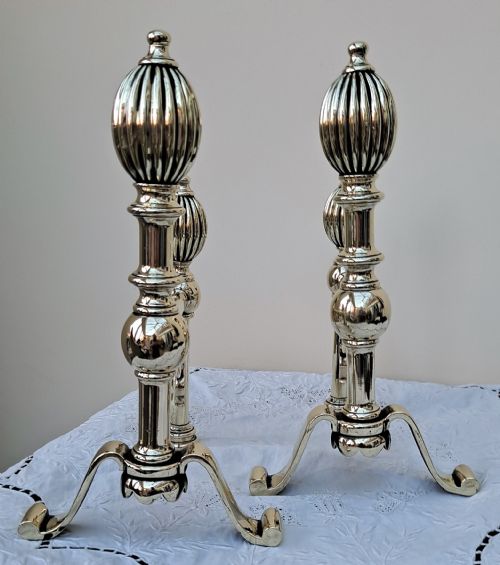
- Supporting metal fire dogs placed on either side of the hearth to hold logs above the hearth floor. They often match the brass or ironwork of the accompanying grate.
- Combination fireplace
- A complete surround and grate manufactured as a single unified unit during the Victorian period. It simplified installation by combining the mantel, register, and fire opening.
Period Fire Grate: Frequently Asked Questions
Will a period fire grate fit my chimney?
Most period grates are designed for traditional masonry chimneys and open hearths. Proper installation requires measuring the opening depth, width, and height to accommodate the specific basket or insert.
Working with an experienced installer ensures the grate sits securely against the masonry and meets safety standards for solid fuel or gas conversion.
How do I clean cast iron grates?
Regular maintenance involves brushing away ash and soot with a soft bristle brush after the metal cools completely. Avoid using water or harsh chemical cleaners which can cause surface oxidation.
Applying a traditional grate polish or stove blacking with a cloth restores the deep dark finish to cast iron components without damaging the original metal.
Can these grates burn real wood?
Many historic grates accommodate seasoned hardwood logs, provided the basket depth and firebrick lining are suitable for wood combustion. Wrought iron and heavy cast iron withstand high temperatures effectively.
Smaller hob grates were traditionally engineered primarily for coal rather than large logs. Checking the internal capacity prevents overloading the basket.
How do I date an iron grate?
Dating relies on stylistic clues, such as neoclassical urn motifs from the Georgian era or geometric strapwork from the Arts and Crafts period. Manufacturing techniques also shift from hand-forged wrought iron to mass-produced Victorian castings.
Comparing the form against known register grates and combination fireplaces helps narrow the manufacturing decade.