

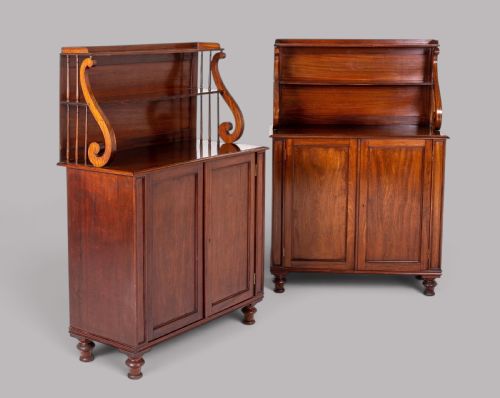
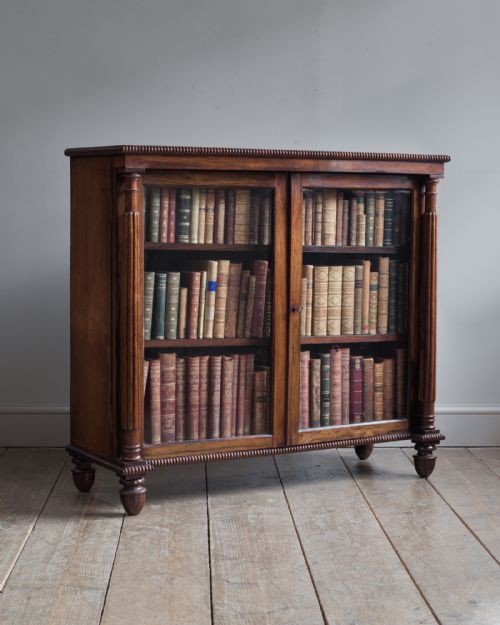
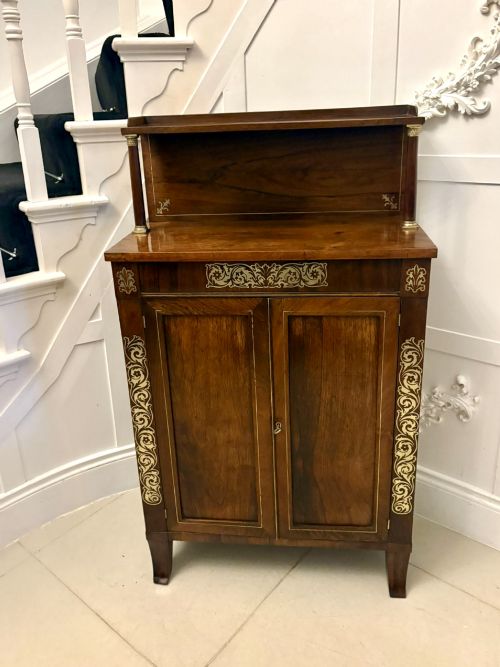
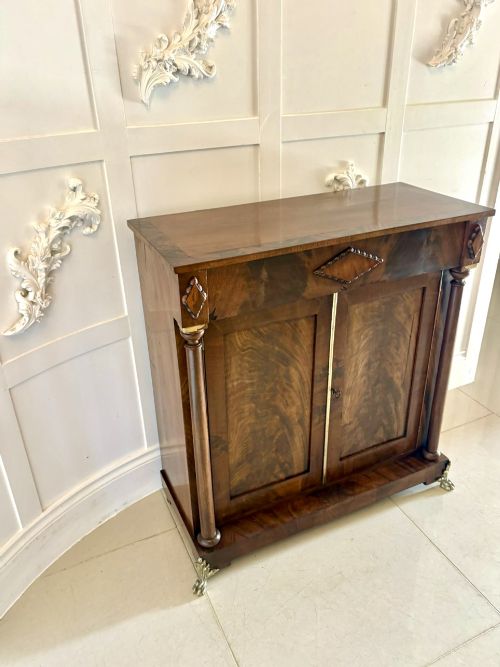
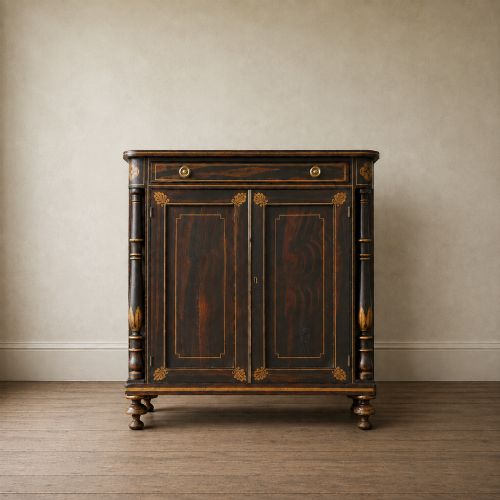
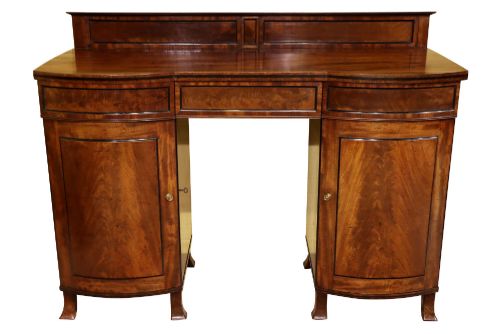
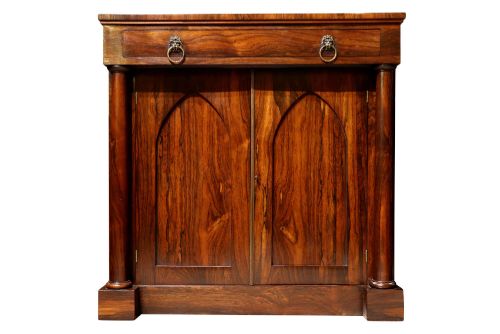
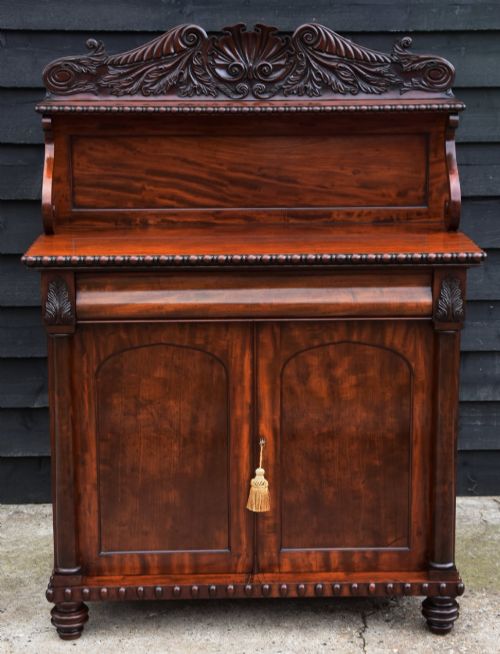
Period Credenza
Period credenza examples span mahogany and rosewood forms, offering substantial dining room storage through classic Georgian, Regency, and Victorian designs.
Period Credenza
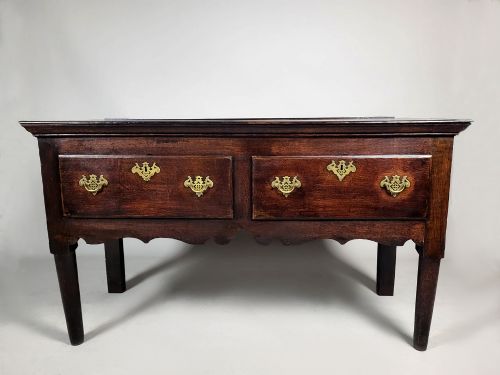
A period credenza brings formal architectural presence into a dining room or hall, functioning as a primary storage piece for serving ware and household linens. When collectors search for a period credenza, they encounter various low-profile cabinets, chiffoniers, and sideboards originating from the eighteenth and nineteenth centuries.
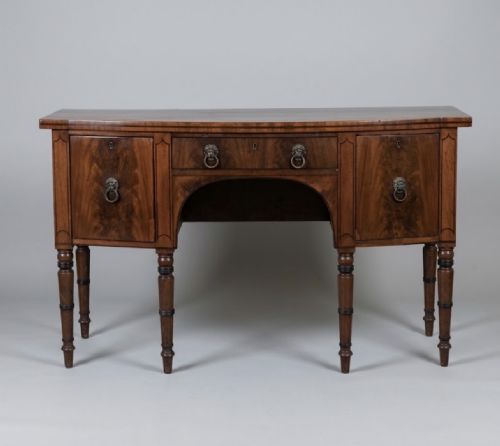
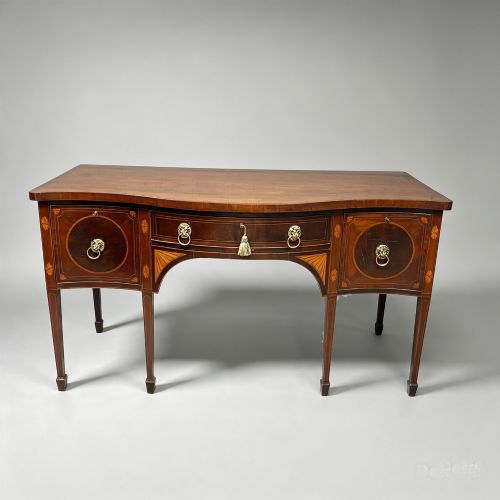
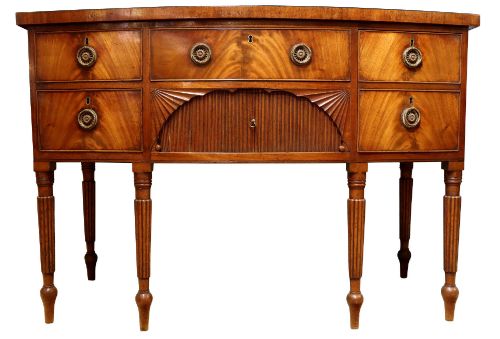
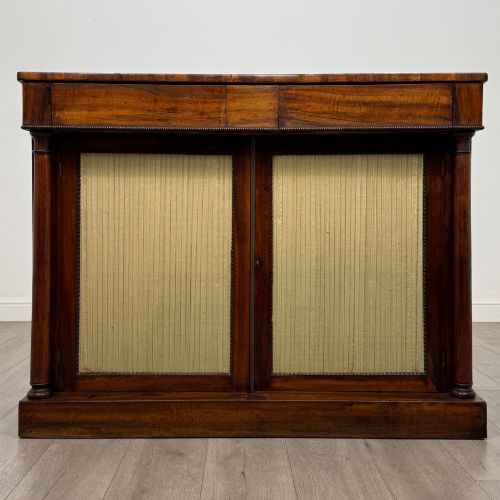
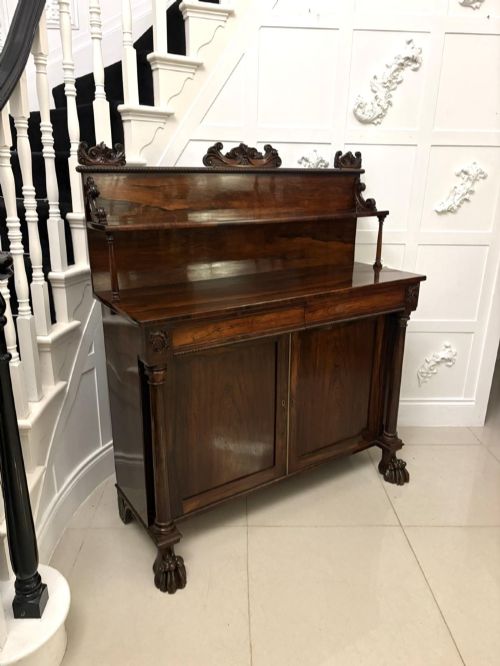
The selections on this page lean heavily toward Regency and Georgian forms, featuring rich timber grains and brass ornamentation. These pieces range from compact rosewood cupboards to large flame mahogany sideboards designed to anchor a formal interior.
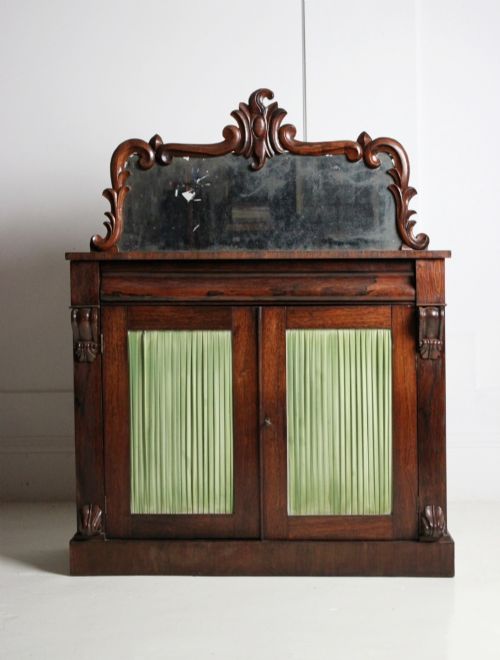
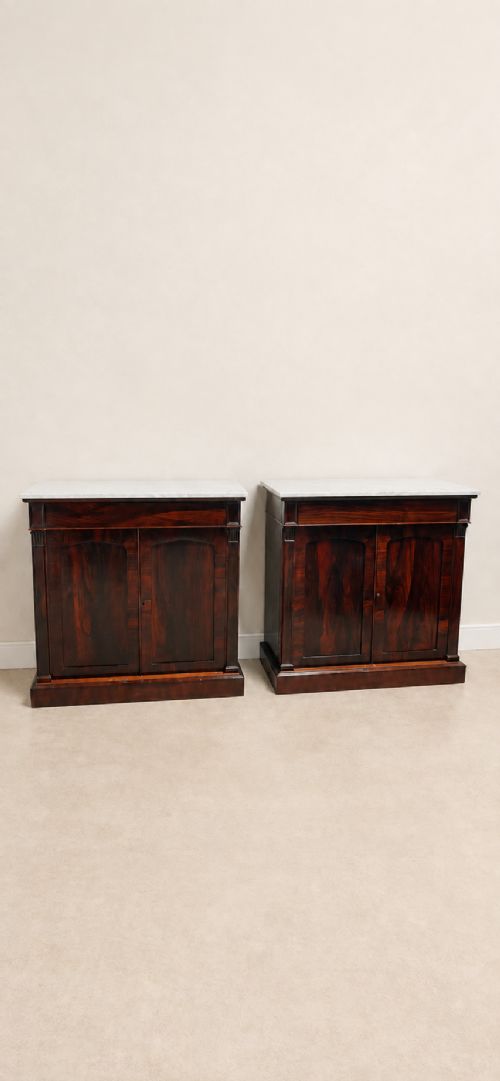
Makers and cabinet makers of these periods utilised classical proportions, adapting side cabinets and credenzas to suit the formal entertaining habits of the era. Buyers meet numerous variations incorporating silk-panelled doors, brass grilles, and marble tops.
Judging execution and finish
Quality rests upon the selection of timber veneers and the precision of the cabinet maker's joinery. Superior examples display continuous, book-matched grain patterns across drawer fronts and doors, demonstrating careful planning by the maker.
The refinement of secondary details, such as the crispness of brass inlay, original bronze mounts, and the integrity of internal shelving, separates standard production items from masterworks. Original surface patination and minimal timber replacement preserve the historical integrity of the piece.
Period Credenza Retail Price Guide 2026
Typical asking prices for period credenza among the pieces listed under this phrase on Sellingantiques today, from the lower quarter to the upper quarter. They describe what is for sale here now, not the wider market.
Listings feature woods including mahogany, rosewood, oak, walnut, gonçalo ailes, and amboyna across Georgian and Victorian periods.
Louis Constantin Le Gaigneur
The Period Credenza Glossary
- Credenza
- A low cabinet or sideboard, historically used for displaying plates and serving food in dining spaces. These pieces sit lower than traditional tall display cabinets.
- Chiffonier
- A compact sideboard or cabinet featuring shelves or a small superstructure on top, popular during the Regency period. They often include enclosed cupboards beneath.
- Flame mahogany veneer
- A decorative wood slicing that produces a distinctive, flamelike figure on cabinet doors and drawer fronts. Cabinet makers prized this technique for creating striking visual movement.
- Bow front
- A convex, curved cabinet front that projects outward in an arc. This shaping required advanced woodworking skill to bend timber or construct curved framing.
- Ormolu
- Gilded bronze mounts applied to furniture surfaces for decorative contrast. Artisans chased these metal elements by hand to achieve sharp detail.
Period Credenza: Frequently Asked Questions
Where did people place a period credenza?
These low cabinets typically stood against the main dining room wall to hold serving dishes, cutlery, and glassware during formal meals.
They also found places in reception rooms and grand hallways where hosts displayed silver and decorative objects.
How do I identify a Regency credenza?
Regency pieces often display classical architectural motifs, rosewood or mahogany timbers, and precise brass inlay work.
Look for symmetrical door arrangements, bronze mounts, and restrained ornamentation characteristic of the early nineteenth century.
Can I use a credenza in a modern room?
The low profile and substantial surface area make these cabinets practical for media storage or general display in contemporary living spaces.
Their rich wood tones provide warmth and contrast against minimalist architectural backgrounds.
What is the difference between a sideboard and a credenza?
Sideboards generally feature deeper proportions and extensive drawer configurations designed specifically for dining room storage.
Credenzas usually present as lower, cabinet-based units with doors enclosing shelved storage space.