

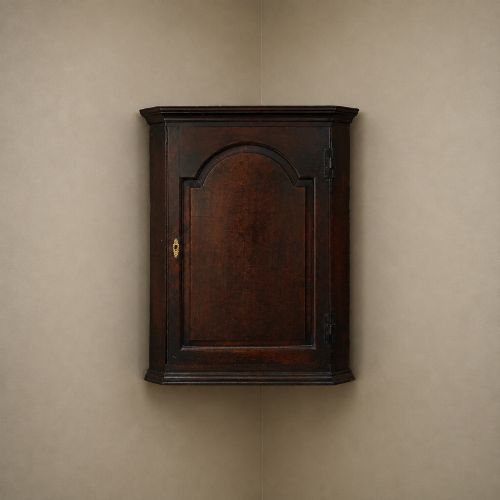
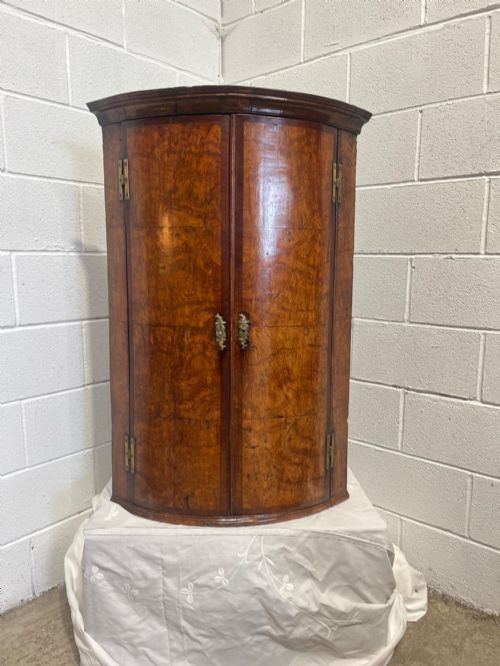
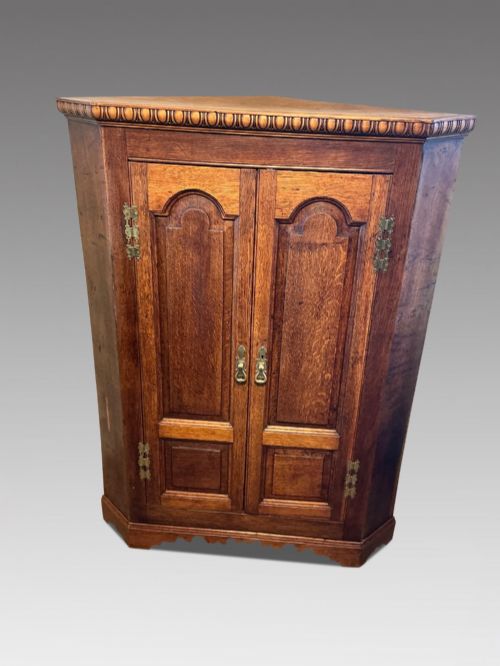
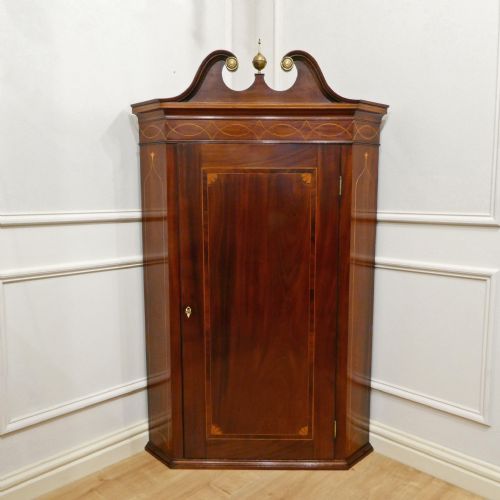
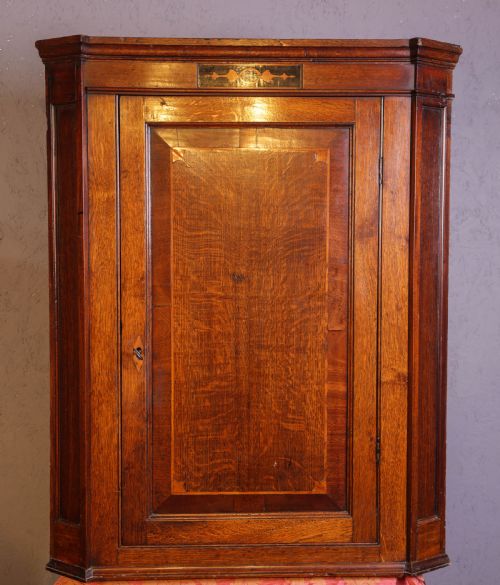


Period Corner Cupboard
A period corner cupboard turns wasted wall junctions into focal points, offering clever storage for porcelain or glassware in a compact footprint.
Period Corner Cupboard
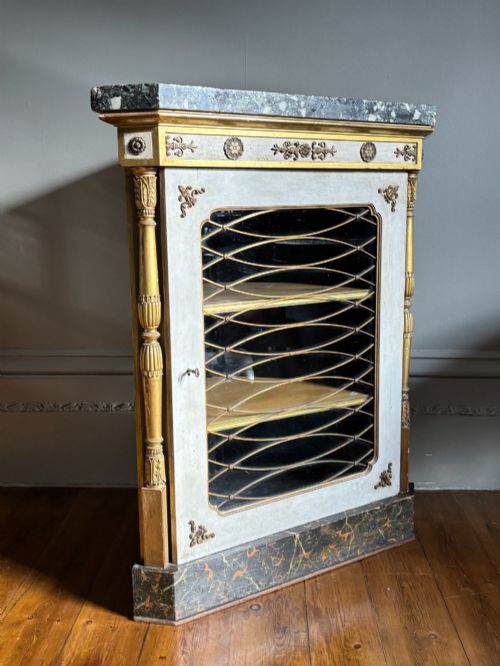
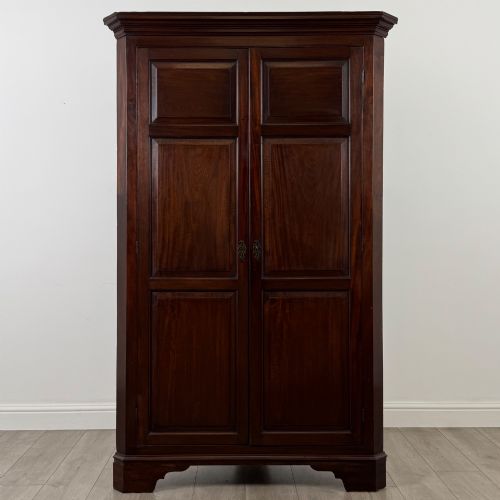
A period corner cupboard is a fitted or freestanding storage unit designed to slot neatly into the intersection of two walls, making efficient use of awkward domestic angles. The vast majority of examples on this page hail from the Georgian and eighteenth centuries, built primarily in rich oak or dense mahogany.
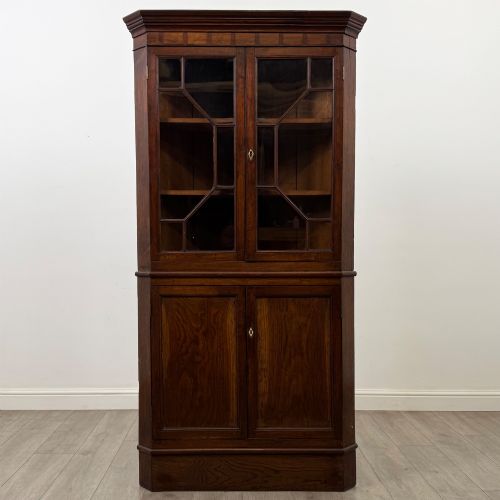
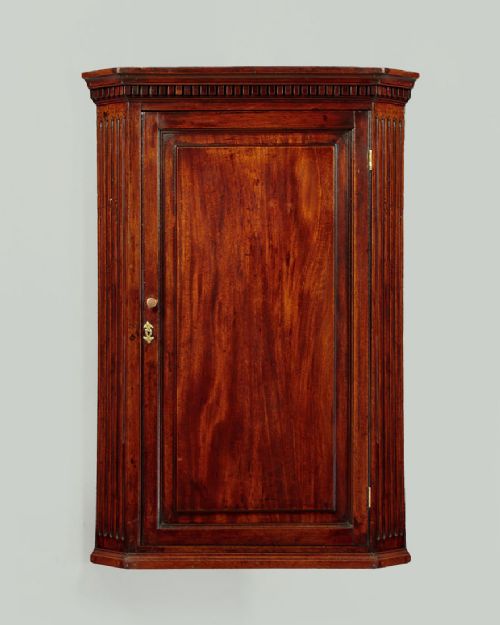
Buyers will encounter two main structural formats in these listings: wall-hanging versions intended to save floor space, and grander floor-standing or two-part cabinets that anchor an entire room. Many feature bow fronts or glazed upper doors designed to display prized possessions, bridging the gap between utilitarian storage and formal display furniture.
How They Were Made
Cabinetmakers built these pieces using solid timbers such as oak, mahogany, and walnut, frequently employing panelled construction to accommodate the natural seasonal movement of wood without splitting. Interiors often utilised deal or secondary softwoods for shelving, whilst exterior decorative touches included satinwood inlay, brass H-hinges, and crossbanding.
The joinery relies heavily on pegged mortise and tenon joints for the carcase, alongside hand-cut dovetails for internal drawer boxes. Wall-hanging variants incorporated sturdy internal brackets or hanging lugs to bear the substantial weight of dense hardwood and stored crockery.
Period Corner Cupboard Retail Price Guide 2026
Typical asking prices for period corner cupboard among the pieces listed under this phrase on Sellingantiques today, from the lower quarter to the upper quarter. They describe what is for sale here now, not the wider market.
Several examples feature tiny secret internal drawers hidden behind faux book spines, designed to keep household ledgers safe from prying eyes.
What Varies in Quality
Quality in a period corner cupboard rests on the choice of timber and the ambition of the joinery, ranging from simple country workshop pieces in utilitarian oak to refined urban examples featuring figured mahogany and intricate crossbanding. The crispness of carved mouldings and the presence of original brass hardware elevate an interior piece significantly.
Proportion and scale dictate the visual success of the piece, particularly where curved or bow-front doors demand absolute precision from the maker. Cabinets possessing secondary internal drawers or glazed astragal doors demonstrate a higher tier of craftsmanship than plain, single-door counterparts.
The Period Corner Cupboard Glossary
- Bow front
- A convex, curved front profile that projects outward from the corner. This curved design softens the sharp angles of a room.
- Astragal
- A small wooden moulding used to hold panes of glass within a glazed door frame. These delicate bars divide the window into smaller geometric sections.
- Crossbanding
- A decorative border technique where thin strips of veneer are laid perpendicular to the grain of the primary panel. This frames the cabinet door with a contrasting border.
- Standing corner cupboard
- A tall, floor-resting unit that typically divides into two stacked sections for easier transport and placement. These larger versions often incorporate a lower cupboard base beneath an upper display area.
- Raised panel
- A central wooden panel with edges bevelled down to fit snugly into a grooved frame. This traditional construction method allows the wood to expand and contract safely.
Period Corner Cupboard: Frequently Asked Questions
How do I hang a wall cupboard?
Hanging a heavy timber corner unit requires locating solid masonry or strong wall studs behind the plaster. Secure heavy-duty screws directly through the internal backboards into the structural support.
Because these antique pieces carry considerable weight, professional installation ensures the cabinet remains safely anchored over time.
Were they built for dining rooms?
These cabinets traditionally stood in dining parlours or sitting rooms to hold porcelain tea services, glassware, and bottled spirits. Their triangular footprint kept them out of the main flow of traffic while keeping tableware close at hand.
Today, they serve a similar purpose in modern dining spaces or living areas for displaying collections.
Can these fit modern corners?
Most standard room corners form a ninety-degree angle, which matches the precise ninety-degree back construction of these traditional cupboards. Measuring the exact wall clearance and ceiling height helps ensure a smooth fit.
Freestanding models offer straightforward placement, whilst wall-hanging versions require checking the surrounding moulding and skirting boards.