
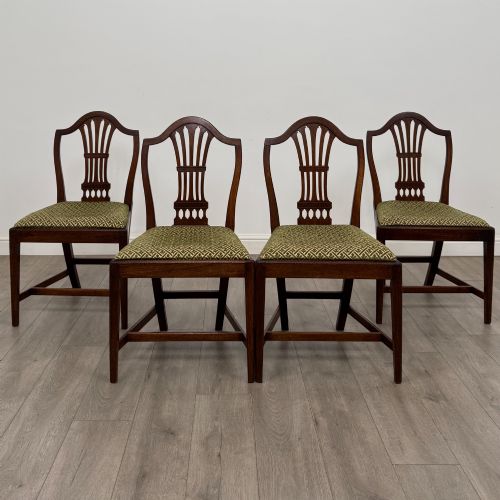
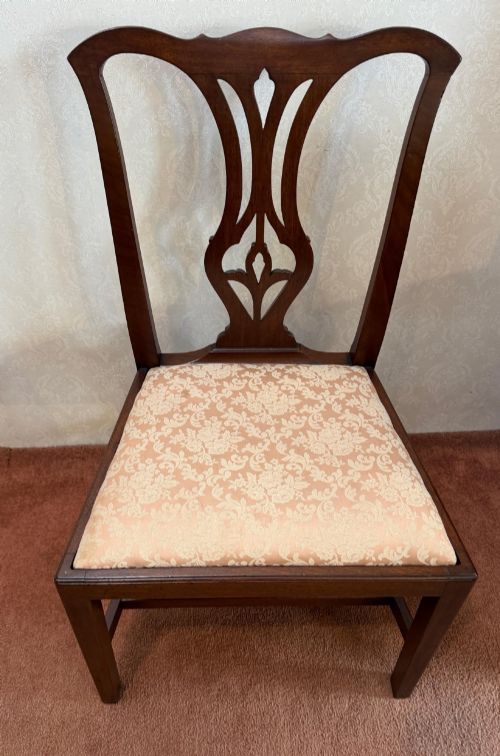
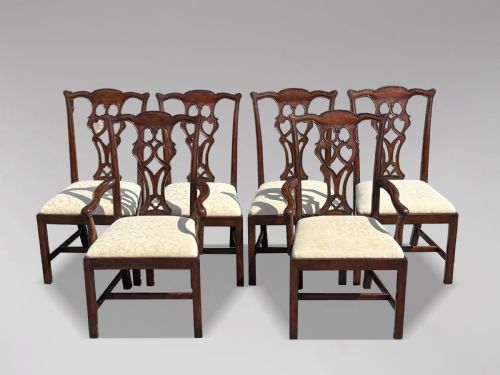
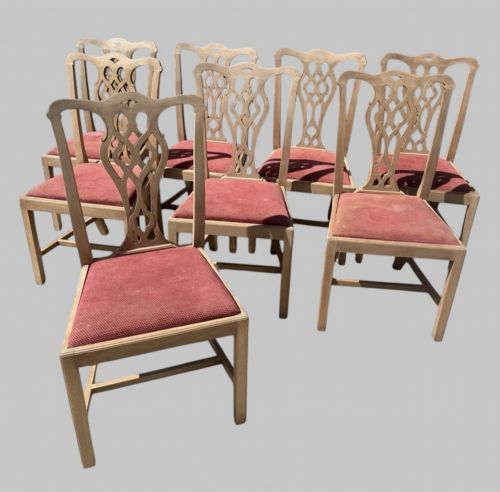
Period Chippendale Dining Chairs
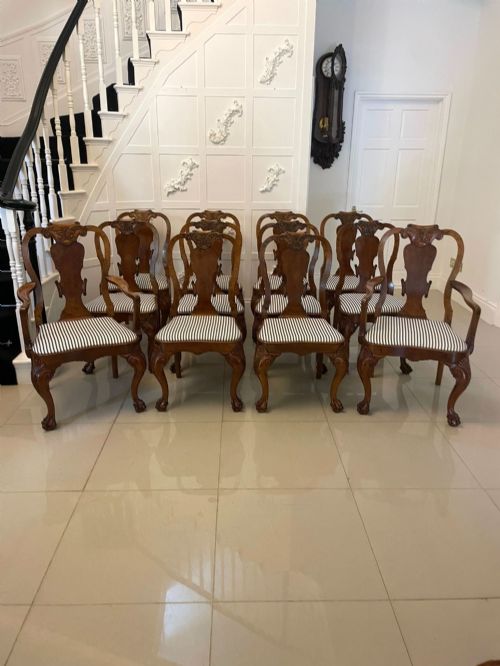
Period chippendale dining chairs bring solid eighteenth-century craftsmanship and carved mahogany elegance to the dining room.
Period Chippendale Dining Chairs
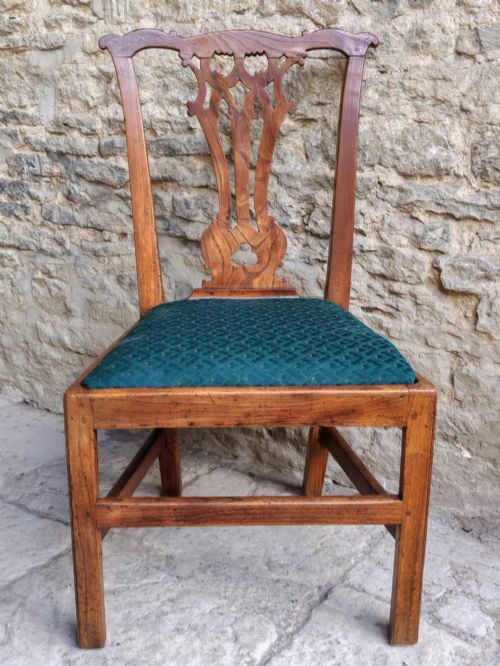
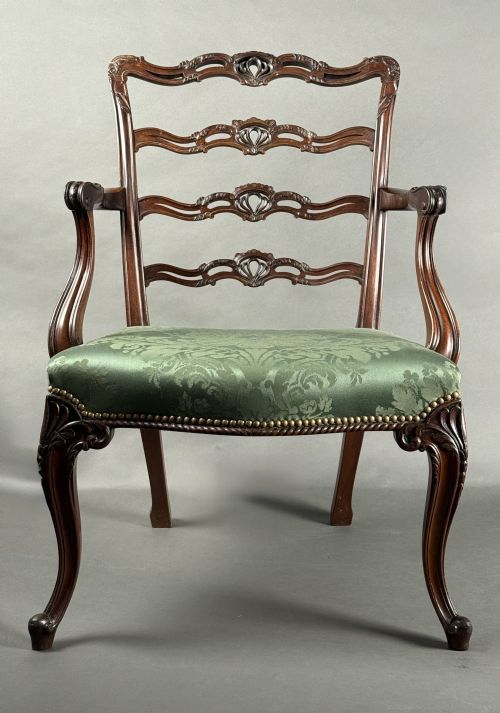
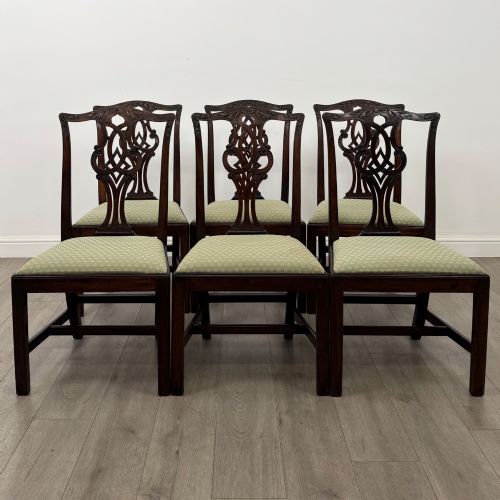
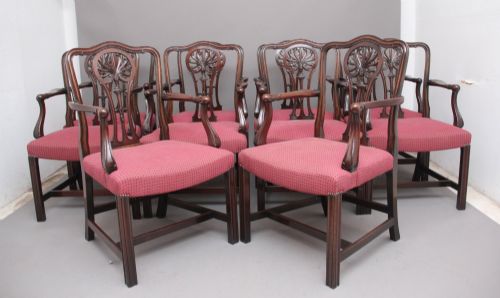
Period chippendale dining chairs encompass eighteenth-century Georgian seating as well as later revival pieces made in the Victorian and Edwardian eras. These chairs appear as single pieces, pairs, or matched sets ranging from four to twelve items, often divided between side chairs and armchairs.
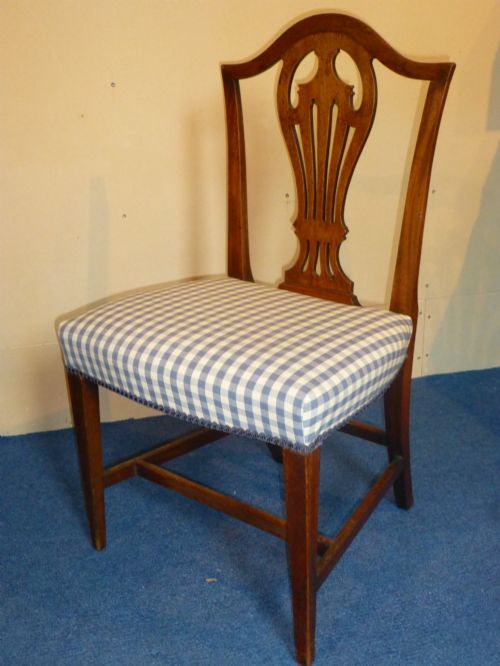
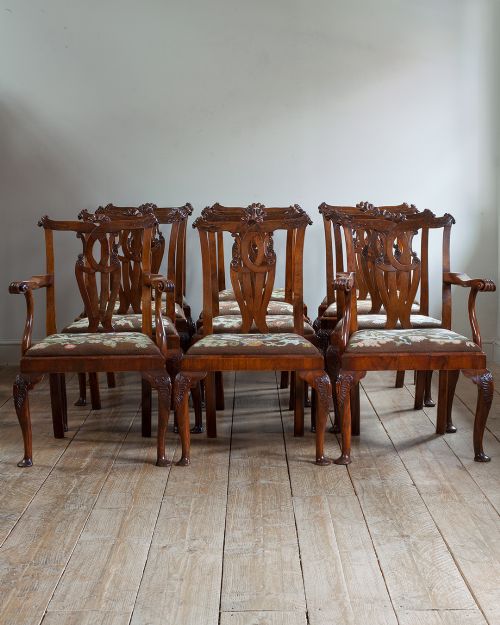
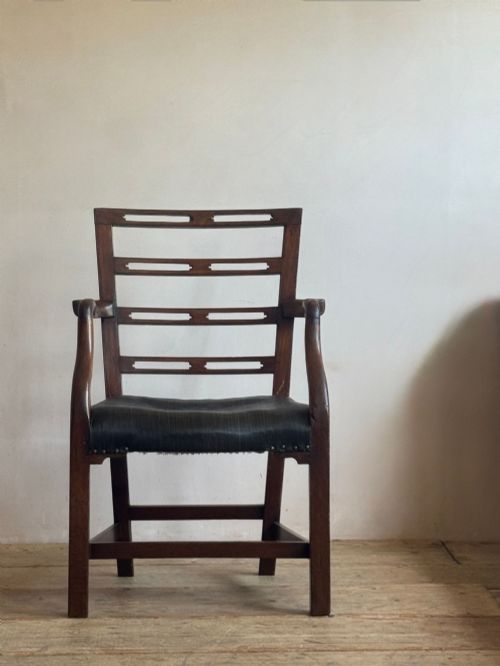
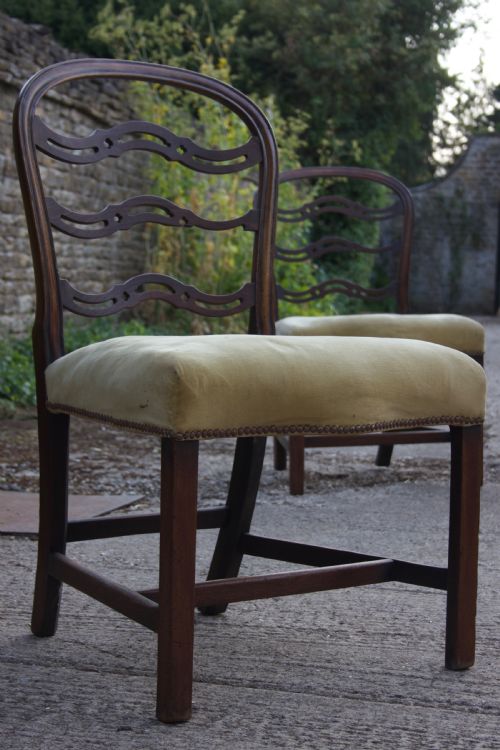
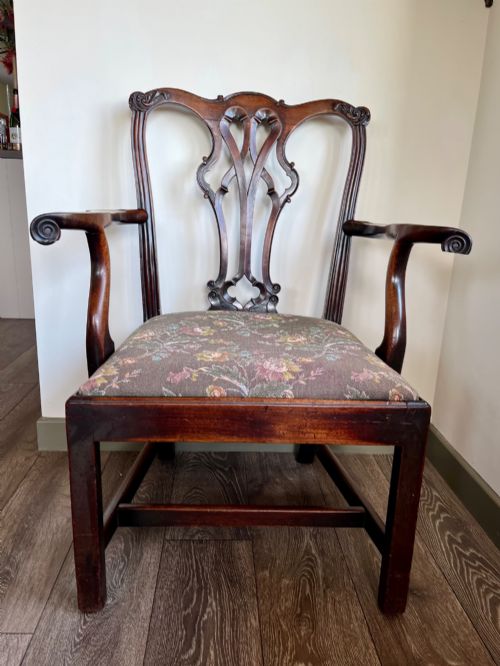
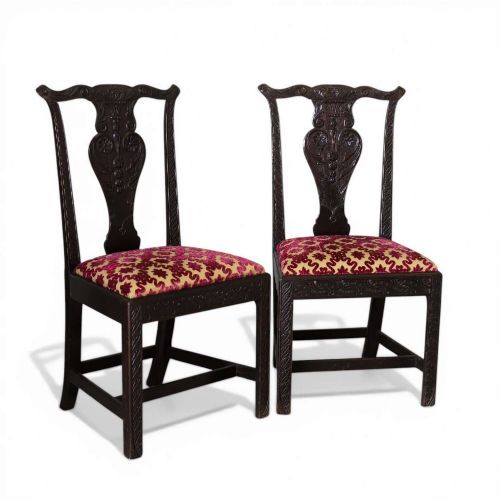
The form relies on sturdy wooden frames with distinct splat backs, frequently accompanied by drop-in seats or upholstered pads. Walnut, elm, fruitwood, and oak sit alongside the predominant mahogany.
Buyers seeking period chippendale dining chairs encounter original eighteenth-century items alongside nineteenth-century Chippendale style adaptations produced around eighteen-eighty or nineteen-ten.
How They Were Made
Cabinetmakers constructed these frames primarily from dense mahogany, though regional examples utilise elm, oak, walnut, or fruitwood. Timber selection dictated the depth of carving achievable on the top rails and interlaced splats.
Joinery relied on traditional mortise and tenon construction to withstand daily use around the dining table. Seat frames frequently accommodated drop-in pads covered in leather, fabric, tapestry, or velvet secured with brass tacks.
Some chairs spent centuries serving as silent witnesses to family arguments over who carved the Sunday roast.
What Varies in Quality
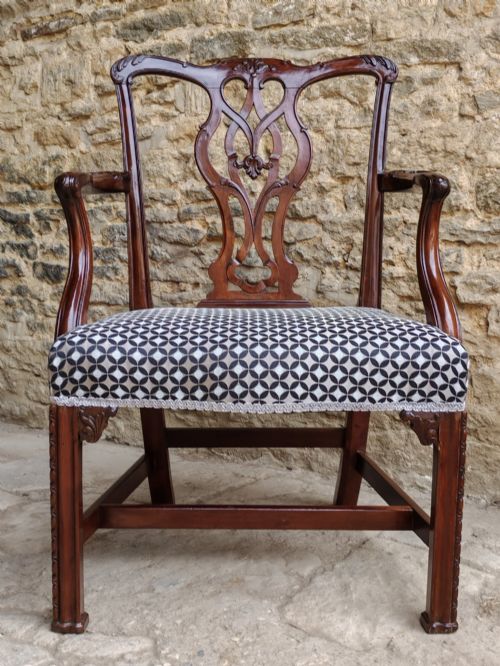
Quality rests in the crispness of the hand-carving upon the splat and crest rail, alongside the density and grain pattern of the timber. Finer sets display deep relief work and well-proportioned cabriole legs terminating in claw and ball feet.
The integrity of the original frame construction and the matching uniformity across an entire set of chairs dictate the standing of the pieces. Later revival versions show varying fidelity to eighteenth-century proportions depending on the workshop of origin.
Alfred Allen of Birmingham
The Period Chippendale Dining Chairs Glossary
- Carver
- An armchair designed with elbow rests, traditionally used at the head of a dining table. These match the smaller side chairs in a larger set.
- Splat
- The vertical wooden strip down the centre of a chair back, often pierced and intricately carved in the manner associated with Thomas Chippendale.
- Cabriole leg
- A furniture leg that bends outward in a convex curve at the knee and tapers inward in a concave curve toward the foot.
- Claw and ball
- A foot motif depicting a bird talon clutching a spherical ball, frequently carved at the base of eighteenth-century chair legs.
- Drop-in seat
- A removable wooden frame insert padded and upholstered, designed to drop cleanly into the recess of the chair seat.
Period Chippendale Dining Chairs: Frequently Asked Questions
How do I spot an original eighteenth-century chair?
Examine the timber shrinkage, joinery methods, and hand-tool marks visible underneath the seat frame. Eighteenth-century examples display timber patination and construction techniques distinct from later nineteenth-century revival pieces.
Compare the carving depth and secondary woods used in the frame blocks against known period exemplars.
What is the difference between Georgian and revival chairs?
Georgian chairs were manufactured during the eighteenth and early nineteenth centuries as contemporary seating. Revival versions were produced later, particularly during the Victorian and Edwardian periods, copying earlier designs.
Revival pieces often utilise machine assistance or show subtle differences in wood density and proportions.
Can I mix side chairs and carvers?
Dining sets traditionally combined matching side chairs with a pair of matching armchairs for the heads of the table. Mixing entirely different chair styles requires careful attention to seat height and wood tone.
Ensure the back heights create a balanced visual line around the dining room.
How should I care for antique upholstery?
Protect antique fabric, leather, or tapestry seats from direct sunlight and excessive humidity. Regular gentle dusting preserves the textiles without wearing down the fibres.
Consult a specialist restorer before attempting any cleaning on original tapestry or antique velvet.