

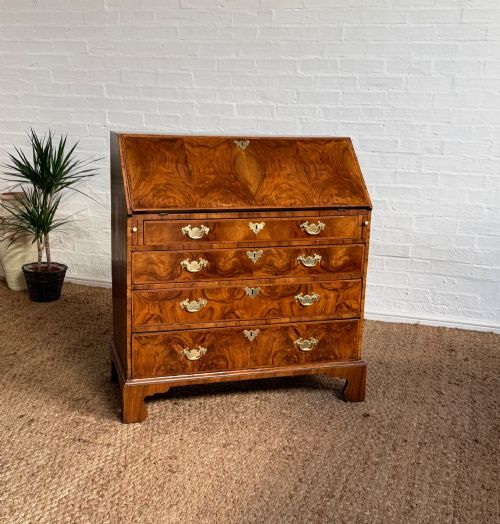
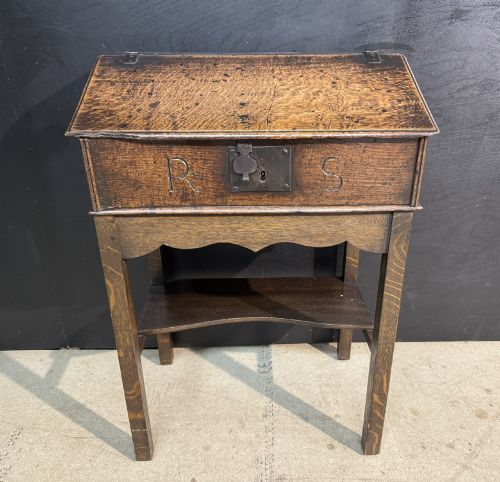
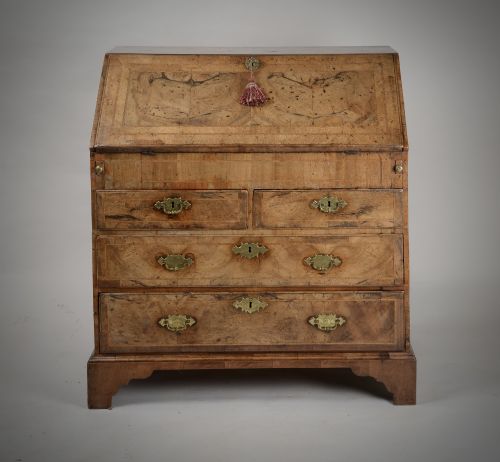
Period Bureau
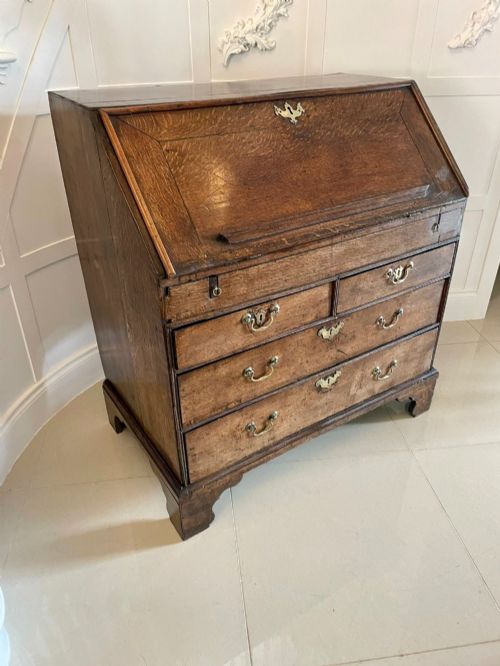
A period bureau is a fitted writing cabinet designed to conceal correspondence and papers, combining a sloping fall-front with drawers in walnut, oak, and mahogany.
Period Bureau
When you search for a period bureau, you encounter antique items spanning several centuries of cabinet-making, though pieces from the Georgian and 18th Century eras dominate the selection.
The primary form involves a hinged writing flap that opens to reveal internal compartments, pigeonholes, and small drawers, positioned above a set of larger lower drawers.
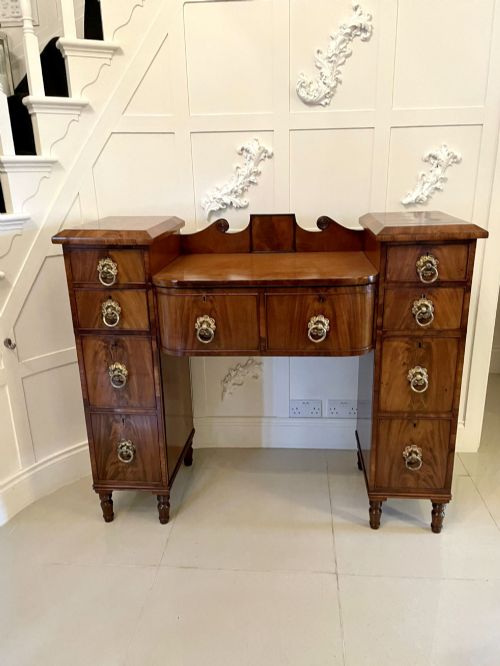
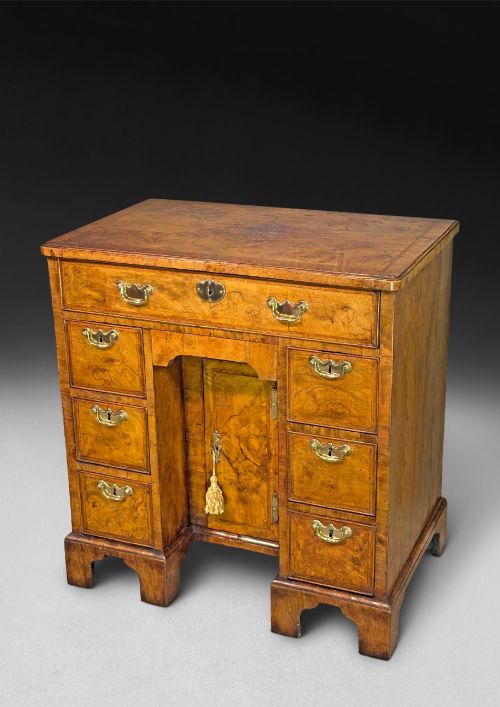
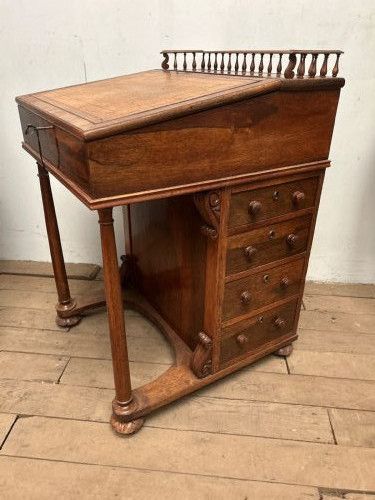
Related writing forms such as secretaire bookcases, kneehole desks, and Davenport desks also appear frequently alongside standard sloping bureaus.
How they were made
Craftsmen utilised solid timbers such as oak for early 17th Century pieces, transitioning to figured walnut and rich mahogany during the Georgian periods.
Fine veneers including burr walnut and satinwood were applied to primary surfaces, complemented by secondary woods and brass hardware for handles and escutcheons.
Listings feature mahogany, oak, walnut, burr walnut, and satinwood across pieces dating from the 17th Century to the Art Deco period.
What varies in quality
The standard of a bureau rests on the choice of timber figure, the tightness of the drawer dovetails, and the intricacy of the internal pigeonholes and small drawers.
Superior examples display balanced proportions, original brasses, and meticulous crossbanding, whereas lesser pieces show heavy alterations or replacement secondary timbers.
Gillows of Lancaster·Thomas Chippendale
The Period Bureau Glossary
- Bureau
- A writing desk featuring a sloping lid that folds down to create a writing surface. It encloses small drawers and pigeonholes.
- Secretaire
- A piece of furniture containing a drawer or compartment that pulls out to serve as a writing desk. It often disguises the writing function behind a dummy drawer front.
- Dovetail
- A joint formed by interlocking wedge-shaped fingers, used extensively in drawer construction. Hand-cut versions indicate earlier craftsmanship.
- Crossbanding
- A strip of veneer applied to the borders of a furniture top or drawer front with the grain running perpendicular to the main surface.
- Pigeonhole
- A small, open compartment within a desk or bureau interior designed for sorting letters and documents.
Period Bureau: Frequently Asked Questions
What is a period bureau?
A period bureau is an antique writing desk featuring a hinged flap that drops to form a horizontal writing surface. Inside, small compartments and hidden drawers organise correspondence.
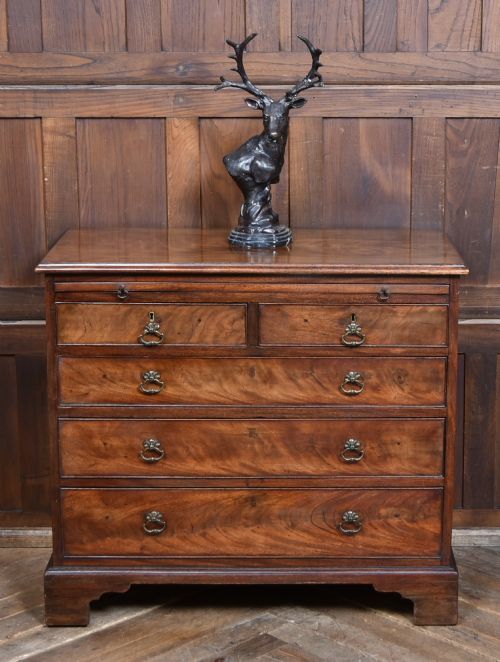
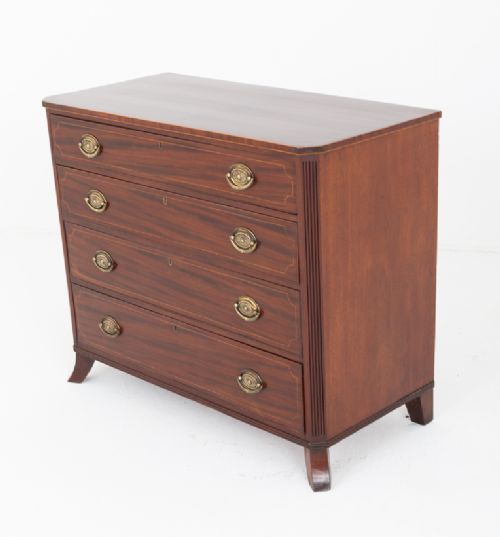
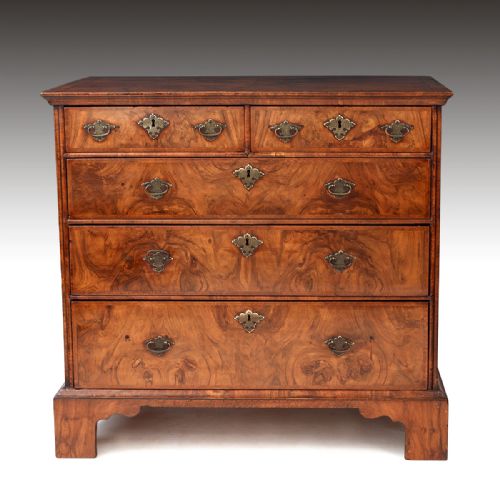
Beneath this writing section, standard chests of drawers provide domestic storage. These pieces bridge the gap between working furniture and formal cabinet-making.
How do I date a bureau?
Dating relies on observing the primary timbers, construction methods, and stylistic details. Oak and walnut predominate in 17th Century and early 18th Century examples, while mahogany defines the Georgian era.
Secondary woods inside the drawers and the style of the brass handles offer further clues. Hand-cut dovetails and timber choice confirm the period of manufacture.
Where should I place a bureau?
A bureau suits studies, living rooms, and bedrooms where its compact footprint provides both surface area and enclosed storage. The fall-front needs clearance when opened for writing.
Keeping the timber away from direct heat sources and sunlight protects the polished surfaces and delicate veneers from drying out.
What is a secretaire bookcase?
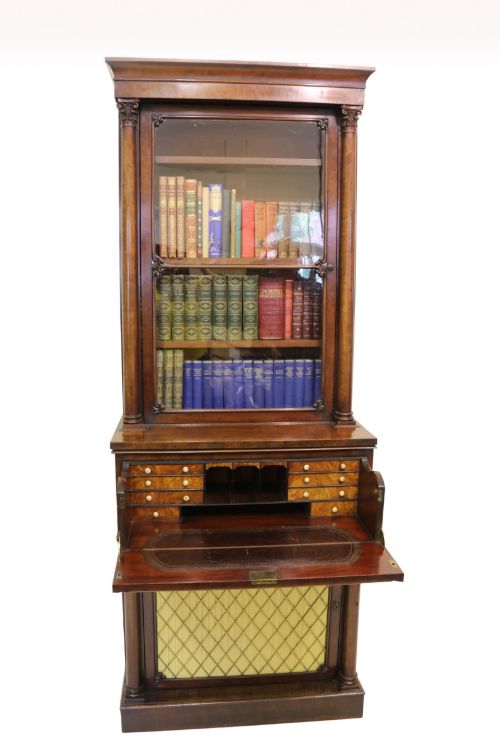
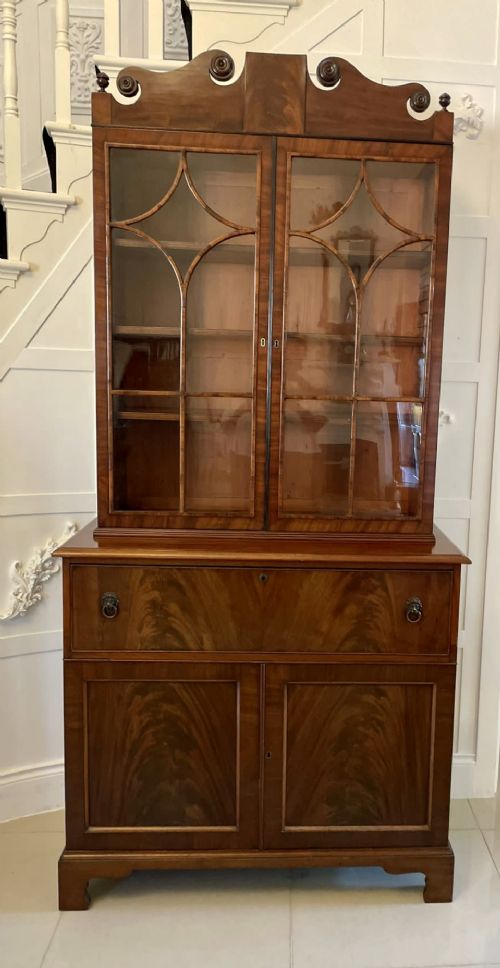
A secretaire bookcase combines a writing drawer with upper shelving enclosed by glass or wooden doors. The writing section pulls forward to drop down, revealing fitted compartments.
This form offers display space above and functional desk space below within a single tall piece of furniture.