


Period Brass Candleholders
Period brass candleholders bring genuine weight and character to a room, offering functional metalwork shaped by centuries of use and design.
Period Brass Candleholders
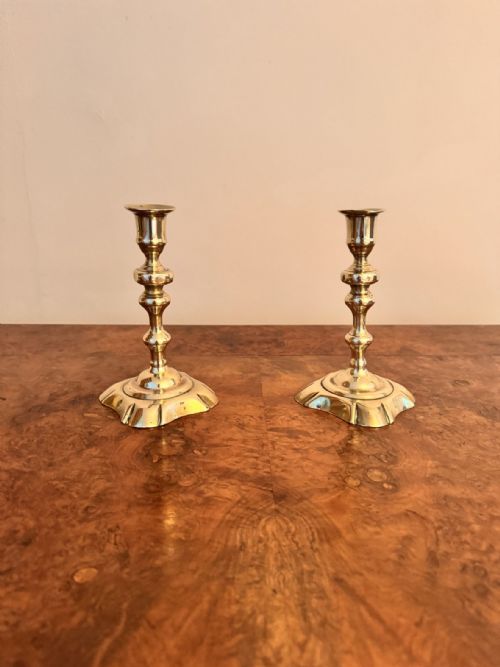
Period brass candleholders comprise candlesticks shaped across the eighteenth, nineteenth, and early twentieth centuries, drawing on Georgian, Regency, Victorian, and French Empire styles. You will frequently encounter pairs of Georgian and Regency candlesticks fashioned from brass, alongside occasional gilt bronze, marble, and bronze alternatives.
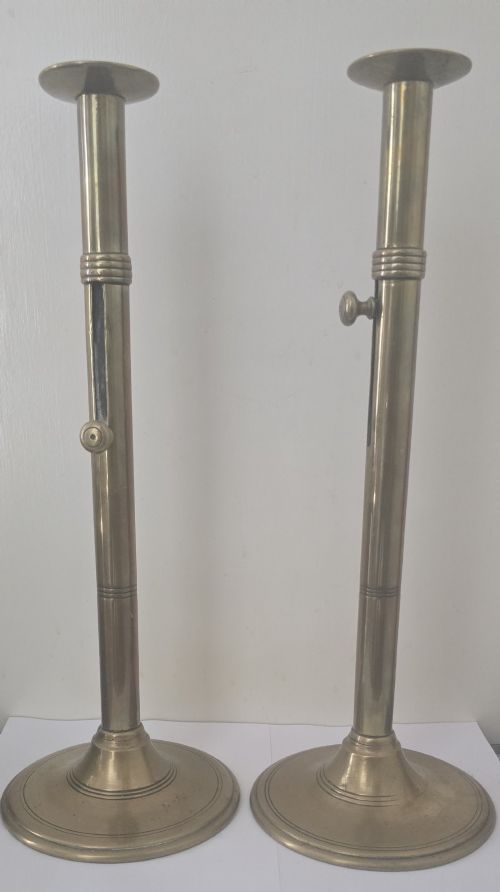
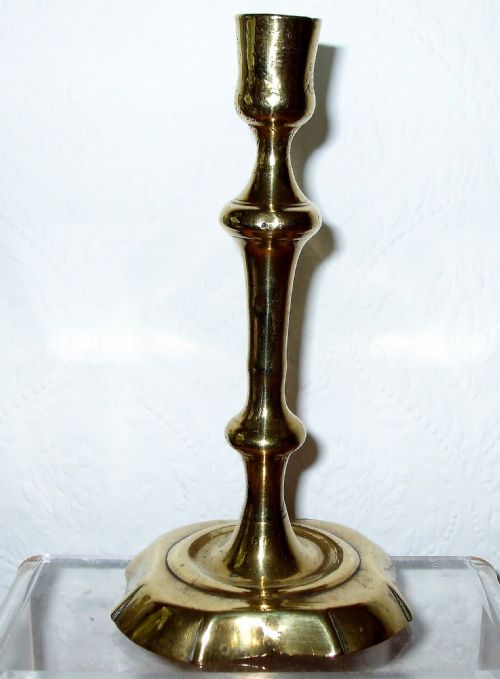
The forms range from tall ecclesiastical designs and column candlesticks to hexagonal and octagonal base shapes, as well as baluster and petal based formats. English examples dominate the selection, complemented by French Empire and Japanese Meiji pieces that broaden the material palette.
How they were made
These items rely primarily on brass, cast and turned to create columns, balusters, and geometric bases like the hexagonal and octagonal variants. Makers also utilised gilt bronze and marble on French Empire pieces, whilst Japanese examples incorporate cast bronze.
Functional elements such as side ejectors appear on taller Georgian ecclesiastical designs to help clear spent wax. Surface finishes range from polished brass to patinated bronze and gilded highlights, reflecting the specific period techniques.
Current listings feature items spanning the eighteenth and nineteenth centuries, incorporating Georgian, Regency, and Victorian styles.
What varies in quality
The distinction between standard utility items and finer examples rests in the crispness of the casting and the balance of the proportions. Early eighteenth century pieces with complex bases demonstrate superior geometric precision compared to later mass produced alternatives.
Material integration also dictates standard, where combinations of brass with marble or gilt bronze display a higher ambition in design and execution. The presence of original working components, such as side ejectors, elevates the integrity of the piece.
The Period Brass Candleholders Glossary
- Baluster
- A moulded shaft with a swelling lower portion resembling a small column. This shape provides a sturdy grip and a pleasing silhouette on nineteenth century examples.
- Ejector
- A mechanism inside the shaft used to push out the remaining candle stub. These are particularly useful on tall ecclesiastical brass candlesticks.
- Gilt bronze
- Metal alloy treated with a layer of gold leaf or mercury gilding. This material appears on French Empire items to create a rich, reflective surface.
- Meiji
- A period of Japanese history spanning the late nineteenth and early twentieth centuries. Pieces from this era often utilise bronze with distinct artistic motifs.
- Petal base
- A foot moulding shaped like overlapping flower petals. This decorative base style is characteristic of certain eighteenth century English brass candlesticks.
Period Brass Candleholders: Frequently Asked Questions
How do I clean period brass?
Traditional brass pieces benefit from gentle dusting and occasional cleaning with a soft cloth to preserve the natural patina accumulated over centuries. Avoid harsh chemical polishes that strip away the aged surface character.
Keeping them away from damp environments prevents active corrosion and helps maintain the stability of the metal over time.
Are these candleholders sold in pairs?
Many of the listed candlesticks survive and are offered as matching pairs, which is particularly common for Georgian and Regency dining table sets. Single examples also appear among the eighteenth century items.
Matching pairs generally command more attention from collectors seeking symmetrical arrangements for mantelpieces or sideboards.
Can I use modern candles in them?
Standard modern taper candles may occasionally require minor trimming at the base to fit securely into older sockets. Period sockets were designed for the specific diameter of tallow or beeswax candles of the era.
Checking the aperture width before lighting ensures the candle sits upright and prevents wax from spilling down the shaft.