


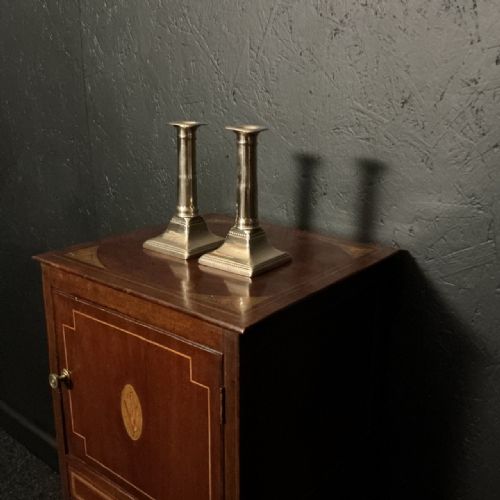


Period Brass Candle Holders
Period brass candle holders bring a warm, functional glow to a room, carrying the weight and form of centuries past.
Period Brass Candle Holders
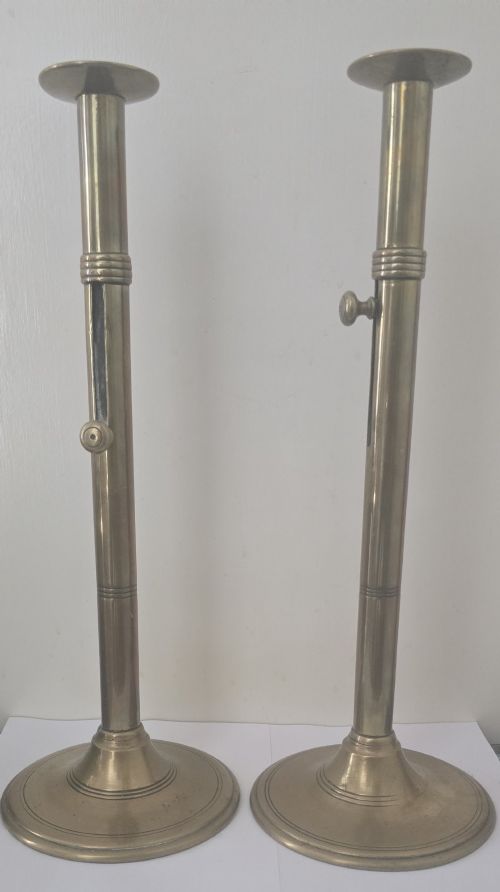
When you search for period brass candle holders, you encounter items designed to support illumination before the general adoption of electric lighting. The selection spans domestic candlesticks, tall ecclesiastical examples, multi-light candelabra, and specialised chamber sticks for carrying through a house. You also find associated items such as candle lamps and wall mirrors incorporating metalwork.
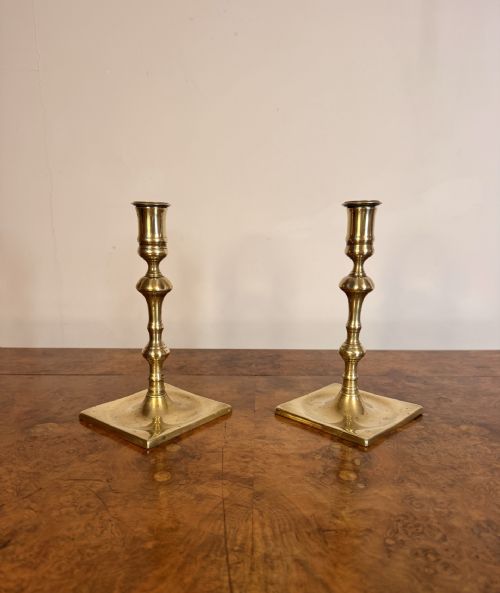
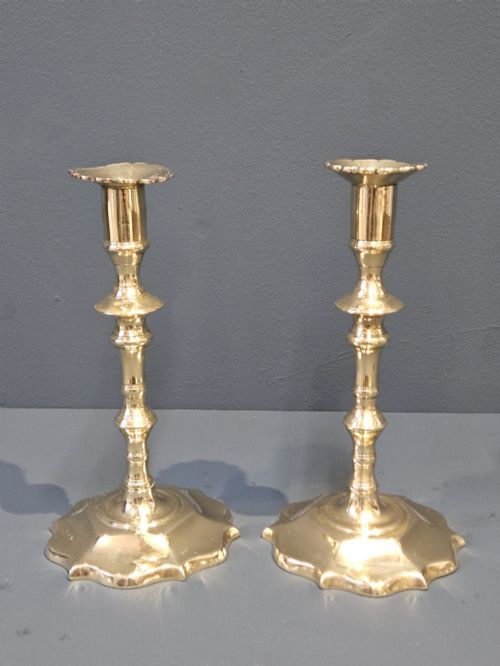
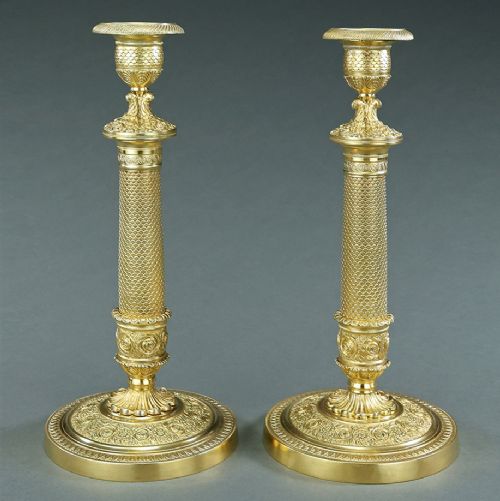
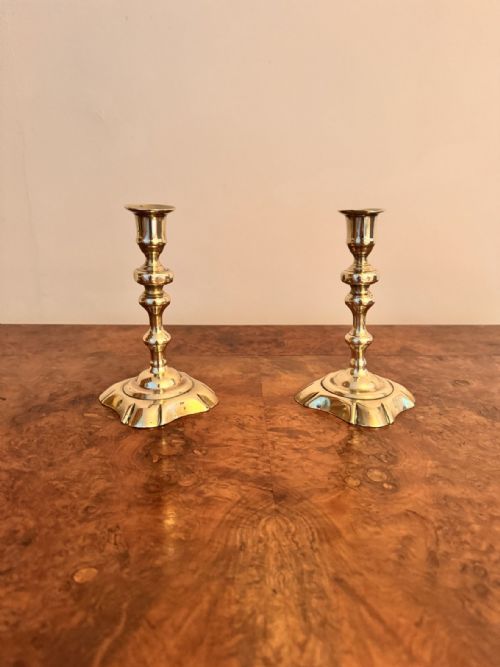
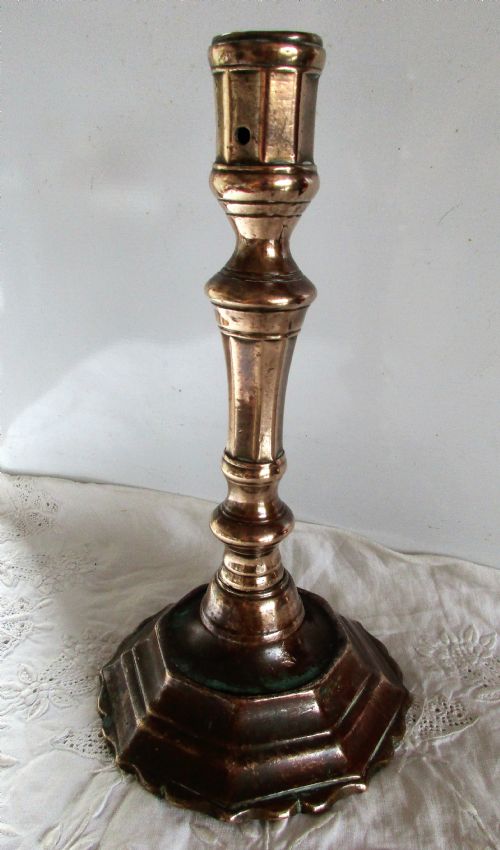
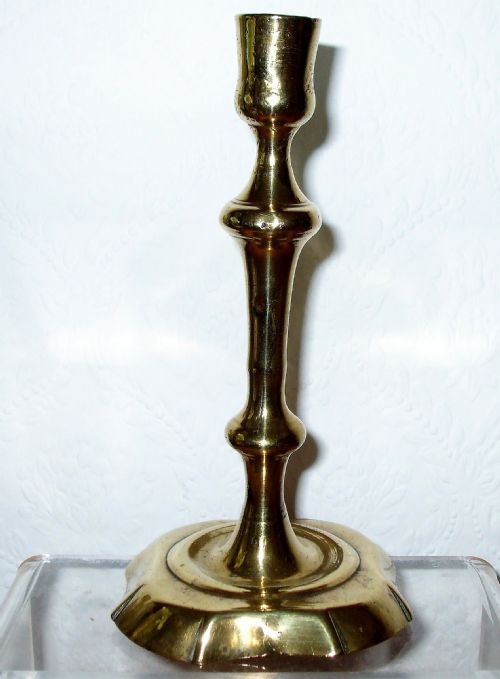
The material forms vary considerably in profile and construction across the centuries. Early examples feature hexagonal and octagonal bases, while mid-eighteenth-century pieces introduce seamed stems and ejector mechanisms. Later nineteenth-century designs draw on Regency, Victorian, French Empire, Charles X, and Aesthetic styles, occasionally combining bronze, ormolu, gunmetal, and mahogany.
The geographic origins extend beyond English workshops to include continental French and Japanese metalwork. Pairs dominate the listings, offering balanced symmetry for mantelpieces, side tables, and dining surfaces. Each piece reflects the lighting requirements and aesthetic preferences of its specific decade of production.
Materials and construction techniques
The primary metal is brass, utilised both in cast form and through sheet metal manipulation. Mid-eighteenth-century items often display seamed construction where components are joined and finished by hand. Workshops also cast bronze and gunmetal, applying gilt bronze and ormolu finishes to French Empire and Charles X candelabra.
Secondary materials appear in specific designs to add contrast or utility. Mahogany forms the body of certain Georgian sticks, while copper and glass shades accompany Victorian candle lamps. Patinated bronze surfaces demonstrate deliberate chemical treatment to achieve darkened tones on nineteenth-century pieces.
Period Brass Candle Holders Retail Price Guide 2026
Typical asking prices for period brass candle holders among the pieces listed under this phrase on Sellingantiques today, from the lower quarter to the upper quarter. They describe what is for sale here now, not the wider market.
Listings feature brass, bronze, ormolu, and mahogany across Georgian, Regency, and Victorian periods.
Distinctions in craftsmanship and design
Quality rests in the crispness of the casting and the integrity of the original assembly. Superior examples maintain clean lines in hexagonal and octagonal bases without excessive smoothing from later polishing. The presence of working ejector mechanisms in Georgian pieces demonstrates careful internal engineering.
The refinement of surface finish further separates standard production from exceptional pieces. Ormolu and gilt bronze retain distinct matte and polished sections that catch candlelight effectively. Weight, proportion, and the retention of original components dictate the standing of any individual holder.
The Period Brass Candle Holders Glossary
- Ejector
- A mechanical internal device designed to push remaining wax stubs out of the socket. This mechanism appears frequently in Georgian brass examples.
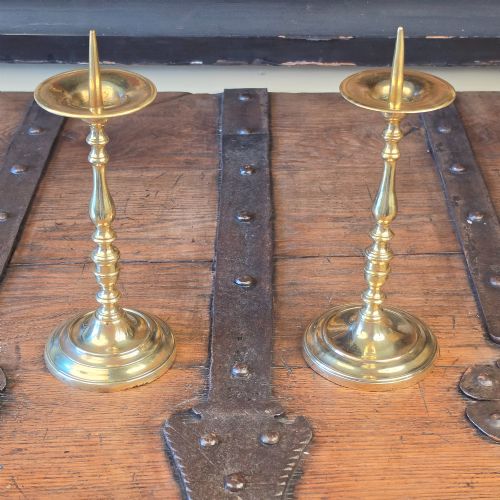
- Pricket
- A sharp vertical spike fitted to the drip pan to secure a candle, common on ecclesiastical and revival pieces. It differs from the standard socket found on domestic holders.
- Ormolu
- Gilded bronze produced through the application of a mercury and gold amalgam, prevalent in French Empire and Charles X lighting. The technique creates a rich, matte golden surface.
- Candelabra
- A branched lighting fixture designed to hold multiple candles simultaneously. These range from three-light Regency bronzes to large four-light French Empire examples.
- Chamber stick
- A low-profile candle holder fitted with a saucer base and a loop handle. It was traditionally carried by hand to light a path through dark corridors.
Period Brass Candle Holders: Frequently Asked Questions
How do I date period brass candle holders?
Dating relies on observing changes in base shapes, stem profiles, and manufacturing methods. Early eighteenth-century examples favour heavy cast hexagonal or octagonal footprints, whereas later Georgian and Regency items introduce slender columns and functional ejector mechanisms.
Examining the metal composition and construction seams provides further clarity. Hand-beaten seams and specific patination styles help align a piece with Georgian, Victorian, or continental periods.
How were chamber sticks used historically?
Chamber sticks served as portable lighting before the widespread installation of permanent wall fixtures and electric illumination. A user held the loop handle to transport the flame safely down hallways and up staircases.
The wide saucer base caught dripping wax to protect hands and furniture, and many included a small cone-shaped snuffer resting in the tray.
Can I use real candles in antique holders?
Using real candles is entirely possible, provided the candle fits securely in the socket without forcing. Tapered candles or custom-fitted wax insertions prevent wobbling and protect the antique metal from direct heat.
Monitoring the burn ensures that wax does not overflow onto vulnerable surfaces or historical patination. Extinguishing the flame well before it reaches the socket preserves the internal metalwork.