


Period Armchair Castors
Period armchair castors ground these substantial seating pieces, allowing heavy library and desk chairs to move smoothly across floors.
Period Armchair Castors
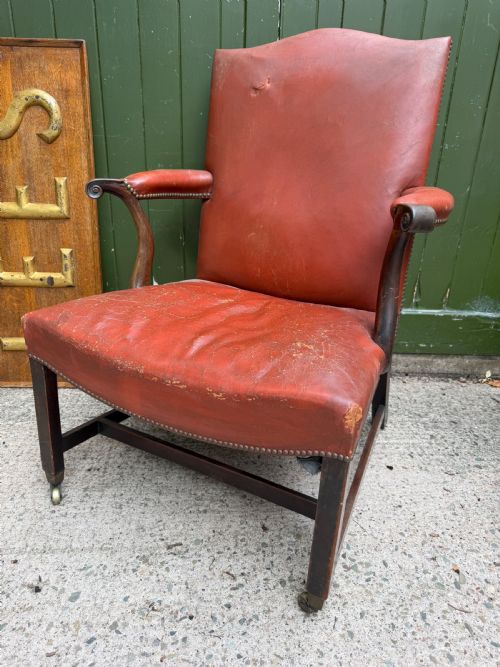
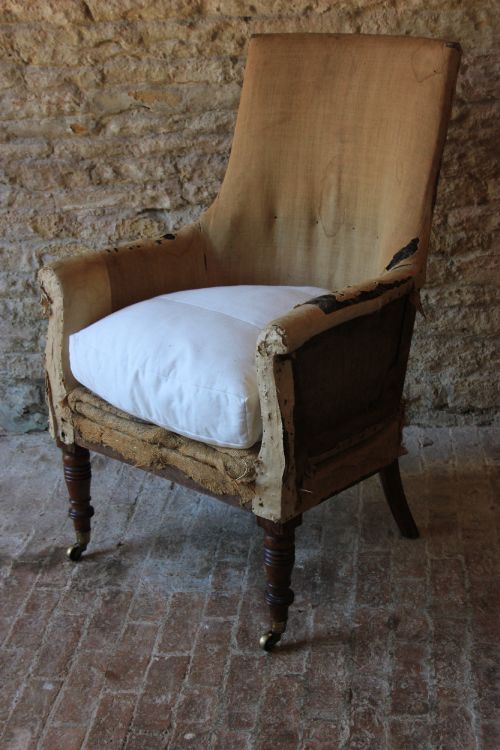
When you search for period armchair castors, you encounter hardware supporting substantial seating such as library chairs, bergères, and desk chairs spanning Georgian, Regency, Victorian, and Edwardian eras. These fittings are attached to the base of heavy wooden frames made of mahogany, rosewood, and walnut to facilitate smooth movement across floors.
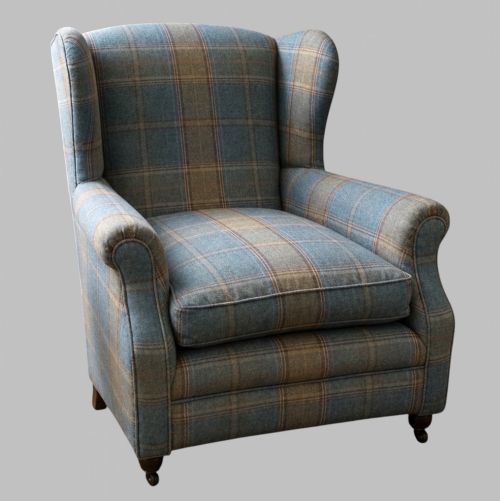
The selections on this page lean heavily towards Regency and Georgian library armchairs alongside later Edwardian winged and bergère examples. These chairs often feature upholstered or cane bodies paired with robust timber undercarriages designed for utility in studies, libraries, and drawing rooms.
Construction and materials
The hardware components beneath these chairs rely on cast brass, often paired with ceramic elements to form the wheel and socket assemblies. These metals are fitted securely into the wooden legs of mahogany, rosewood, and walnut frames.
Upholstery techniques visible across the listings incorporate traditional horsehair stuffing, deep buttoning, and modern textile applications like velvet, hessian, and plaid fabric. Woodwork relies on joinery suited to heavy frames, accommodating the stresses placed upon the castor mountings during movement.
The listings span multiple centuries, uniting Georgian, Regency, Victorian, and Edwardian forms through their shared reliance on brass and wooden support elements.
Assessing quality and proportion
Quality in these seating pieces rests upon the harmony of proportions and the integrity of the timber frame. Well-drawn frames with generous dimensions and crisp carving demonstrate superior workshop execution compared to plainer, heavier carcasses.
The integration of the castor fittings into the leg structure indicates the original grade of the piece. Superior examples show careful rebating and solid brass hardware that matches the scale of the armchair without overwhelming the foot.
J.Mills·Gillows
The Period Armchair Castors Glossary
- Castor
- A small wheel on a swivel, fixed to the bottom of an armchair leg to allow easy rolling. They are typically rendered in brass or ceramic.
- Bergère
- An enclosed upholstered armchair with wooden framing exposed around the sides and back. Cane panels are frequently integrated into the design.
- Library chair
- A heavy, substantial armchair designed for reading rooms, often featuring a mahogany or rosewood frame and upholstered arms.
- Lyre front
- A furniture front incorporating a central carved element shaped like a classical stringed instrument. This motif appears frequently on Regency pieces.
- Wingback
- An armchair with high sides attached to the back, designed to shield the sitter from drafts. These versions often feature deep buttoning.
Period Armchair Castors: Frequently Asked Questions
What floors suit period armchair castors?
These small brass and ceramic wheels roll best on low-pile carpets, rugs, or well-waxed timber floorboards. Hard stone or uneven flagstones can jar the historic mounts.
Ensure the floor surface is level to prevent undue sideways pressure on the wooden legs where the castors are fitted.
How do I identify a Regency library chair?
Regency library armchairs typically display rich mahogany or rosewood timbers, generous proportions, and classical motifs like lyre fronts or sabre legs. They are built for serious study.
The inclusion of robust castors beneath these heavy frames allowed scholars to reposition their seating easily within large rooms.
Can I use these armchairs daily?
Most of these seating pieces are sturdy enough for regular daily use, provided the frame joints and castor mountings remain secure. Library and desk chairs were originally built for heavy service.
Periodic checks of the fittings ensure the hardware stays firmly seated in the wood without splitting the grain.
Are Edwardian armchairs different from Georgian ones?
Edwardian armchairs often revive earlier styles like the bergere or wingback, utilising mahogany and lighter cane work. They reflect a comfortable, domestic interior.
Georgian and Regency variants tend to employ denser timbers like rosewood and heavier mahogany, with more austere architectural lines suited to formal libraries.