




Victorian Spoonback Armchair
A victorian spoonback armchair is a curved, upholstered seat designed for nineteenth-century parlours, offering deep comfort and elegant craftsmanship.
Victorian Spoonback Armchair
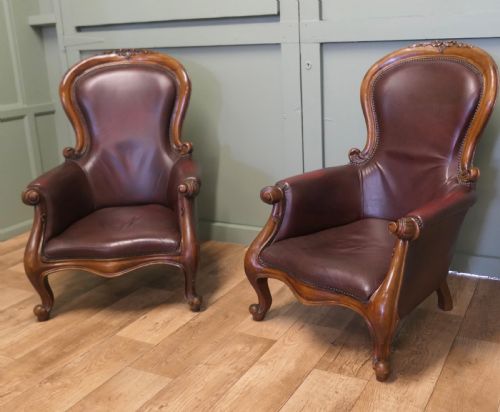
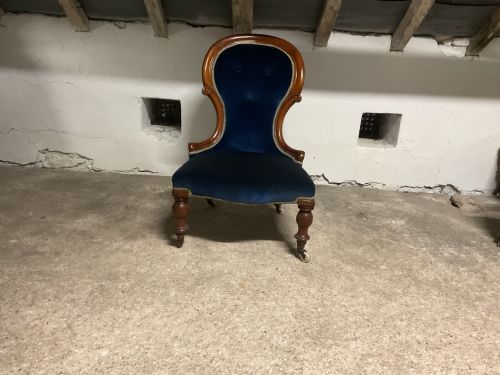
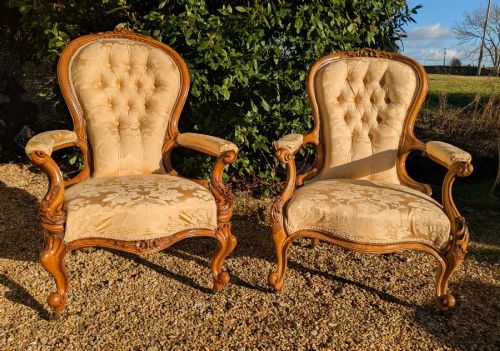
A victorian spoonback armchair is defined by its concave, oval-shaped backrest that resembles the bowl of a spoon, providing support suited to nineteenth-century sitting habits. These pieces commonly emerge from the Victorian period, spanning the mid to late nineteenth century through to around eighteen-eighty.
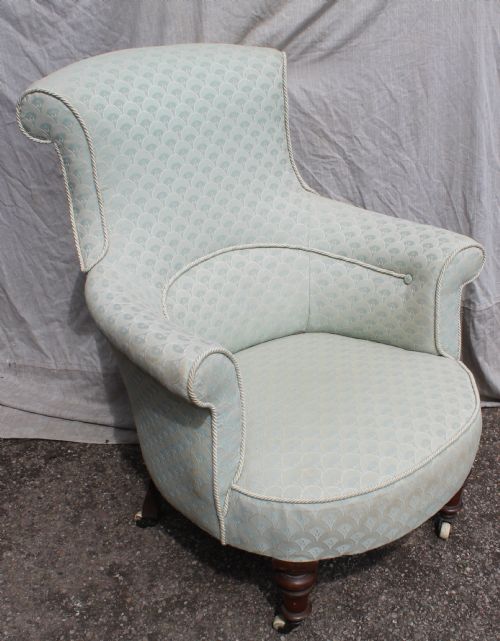
The evidence shows forms ranging from low fireside chairs and nursing seats to larger gentleman's open armchairs and full salon suites. Mahogany and walnut dominate the wooden framing, frequently paired with cabriole legs and brass castors.
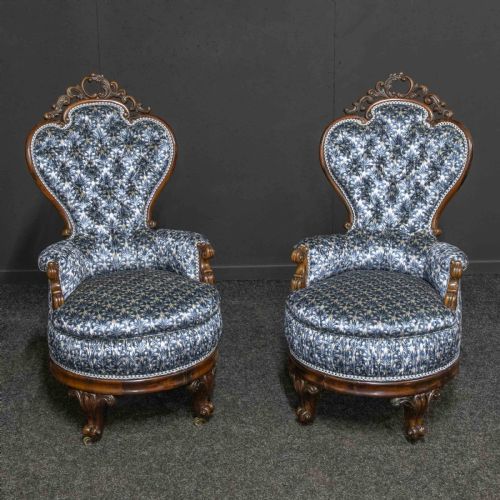
Buyers will most frequently encounter mahogany and walnut frames finished with carved showwood details, often upholstered in velvet, leather, or various contemporary textiles. Examples range from compact ladies chairs to paired easy chairs designed for formal parlours.
Materials and construction methods
Frames are constructed primarily from dense hardwoods like mahogany, walnut, and rosewood, chosen for their ability to hold intricate carved details along the showwood borders. These timbers provide the structural integrity required to support the distinctive curved backrest under daily use.
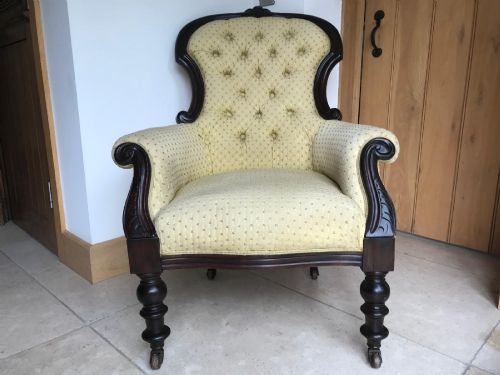
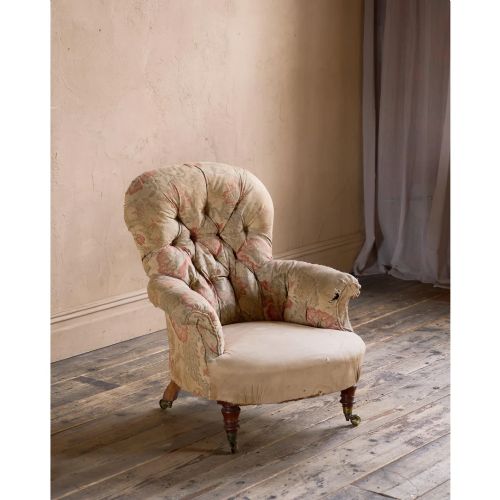
Upholstery techniques involve traditional stuffing secured within velvet, leather, or textile coverings, often enhanced by buttoning across the spoon-shaped back. Brass castors are frequently fitted to the lower legs to allow smooth movement across nineteenth-century flooring.
Listings feature pieces spanning the mid to late nineteenth century, predominantly constructed from mahogany and walnut.
Distinctions in craftsmanship and design
Quality separates through the crispness of the hand-carved showwood and the selection of fine timber grains in the walnut or rosewood frames. Superior examples display deeply articulated floral or scroll motifs carved directly into the solid wood rather than simpler, shallow mouldings.
Proportion and structural rigidity also define the upper tier, where cabriole legs flow seamlessly into the seat rail without awkward joins. Maker attributions to established workshops further elevate pieces through refined joinery and balanced seating ergonomics.
Holland and Sons·C. Hindley and Sons
The Victorian Spoonback Armchair Glossary
- Spoonback
- A chair back shaped in a concave oval resembling a spoon, designed to cradle the sitter's spine. This distinctive contour defines the primary aesthetic of mid-nineteenth-century seating.
- Showwood
- Exposed polished timber framing left visible around the upholstered sections of a chair. It highlights the grain and carved ornamentation of the mahogany or walnut.
- Cabriole leg
- A furniture leg that curves outward in a convex shape and tapers inward to a scroll or pad foot. This stylistic feature appears frequently on mid-nineteenth-century salon seating.
- Buttoning
- Upholstery technique where deep tufts are pulled tight and secured with buttons to create a diamond pattern across the backrest. It provides both structural tension and decorative depth.
- Salon suite
- A matched set of seating furniture designed for a Victorian drawing room, usually comprising armchairs and smaller parlour chairs. These groupings share identical timber frames and textile coverings.
Victorian Spoonback Armchair: Frequently Asked Questions
What is a spoonback armchair?
A spoonback armchair is a nineteenth-century seating form featuring a concave, oval backrest that mimics the curve of a spoon. This design supports the back while showcasing carved wooden framing.
These pieces were principal items in Victorian parlours, libraries, and bedrooms, serving both functional relaxation and formal social display.
Where were these chairs used?
These armchairs served multiple domestic spaces, from fireside settings and reading libraries to formal drawing rooms and bedroom nursing spots. Different scales accommodated different household members and rooms.
Smaller ladies chairs suited private chambers, while larger open armchairs and gentleman's seats anchored reception spaces.
How do I live with one?
Living with a Victorian armchair involves placing it where the carved showwood frame remains visible from multiple angles in the room. Pair the piece with complementary nineteenth-century furniture to maintain historical context.
Ensure upholstery is maintained according to its textile type, whether leather, velvet, or woven fabric, to preserve the traditional padding beneath.