





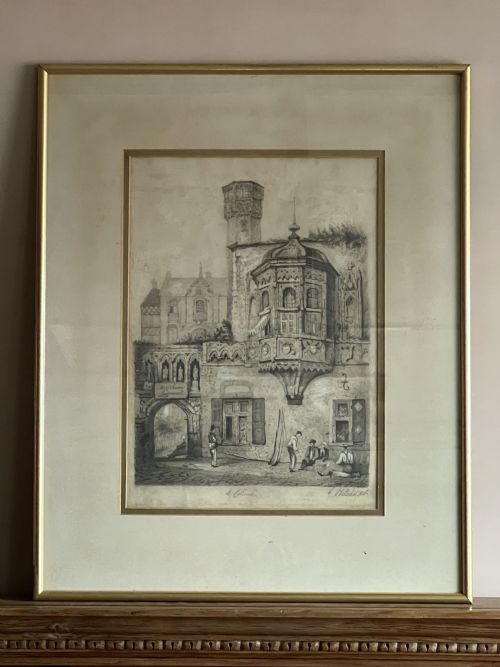


Pencil Architectural Drawings
Pencil architectural drawings are historic works on paper capturing buildings and streetscapes, offering buyers a direct window into past design.
Pencil Architectural Drawings
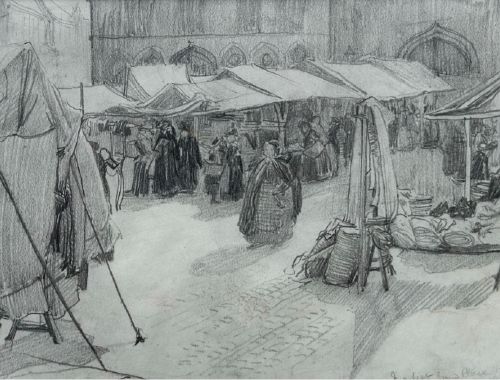
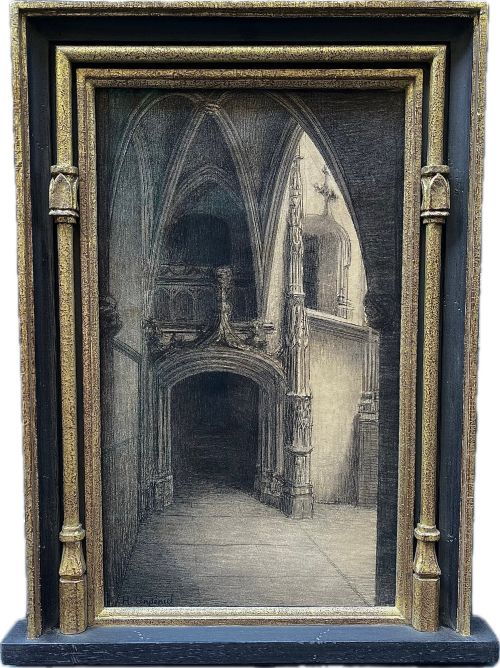
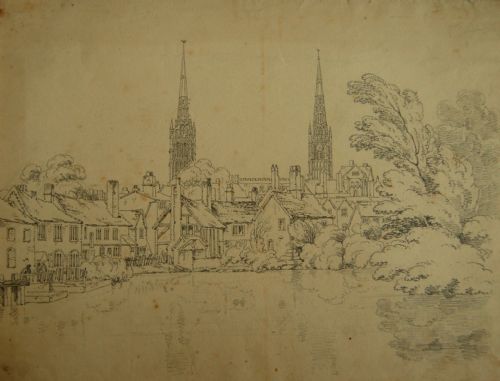
When you search for pencil architectural drawings, you encounter original works that capture historic buildings, churches, and urban scenes from the nineteenth and twentieth centuries. These pieces record landscapes, collegiate courts, and continental structures through the medium of graphite on paper.
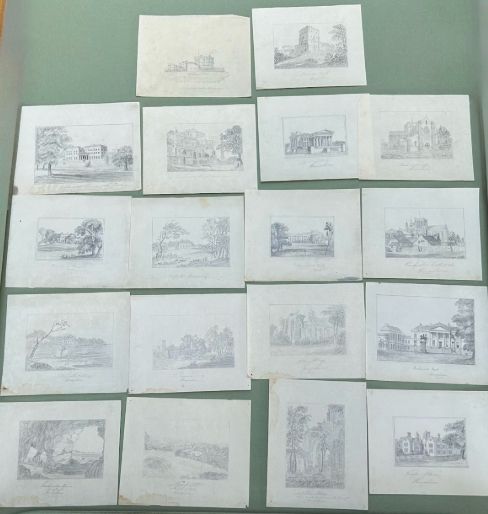
The selections available here range from early nineteenth century Hampshire landscapes and Dublin building studies to mid-twentieth century continental views and collegiate courts. Works often combine graphite with watercolour or wash, presented as framed artwork ready for display.
Buyers frequently meet pieces produced during the Georgian, Victorian, and Gothic Revival styles, as well as early and mid-twentieth century British art. These origins span English locations like Cambridge and Coventry alongside European subjects in Belgium, France, and Germany.
What varies in quality
The distinction between works rests on the precision of the draughtsmanship and the clarity of the architectural detail recorded by the artist. Pieces that capture intricate masonry, perspective, and structural form demonstrate a higher level of execution.
The integration of secondary media, such as careful wash or watercolour applications alongside the pencil lines, alters the visual weight of the piece. Furthermore, the presence of signatures, stamps, and contemporary framing contributes to the standing of an individual artwork.
Pencil Architectural Drawings Retail Price Guide 2026
Typical asking prices for pencil architectural drawings among the pieces listed under this phrase on Sellingantiques today, from the lower quarter to the upper quarter. They describe what is for sale here now, not the wider market.
Materials across these listings include paper, graphite, pencil, ink, wood, watercolour, gold leaf, and gilt wood.
Henry Percy Huggill·Henri Charles Angéniol·J W Hogley·Sir Francis Leggatt Chantrey·Fred Lawson·Henry Edridge
The Pencil Architectural Drawings Glossary
- Graphite
- A form of carbon used as the marking core in pencils. It produces grey or black lines of varying tones depending on the hardness of the lead.
- Watercolour
- A paint consisting of pigment suspended in a water-soluble vehicle. Artists use it alongside pencil to add transparent colour washes to architectural drawings.
- Gothic Revival
- An architectural and artistic style beginning in the mid-eighteenth century and prominent in the nineteenth century. It imitates medieval gothic forms, frequently seen in church and collegiate drawings.
- Wash
- A technique involving a thin, fluid layer of diluted ink or watercolour applied across paper. It provides tonal depth and shadows behind pencil linework.
Pencil Architectural Drawings: Frequently Asked Questions
How do I frame pencil drawings?
These works on paper require conservation-grade mounting to keep the graphite and paper separated from the glass. Proper framing protects the delicate medium from moisture and direct sunlight over time.
Selecting simple wood or gilt frames helps preserve the historical context of nineteenth and twentieth-century architectural art.
Where were these drawings produced?
The pieces originate from various British and European locations, including architectural studies in Dublin, Cambridge, Coventry, and Hampshire. Continental subjects from Belgium, France, and Germany also appear in the selection.
Artists often travelled to record specific buildings, markets, and townscapes on location.
What periods do these drawings represent?
The available selection spans the nineteenth and twentieth centuries, encompassing Georgian, Victorian, and Gothic Revival aesthetics. Specific dates range from the early nineteenth century through to the 1940s.
Each period brings distinct stylistic approaches to architectural recording and draughtsmanship.
Are these works original?
The inventory consists of original drawings, sketches, and watercolour studies rather than later reproductions. Many pieces feature period signatures, inscriptions, or artist stamps confirming their provenance.
Academic sketch studies and finished townscapes both represent direct hand-drawn works by the respective artists.