





Academic Pencil Drawings
Academic pencil drawings capture rigorous life studies and classical forms on paper, offering collectors a direct window into traditional draughtsmanship.
Academic Pencil Drawings
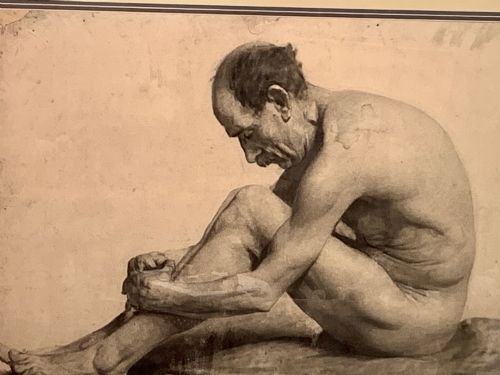
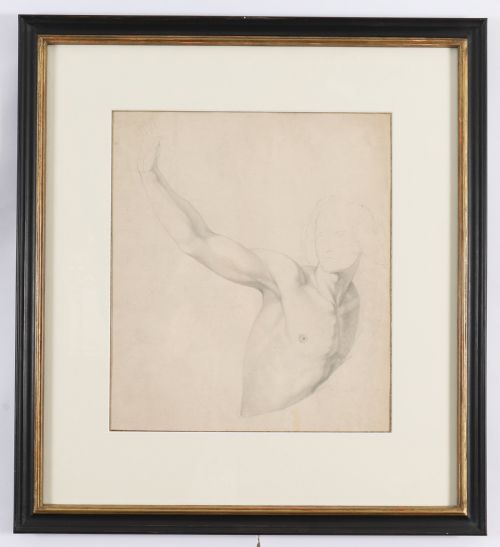
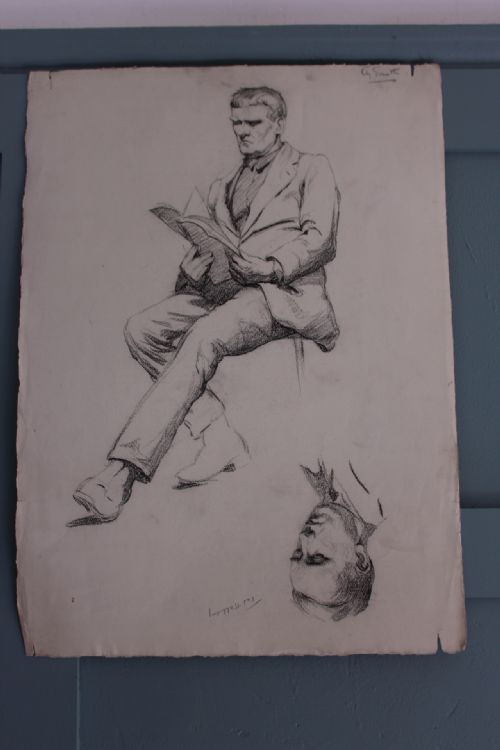
Academic pencil drawings encompass framed artworks, figural studies, and portraiture originating from the eighteenth century through to the mid-twentieth century. These pieces record rigorous training methods, often featuring copies of classical statuary or detailed life models rendered with graphite and chalk.
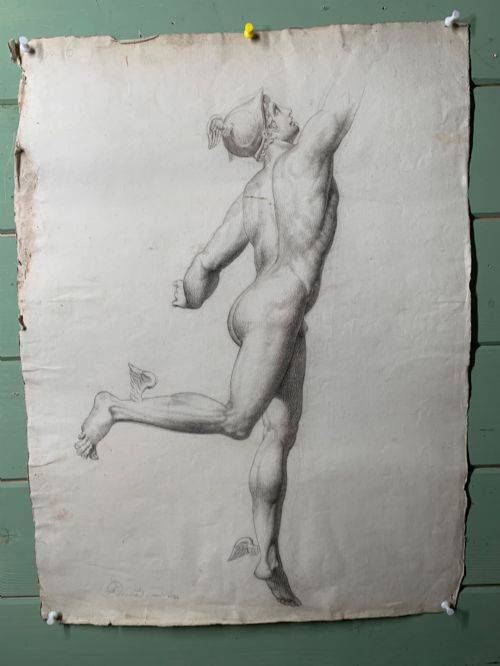
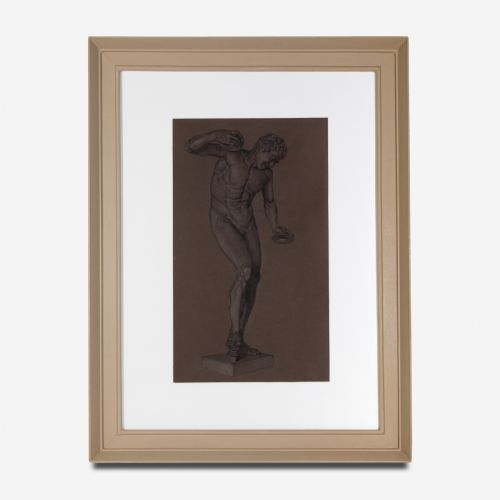
The examples most commonly met on this page span the nineteenth century and the early twentieth century, reflecting both English school and French academic traditions. Collectors encounter everything from intimate portrait sketches of young boys and women to large allegorical scenes and mythological subjects like the God Hermes.
Works range from anonymous studio exercises to signed portraits by listed artists, housed variously in antique gilt frames or simple wooden surrounds. Each drawing preserves the precise tonal gradations and careful observation demanded by historical academies of art.
Materials and technique
These works rely primarily on graphite and pencil on paper, frequently augmented with charcoal, chalk, or watercolour to build depth and tone. Artists exploited the subtle gradations of lead to capture the play of light across human musculature and drapery.
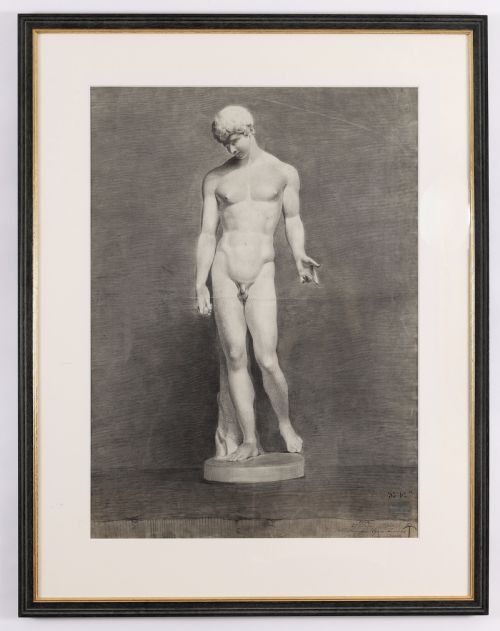
Many sheets incorporate grisaille techniques or fine hatching to achieve sculptural relief, particularly in studies after classical sculptures such as the Capitoline Antinous. The resulting images demonstrate meticulous control of line and shadow developed over hours of studio practice.
Academic Pencil Drawings Retail Price Guide 2026
Typical asking prices for academic pencil drawings among the pieces listed under this phrase on Sellingantiques today, from the lower quarter to the upper quarter. They describe what is for sale here now, not the wider market.
Some anonymous sitters stare back across centuries with such intense expressions that they clearly exhausted the patience of their draughtsmen.
Factors of quality
Quality in these works rests upon the sureness of the line and the anatomical precision demonstrated by the draughtsman. Superior examples reveal a confident grasp of proportion, form, and light that distinguishes a master's hand from a routine student exercise.
The preservation of the paper support and the clarity of the underlying graphite contribute significantly to a piece's visual impact. Drawings that retain crisp tonal contrast without excessive smudging or fading command greater attention from discerning buyers.
Augustus John·Reginald G. Eves·Theobald Chartran·Ernest Borough Johnson
The Academic Pencil Drawings Glossary
- Academic Realism
- A style of painting and drawing produced under the influence of European academies of art, emphasising traditional standards, anatomical accuracy, and classical subject matter.
- Grisaille
- A method of painting or drawing executed entirely in shades of grey or neutral greyish-brown, often used to simulate sculpture or create a monochromatic tonal study.
- Graphite
- A crystalline form of carbon used as the primary marking material in pencils, prized for its smooth application and wide range of achievable tones from silvery grey to deep black.
- Figural Study
- A drawing or painting created to explore the human form, often focusing on musculature, posture, or gesture rather than producing a finished portrait.
Academic Pencil Drawings: Frequently Asked Questions
What distinguishes an academic drawing from a standard sketch?
Academic drawings are formal exercises produced within structured artistic training environments, focusing heavily on anatomical precision, classical proportion, and tonal modelling. They often replicate antique sculptures or live models under strict pedagogical guidelines.
Standard sketches, by contrast, tend to be casual, spontaneous, or preparatory jottings created without the formal constraints or finished presentation typical of academy work.
How should these paper artworks be framed and displayed?
These drawings require protection behind glass to prevent atmospheric damage, dust accumulation, and degradation of the graphite or charcoal medium. Acid-free mounts should be utilised to keep the historic paper surface from touching the glazing directly.
Display spaces ought to avoid direct sunlight and excessive humidity to preserve the stability of the nineteenth-century and earlier paper supports.
Why do many pieces depict classical statues?
Copying antique sculptures formed the foundational cornerstone of traditional academic art training across Europe during the eighteenth and nineteenth centuries. Students mastered light, shadow, and contour by rendering plaster casts of famous figures like the Capitoline Antinous before progressing to live models.
These surviving sheets offer direct evidence of historical studio pedagogy and the rigorous standards demanded of aspiring artists.
Can I date a drawing without a signature?
Dating relies heavily on the quality and type of paper stock, the framing style, watermarks, and stylistic markers inherent to specific decades such as the Victorian era or the early twentieth century. Subject matter and costume details in portraits also provide reliable chronological anchors.
Inscribed dates or studio stamps left by previous collections frequently confirm the exact period of execution when signatures are absent.