


Pedestal Extension Dining Table
A pedestal extension dining table brings versatility and proportion to a room, offering a sturdy central pillar design that adapts for larger gatherings.
Pedestal Extension Dining Table
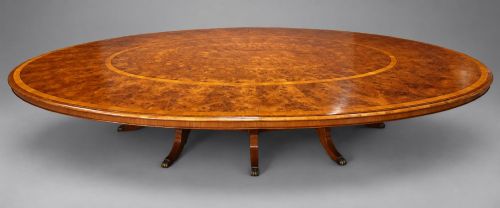
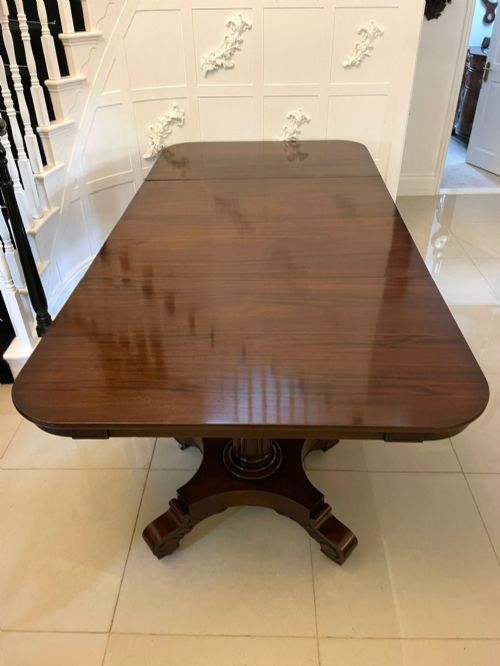
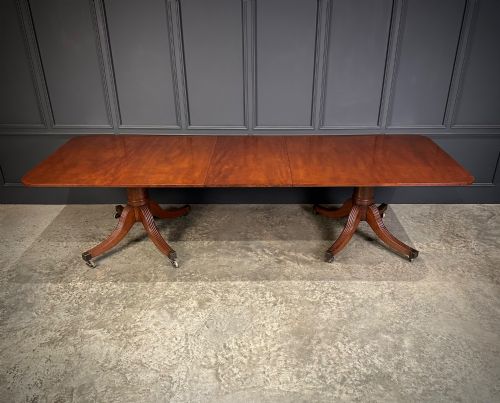
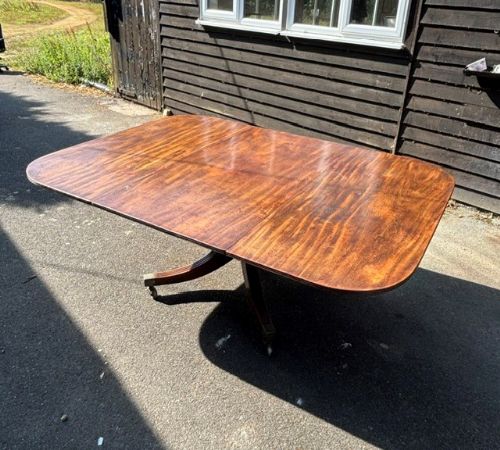
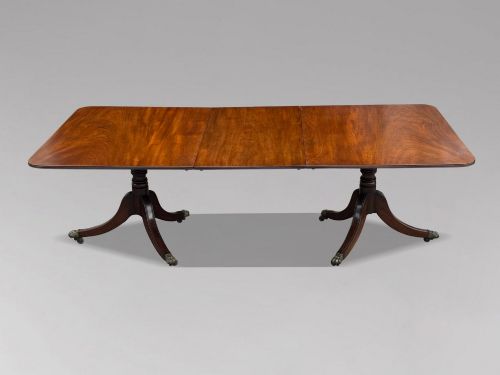
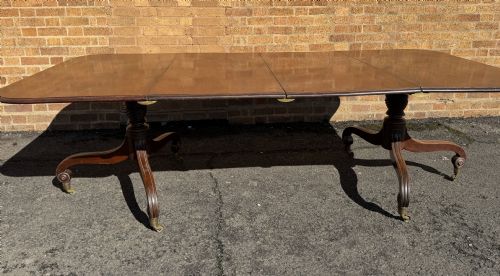
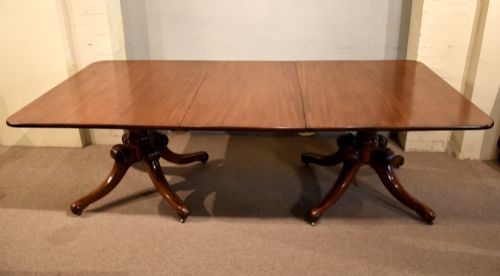
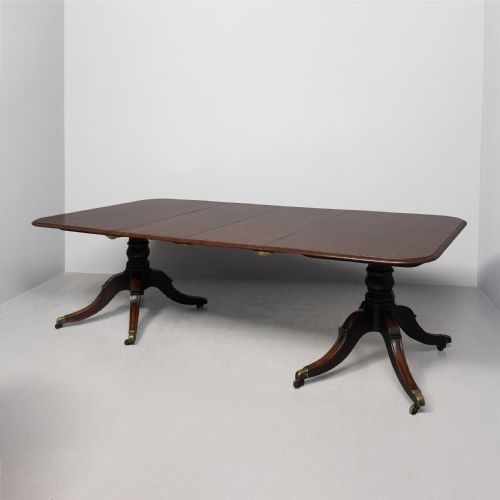
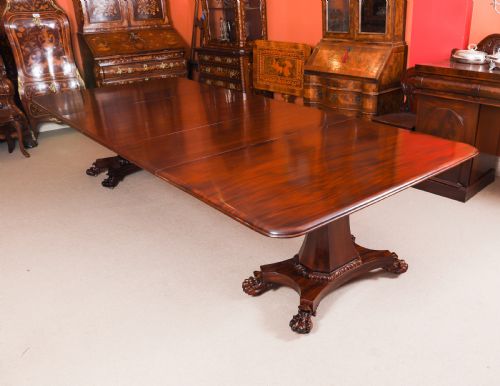
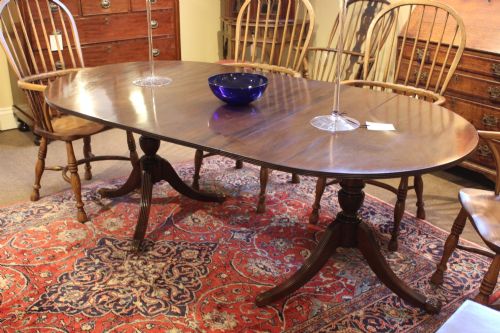
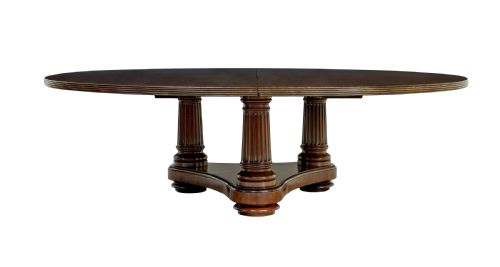
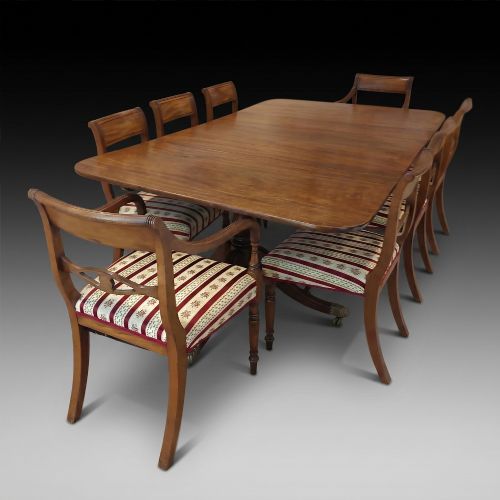
A pedestal extension dining table is designed for flexible seating, often utilising twin, triple, or four-pillar arrangements to support additional leaves. The pieces on this page span the Georgian, Regency, Victorian, and Edwardian periods, alongside later revival interpretations.
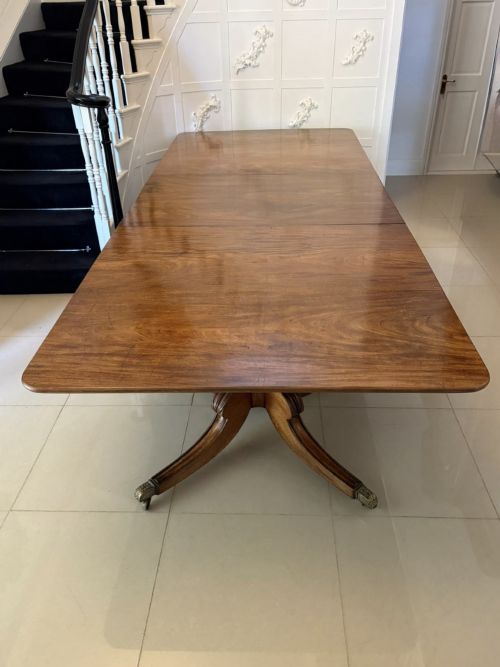
Most examples rely on solid or figured mahogany, supported by pedestals with brass castors and sometimes brass inlays, satinwood details, or rosewood. Forms range from compact twin-pillar tables to monumental multi-pedestal formats seating twenty or more guests.
Buyers will frequently encounter standard twin-pillar formats from the nineteenth century alongside George III and George IV designs. Edwardian oak draw-leaf variants and cherry wood examples also appear, reflecting diverse regional cabinet-making traditions.
Materials and Technique
Cabinet makers selected dense figured mahogany for the top surfaces to highlight natural grain patterns, often pairing them with sturdy turned or reeded pedestals. Brass mechanisms, including pull-out tracks and wind-out systems, allowed the sections to part smoothly for extra leaves.
Inlaid stringing in satinwood or ebony frequently decorates the borders, while brass claw castors fitted to the pedestal feet ensure mobility without straining the leg joints. Finish was typically achieved through repeated polishing with oil or shellac to seal the timber.
Pedestal Extension Dining Table Retail Price Guide 2026
Typical asking prices for pedestal extension dining table among the pieces listed under this phrase on Sellingantiques today, from the lower quarter to the upper quarter. They describe what is for sale here now, not the wider market.
The listings include mahogany, oak, cherry wood, rosewood, and burr walnut, spanning the eighteenth to twentieth centuries.
Judging the Standard
Quality rests on the selection of figured timber for the top and the stability of the central pillar assembly. Superior pieces maintain alignment across multiple pedestals when fully extended with several leaves in place.
Fine craftsmanship shows in the crispness of the pedestal carving, the snug fit of the extension leaves, and the integration of original brass hardware rather than later replacements.
Thomas Butler of London
The Pedestal Extension Dining Table Glossary
- Twin-pillar
- A table design supported by two distinct central pedestals rather than four corner legs. This configuration maximises legroom for diners seated along the sides.
- Wind-out mechanism
- A mechanical screw system operated by a detachable handle that expands the table frame evenly to accept extension leaves. It replaced simpler pull-out methods during the nineteenth century.
- Draw-leaf
- An extension method where auxiliary leaves slide out from beneath the main surface. It allows quick adjustment of table length without removing central panels.
- Satinwood
- A pale, lustrous timber utilised for contrasting stringing and inlay work on mahogany furniture. Cabinet makers favoured it for geometric borders and fine banding.
- Reeded
- A decorative moulding formed of parallel convex rounds carved directly into the timber. It appears frequently on the stems of Regency pedestals.
Pedestal Extension Dining Table: Frequently Asked Questions
How do I add leaves to a pedestal table?
Many tables utilise a winding mechanism or a pull-out track system that separates the pedestals to create a gap in the centre. The matching leaves are then dropped into place and secured with brass clips underneath.
Ensuring the support legs remain properly aligned prevents the wood from warping and keeps the surface level during meals.
What is the difference between twin and triple pillars?
Twin-pillar tables use two central supports and generally accommodate two or three extra leaves for moderate seating capacity. Triple and four-pillar configurations add stability and structural support for much longer formats.
Larger multi-pillar tables suit grand dining rooms and seat sixteen to twenty-six people comfortably.
Are these tables suitable for everyday dining?
These pieces were built for active domestic use from durable hardwoods like mahogany and oak. Using heat mats and tablecloths protects the polished finish from daily wear.
Regular waxing maintains the moisture balance of the timber and preserves the depth of the grain.
How can I tell a Regency table from a revival piece?
Period pieces from the Regency era exhibit authentic timber shrinkage, hand-cut joinery, and period-appropriate brass castors. Revival items produced in the late nineteenth or twentieth century often display more uniform machine sawing and standard interior blocks.
Examining the underside and the fastening screws usually reveals the age of the construction.