



Pedestal Dining Table Leaf
When you search for a pedestal dining table leaf, you are looking at expandable dining furniture designed to alter its length for gatherings.
Pedestal Dining Table Leaf
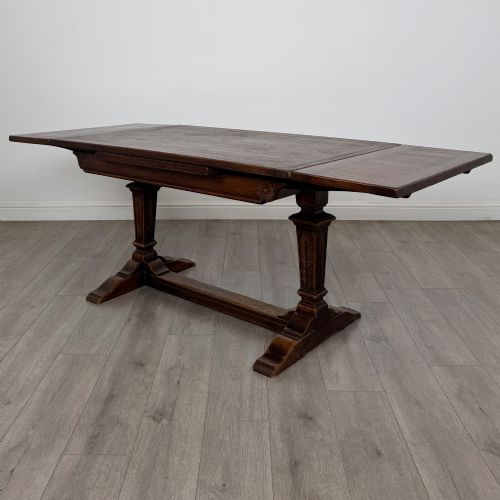
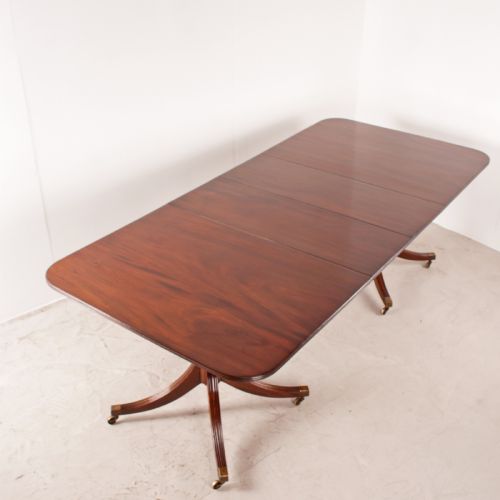
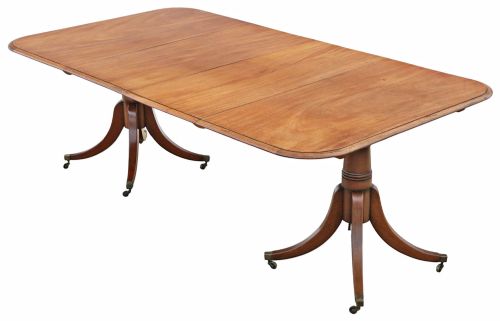
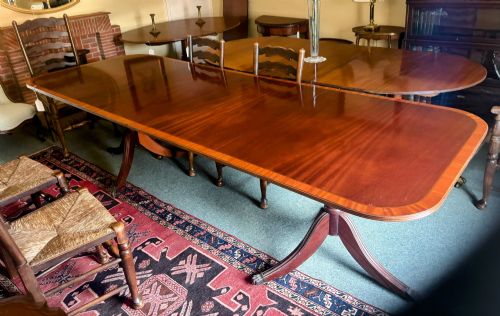
A pedestal dining table leaf brings together central pillar supports and removable or draw-action sections that extend the surface area. Buyers searching this phrase encounter dining furniture originating from Georgian, Regency, Victorian and Edwardian periods, alongside later 1930s interpretations.
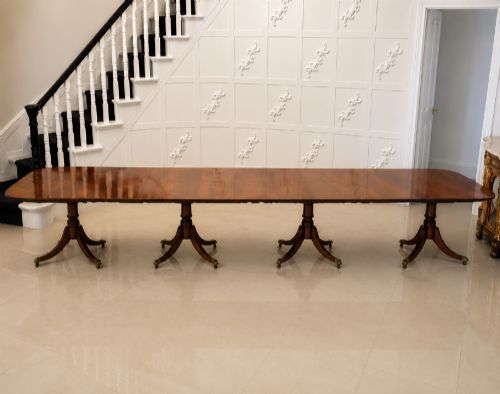
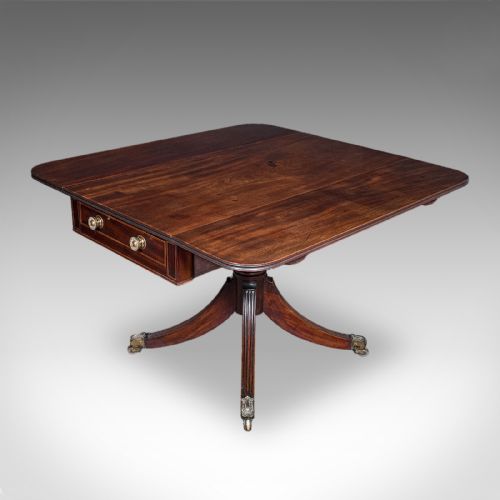
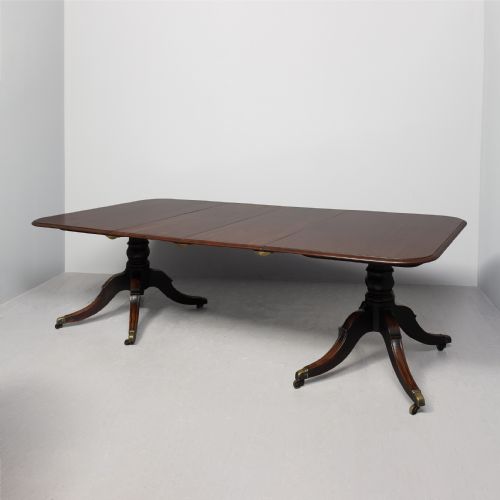
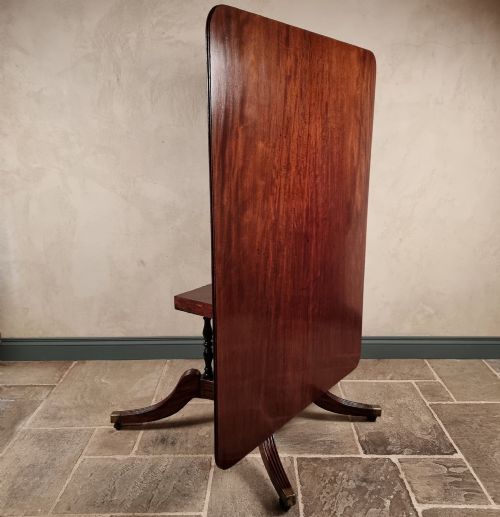
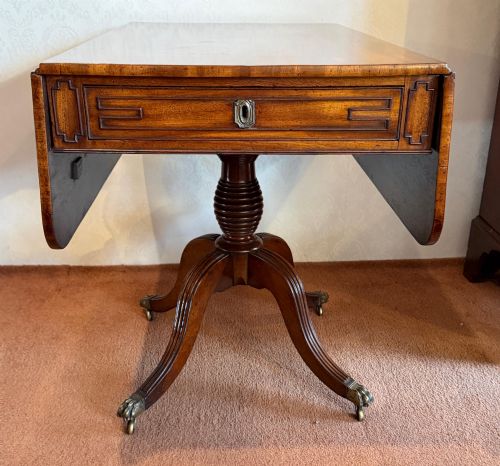
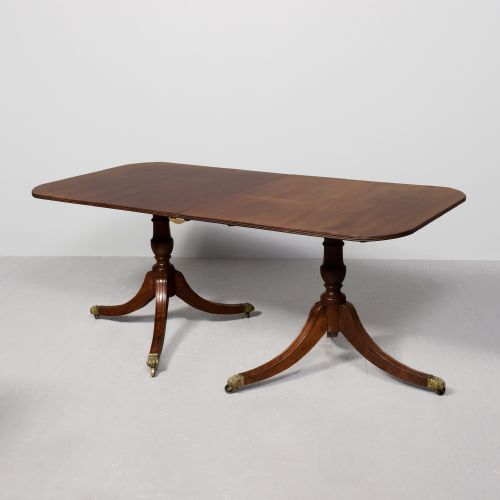
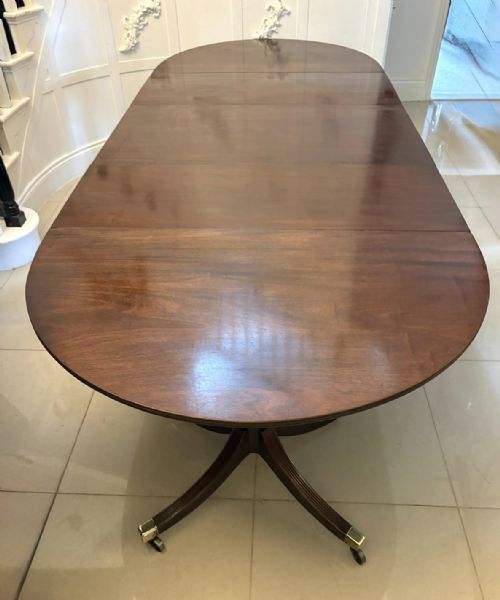
The most common formats on this page are twin and triple pillar mahogany tables accompanied by one or more drop-in leaves, alongside drop leaf and Pembroke tables operating on a central column.
Origins span English country houses and formal dining rooms, with occasional Irish and Scottish examples appearing in mahogany, rosewood, elm and oak.
How they were made
Makers relied primarily on solid mahogany and mahogany veneers, often enhanced with satinwood inlay, brass castors, and occasionally parcel gilt or burr walnut. Oak, elm and rosewood appear in specific regional or period pieces.
Construction involved turning central pedestals from single blocks of timber or mounting pillars onto multi-splayed legs, securing removable leaves with brass alignment pins and wooden runners to ensure stability when extended.
Listings span multiple eras from Georgian and Regency to Edwardian and 1930s pieces, constructed in mahogany, oak, rosewood, elm and satinwood.
What varies in quality
The distinction between standard and superior pieces rests on the choice of timber figurations, such as Spanish or Cuban mahogany, and the precision with which the pillar bases and reeded or splayed legs are carved.
Quality also shows in how smoothly the leaves insert and lock into the main frame, ensuring the grain matches across the extended surface and the pedestals bear the weight evenly without sagging.
Mack, Williams and Gibton
The Pedestal Dining Table Leaf Glossary
- Pedestal
- A central column support that carries the weight of the table top, often branching into three or four splayed legs.
- Leaf
- A removable or folding board inserted into an extendable table to increase its overall length.
- Twin Pillar
- A table construction utilising two distinct central pedestals to support longer dining surfaces.
- Pembroke Table
- A drop-leaf table with hinged flaps on either side and a central support structure.
- Reeded
- A decorative moulding consisting of parallel convex rounded parallel beads carved into the wood.
Pedestal Dining Table Leaf: Frequently Asked Questions
How do I insert the extra leaf?
Most pedestal dining tables pull apart at the centre runners to reveal a slot where the removable leaf drops securely into place.
Brass alignment pins or wooden latches then engage to lock the sections tightly together and maintain a flat surface.
How many people can these seat?
Seating capacity depends on the number of pillars and leaves, ranging from intimate four-seater drop-leaf breakfast tables to grand four-pedestal banquet tables accommodating over twenty guests.
Checking the listed dimensions and leaf count indicates the exact capacity for daily use or larger gatherings.
Are the leaves original to the table?
Some tables retain their original matching leaves, while others incorporate later additions made from matching timber during subsequent restorations.
Close inspection of the wood grain, colour patina and joining mechanisms helps determine whether a leaf was made alongside the main structure.
How do I care for mahogany surfaces?
Mahogany requires regular dusting with a soft cloth and occasional treatment with quality beeswax to nourish the timber and preserve its rich patina.
Direct sunlight and excessive heat should be avoided to prevent the wood finish from fading or drying out over time.