



Pearlware Serving Platter
These pearlware serving platter examples bring robust early earthenware charm to the table with rich cobalt blue and white transfer designs.
Pearlware Serving Platter
A pearlware serving platter offers a glimpse into early nineteenth-century domestic dining through robust earthenware and glazed pottery forms. Most examples encountered here hail from the Georgian and Regency periods, carrying blue and white transfer printed scenes.
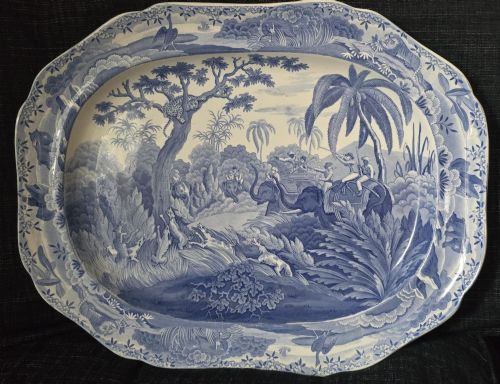
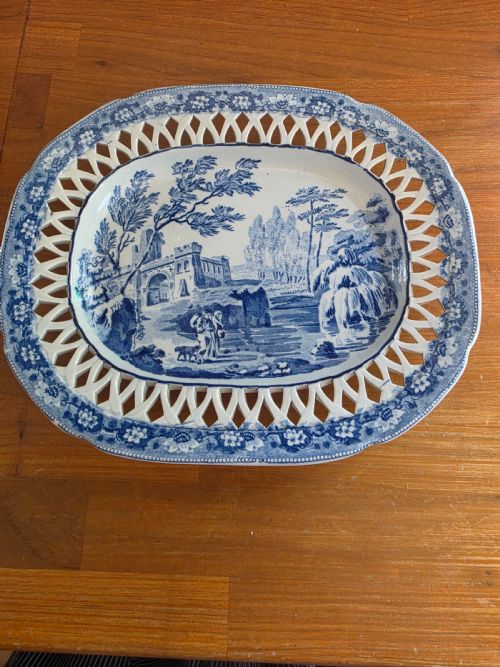
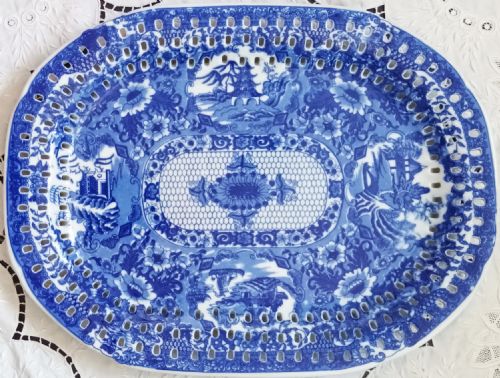
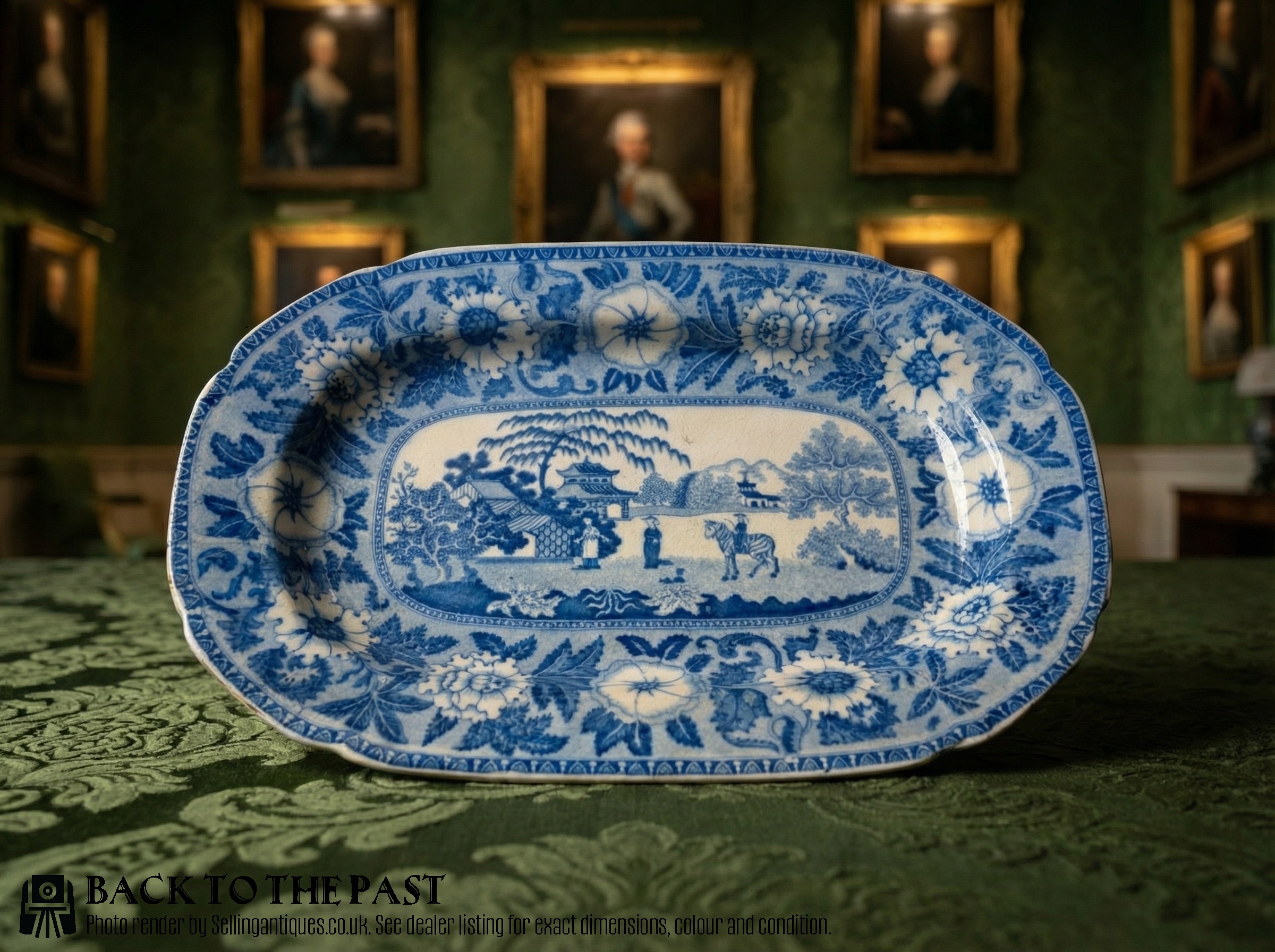
The inventory ranges from large carving platters with built-in reservoirs to pierced net pattern serving dishes and sauce tureen stands. Makers utilised distinct pictorial motifs such as zebra, buffalo, bridge, and classical ruins patterns.
These pearlware serving platter items serve as functional antiques that anchor a traditional table setting or display neatly on a dresser. They bridge the gap between utilitarian kitchenware and collectible ceramics.
Materials and construction
Potters built each pearlware serving platter using refined earthenware bodies coated in a characteristic pale lead glaze that pooled slightly blue in crevices. Artisans applied deep cobalt pigment by hand before transferring detailed scenic engravings onto the damp ceramic surface.
Firing took place in traditional kilns, sealing the transfer printed design beneath a glossy glazed ceramic skin. Specialised forms like carving platters required integrated channels and reservoirs carved directly into the wet clay body before firing.
Pearlware Serving Platter Retail Price Guide 2026
Typical asking prices for pearlware serving platter among the pieces listed under this phrase on Sellingantiques today, from the lower quarter to the upper quarter. They describe what is for sale here now, not the wider market.
One determined potter decided that exotic African wildlife belonged next to classic English ruins, resulting in delightful transfer scenes featuring bewildered elephants.
Assessing quality and appeal
Quality in a pearlware serving platter rests largely on the crispness of the cobalt transfer printing and the complexity of the pictorial scene. Finer examples display deep, uniform blue tones without blurring or smudging across the glazed pottery.
Structural variations also separate standard plates from superior serving pieces, such as intricate pierced borders or functional drainage reservoirs. The presence of clear maker attributions adds historical weight to the ceramic piece.
Davenport·Spode·Thomas Lakin·Don Pottery·John Rogers and Son
The Pearlware Serving Platter Glossary
- Pearlware
- A refined earthenware developed in the late eighteenth century featuring a subtle bluish glaze. This pale tint was intended to mimic the bright whiteness of Chinese porcelain.
- Transfer printing
- A decoration technique where a design is engraved on a copper plate, inked with pigment, and transferred onto paper before being pressed onto the unglazed ceramic body.
- Reservoir
- A recessed well or channel built into the surface of large carving platters to collect meat juices during carving. It represents a more complex functional moulding.
- Pierced border
- An openwork edge cut into the clay before firing to create decorative latticework or fretwork patterns around the rim of the dish.
- Cobalt pigment
- A metallic oxide used under the glaze to produce a stable, deep blue colour capable of withstanding high kiln temperatures.
Pearlware Serving Platter: Frequently Asked Questions
Can I still use these for food?
Many collectors continue to use these serving dishes for dry foods or festive table displays. The lead glaze means modern acidic foods should not sit on the surface for extended periods.
Using them thoughtfully allows you to enjoy their historical craftsmanship during special gatherings. Displaying them on sideboards is equally popular.
What caused the blue tint?
Potters added small amounts of cobalt to the transparent lead glaze to counteract the natural yellowish hue of the fired earthenware body. This clever adjustment created a whiter appearance that resembled porcelain.
Over time, this glaze formulation became the defining characteristic of the pearlware body. It helps distinguish these pieces from earlier creamware items.
Why do some have wells?
Larger meat platters included a recessed well and drainage channels to collect juices while carving roast joints at the table. This practical design kept the meat elevated and made serving cleaner.
Such specialised forms indicate a dining piece intended for formal meat courses. They represent higher functional complexity in nineteenth-century tableware.