
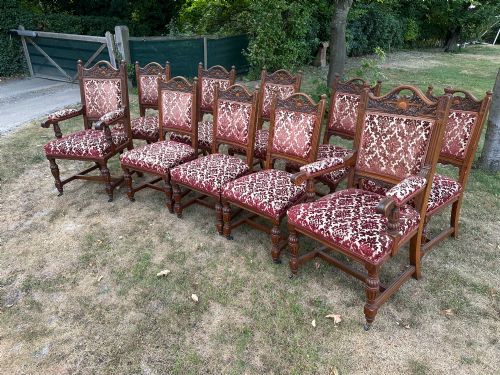
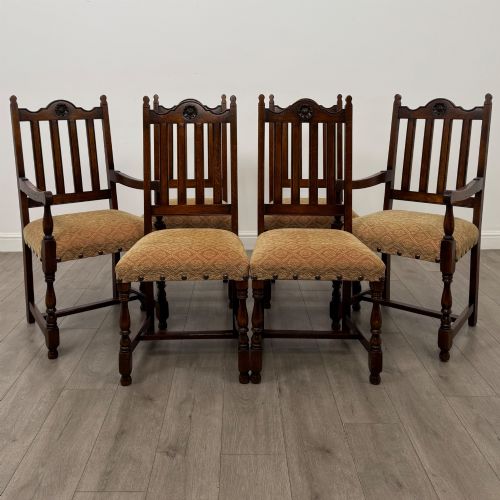
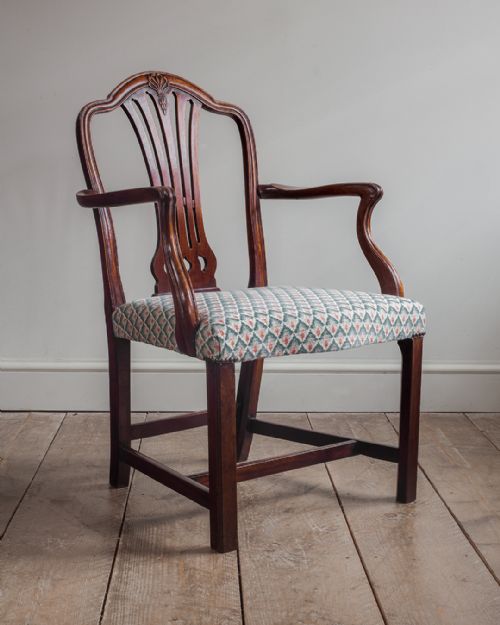
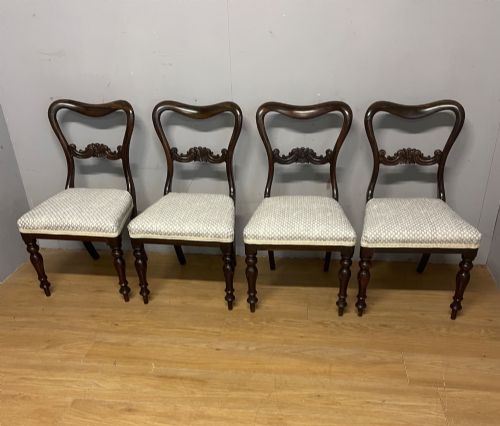
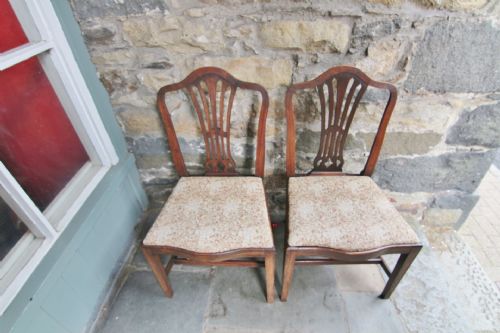


Patterned Seat Dining Chairs
Patterned seat dining chairs bring character to a room through varied upholstery fabrics and traditional wooden frames spanning multiple centuries.
Patterned Seat Dining Chairs
Patterned seat dining chairs encompass seating designed for the dining table, ranging from single side chairs to extensive matching sets. When searching for patterned seat dining chairs, buyers encounter diverse configurations including balloon backs, open elbows, and salon chairs intended for formal dining spaces.
The selections span numerous periods and revivals, predominantly featuring Victorian, Edwardian, and Georgian designs alongside Art Deco and Gothic Revival interpretations. Woods like mahogany, walnut, and oak form the structural foundations, paired with distinctive textile seats.
Materials and Construction
Makers utilised solid timbers such as mahogany, walnut, oak, ash, and alder to construct robust frames, often incorporating carved details like balloon backs or inlaid motifs. Joinery techniques varied from traditional pegging in earlier pieces to reinforced joints in later revival models.
Upholstery methods involved textile coverings like velvet and general fabric secured over internal padding, occasionally complemented by rush seating in regional vernacular pieces. Brass accents sometimes appeared on specific styles to accent the woodwork.
Upholstery materials range from modern textile and velvet to designated William Morris fabrics on Victorian frames.
Assessing Quality and Execution
The tier of a chair rests upon the crispness of the timber carving and the integrity of the frame construction rather than mere age. Superior examples demonstrate thoughtful grain selection in woods like burr walnut or figured mahogany, alongside tight, stable joinery.
Upholstery execution distinguishes standard examples from exceptional ones, with high-end pieces displaying precise pattern placement and durable textile application that complements the proportions of the wooden frame.
Howard And Co London·Charles Bevan·Waring
The Patterned Seat Dining Chairs Glossary
- Balloon Back
- A rounded, oval-shaped wooden backrest popular on Victorian dining chairs that resembles the profile of a balloon.
- Gothic Revival
- An architectural and decorative style drawing inspiration from medieval forms, characterised by pointed arches and heavy carved woodwork.
- Rush Seat
- A traditional seating surface woven from dried marsh rushes, commonly found on regional country chairs.
- Inlaid
- A decorative technique where contrasting pieces of wood or other materials are inserted into the surface to create patterns.
- Side Chair
- A small, lightweight chair without arms designed primarily for use at a dining table.
Patterned Seat Dining Chairs: Frequently Asked Questions
How do I match these chairs to a modern table?
Mixing period seating with contemporary tables relies on balancing wood tones and scale. Matching the predominant timber of the table to the chair frames creates visual cohesion across the dining space.
Alternatively, contrasting dark woods like walnut or mahogany against a lighter modern surface highlights the individual character of the antique chairs without requiring a matching set.
Are larger sets harder to find?
Complete sets of six, eight, or ten chairs occur less frequently than pairs or quartets because individual pieces get separated over decades of use. Larger groupings often originate from formal dining rooms where matched suites were commissioned together.
When larger sets do appear, they represent significant examples of uniform craftsmanship from specific periods like the Victorian or Edwardian eras.
How should I care for antique upholstery?
Protecting textile seats involves regular gentle vacuuming using a low-suction attachment to remove dust particles without straining the fabric fibres. Direct sunlight causes fading in historic velvets and patterned materials, so positioning chairs away from windows preserves the colours.
Professional cleaning remains advisable for delicate or antique textiles to avoid damaging the underlying padding and frame structure.