



Edwardian Sheraton Revival Chairs
Edwardian Sheraton Revival chairs bring neoclassical elegance into the home through refined inlay and graceful proportions.
Edwardian Sheraton Revival Chairs
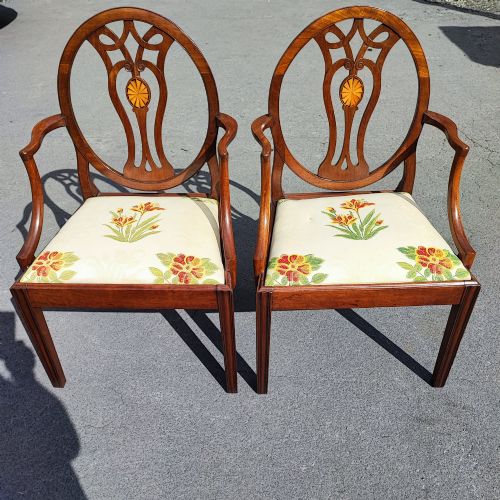
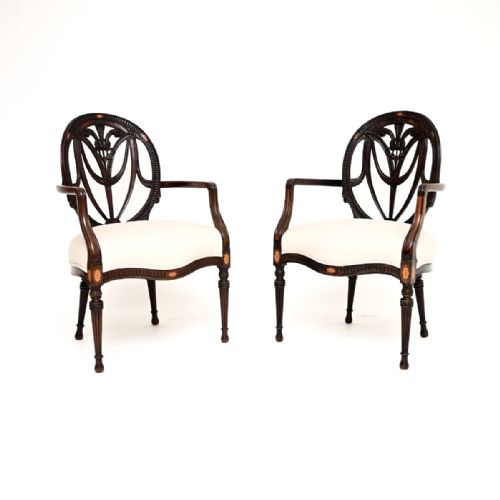
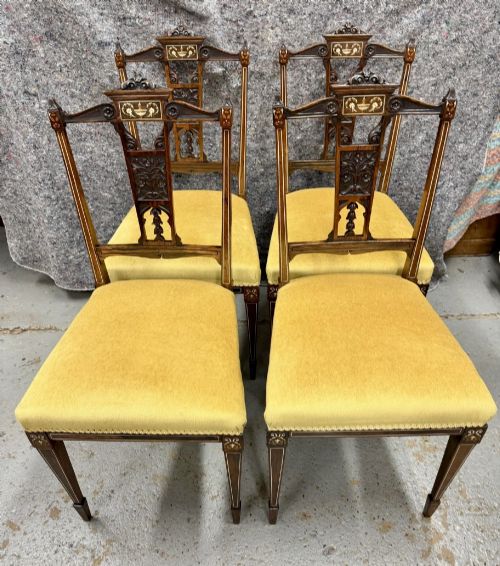
When you search for edwardian sheraton revival chairs, you encounter seating built around the turn of the twentieth century that reinterprets eighteenth-century neoclassical designs. These pieces range from occasional and salon chairs to sets of dining chairs and library armchairs.
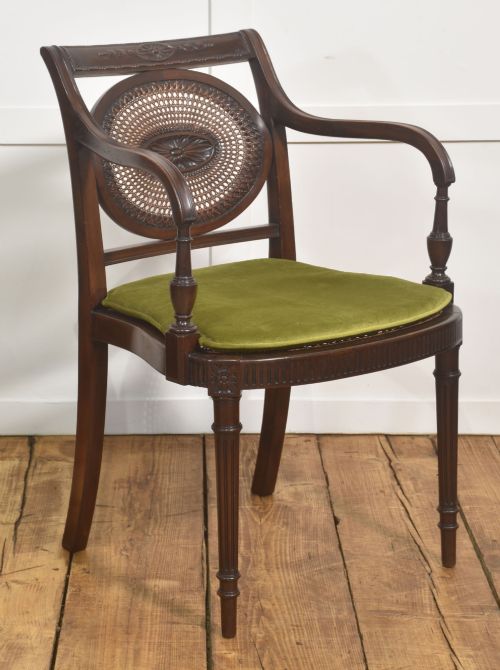
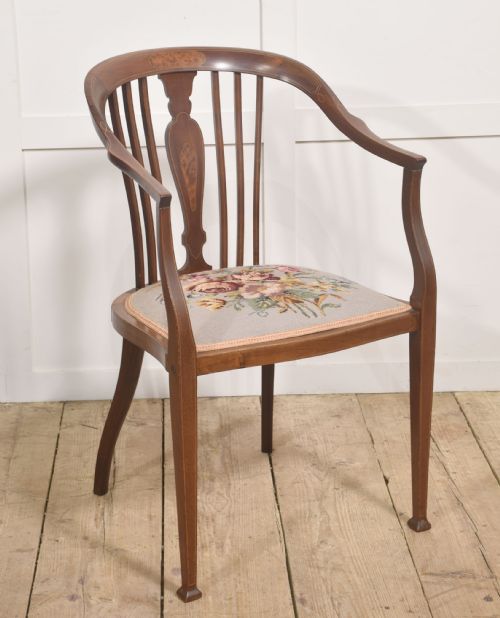
The version you are most likely to meet on this page is an upright or carver chair made of mahogany, often featuring contrasting wood inlays and slender tapering legs. They span periods from late Victorian through the Edwardian era into the early twentieth century.
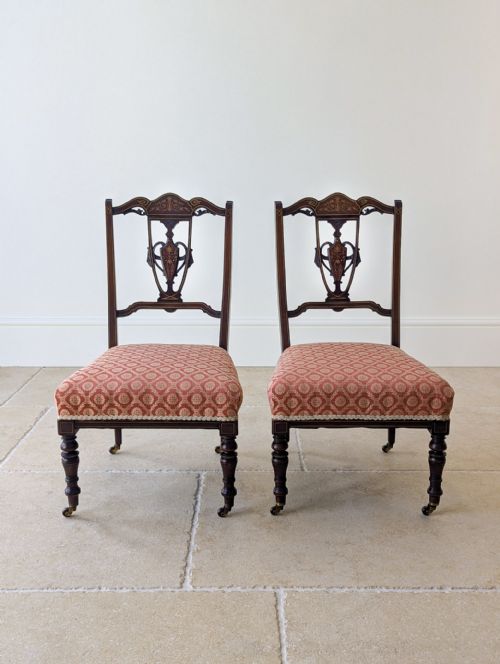
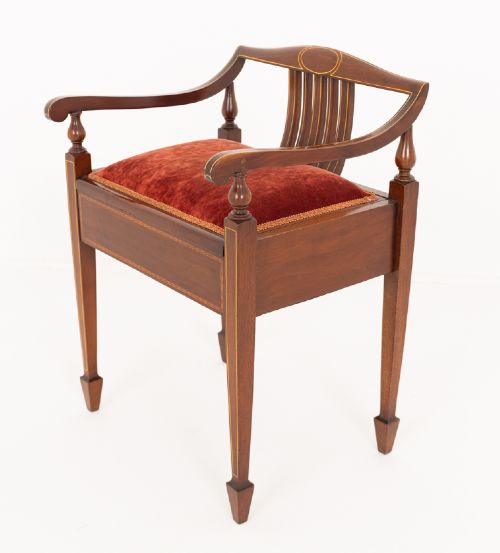
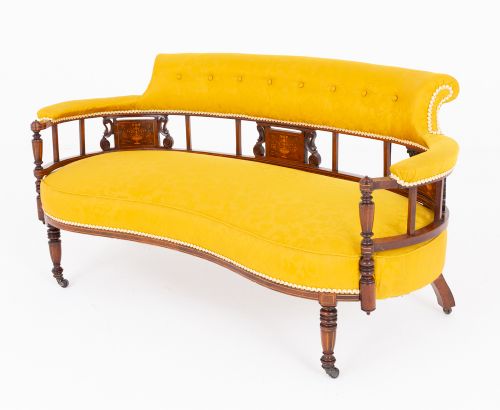
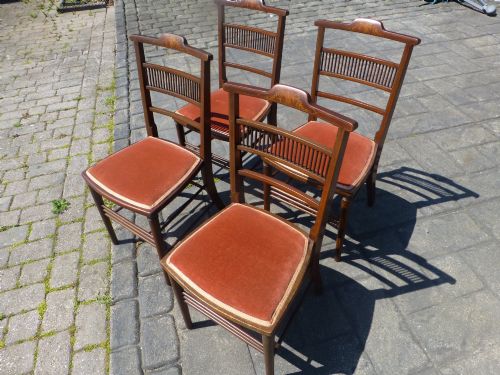
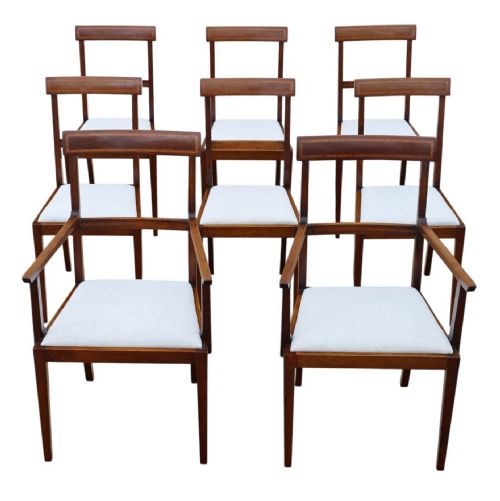
Forms include side chairs, armchairs, tub chairs, and piano stools, reflecting the domestic comfort and formal reception spaces of the period. Sets of four or more dining chairs sit alongside individual salon chairs and desk chairs.
Materials and construction
Cabinet makers utilised mahogany as the primary structural timber, frequently pairing it with satinwood, boxwood, and brass details. These dense hardwoods allowed for the creation of delicate frames without sacrificing stability.
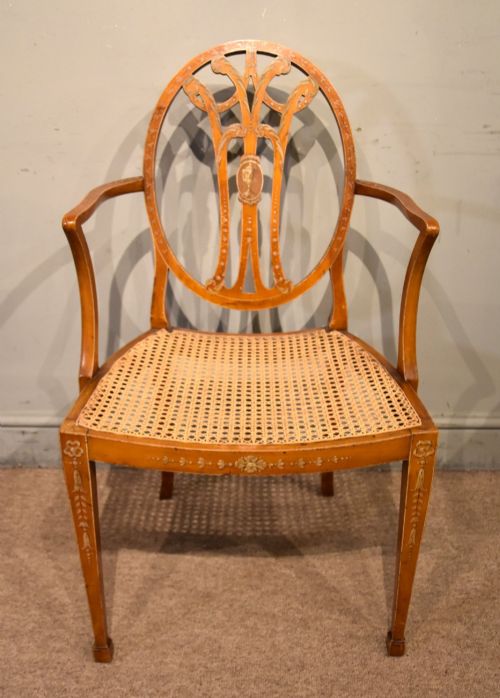
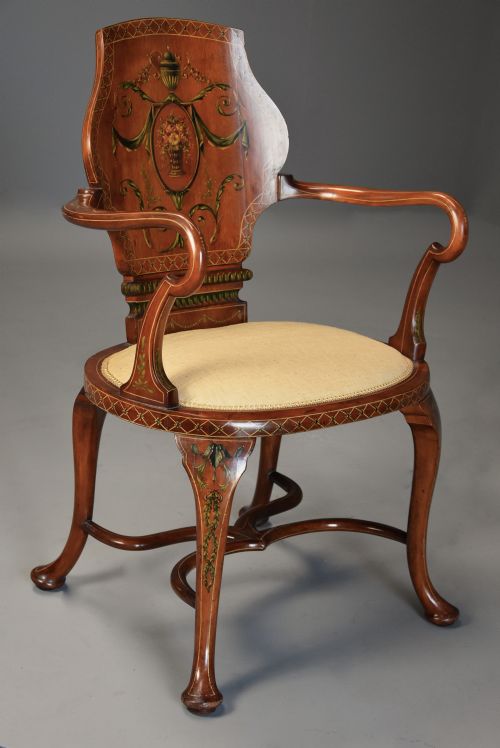
Inlay techniques defined the surface decoration, incorporating satinwood inlay and painted elements directly into the timber. Frames often featured cane panels, upholstered seats in fabric or velvet, and hand-painted motifs.
Joinery relied on traditional methods to support slender back splats, curved armrests, and tapering legs. The combination of structural mahogany with lighter contrasting veneers achieved the characteristic graceful aesthetic.
Common object forms span dining chairs, library armchairs, tub chairs, and piano stools with cane and fabric upholstery.
Distinctions in craftsmanship
The standard of quality rests in the crispness of the inlay work and the selection of figured timber. Superior examples display precise boxwood and satinwood contrasting against the main grain, whereas simpler pieces rely solely on plain woodwork.
Hand-painted decoration introduces another tier of distinction, where detailed floral or classical motifs elevate standard salon seating. The structural integrity of slender elements, such as curved tub backs and delicate side rails, also separates everyday furniture from finer workshop output.
Original upholstery methods and the survival of matching sets command greater interest than assembled groups or heavily restored frames. The retention of original cane work and brass mounts preserves the integrity of the piece.
The Edwardian Sheraton Revival Chairs Glossary
- Sheraton Revival
- A late nineteenth and early twentieth century design movement that recasts the neoclassical forms popularised by Thomas Sheraton. It relies on light proportions, straight legs, and classical motifs.
- Satinwood
- A durable, yellowish-orange timber sourced from tropical trees, utilised for veneers and decorative inlay. Its lustrous grain provides striking contrast against darker woods like mahogany.
- Inlay
- A technique where pieces of contrasting wood, such as boxwood, are set into recesses flush with the surface to create geometric or floral patterns. This ornamentation defines the refined surface style of the period.
- Bergere
- An enclosed upholstered armchair with a wooden frame, where the sides and back are frequently filled with woven cane. This French-inspired form offers lighter visual weight than traditional upholstered seating.
Edwardian Sheraton Revival Chairs: Frequently Asked Questions
How do I identify a true Sheraton Revival chair?
Look for neoclassical elements such as tapering legs, shield backs, and delicate satinwood inlay set into a mahogany frame. These details distinguish the revival style from heavier Victorian designs.
Check the period indicators in the construction and materials, as true revival pieces date predominantly from the late nineteenth and early twentieth centuries rather than the eighteenth century.
Were these chairs used for dining or sitting?
The category encompasses both dining chairs sold in sets and individual pieces like salon armchairs, desk chairs, and piano stools. Dining chairs provided formal seating around the table, while lighter salon chairs furnished reception rooms.
Library armchairs and tub chairs offered greater comfort for reading or writing spaces, reflecting the diverse domestic uses of the Edwardian home.
How should I care for mahogany and satinwood inlay?
Maintain the timber by keeping pieces away from direct sunlight and sudden temperature changes, which can dry out the wood and loosen delicate veneers. Dust regularly with a soft, dry cloth.
Avoid heavy silicone polishes and instead use appropriate wax sparingly to nourish the grain without damaging the historic finish or the surrounding inlay work.
What is the difference between a side chair and a salon chair?
Side chairs are typically un-armed chairs designed for dining tables or auxiliary seating against walls. They feature sturdy frames built to withstand regular use.
Salon chairs are decorative occasional pieces intended for reception rooms, often incorporating painted satinwood, cane panels, or more elaborate upholstery suited to lighter social settings.