


Patterned Porcelain Tableware
Patterned porcelain tableware brings centuries of painted ceramic artistry to the dining room, offering both decorative charm and historic utility.
Patterned Porcelain Tableware
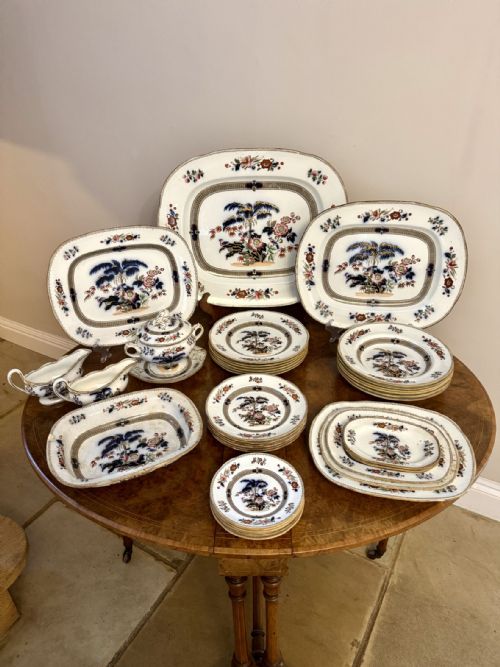
Patterned porcelain tableware encompasses historic ceramic service pieces decorated with hand-painted or transferred motifs, spanning the eighteenth and nineteenth centuries. These items include tureens, sauce boats, dessert services, and dinner services originating from notable English and continental factories.
Buyers encountering this selection will find examples ranging from early Georgian soft-paste porcelain to robust Victorian ironstone and earthenware. Forms vary from individual decorative plates and pickle dishes to comprehensive multi-piece dining services.
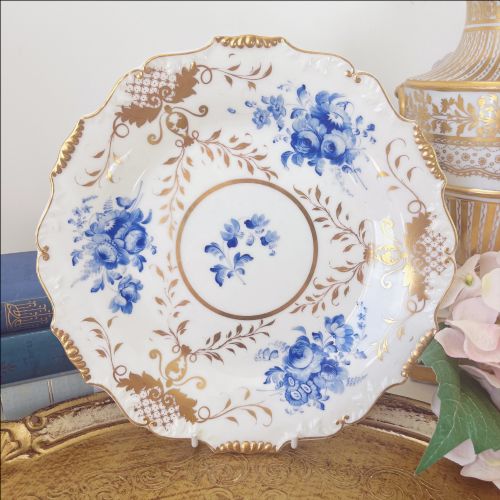
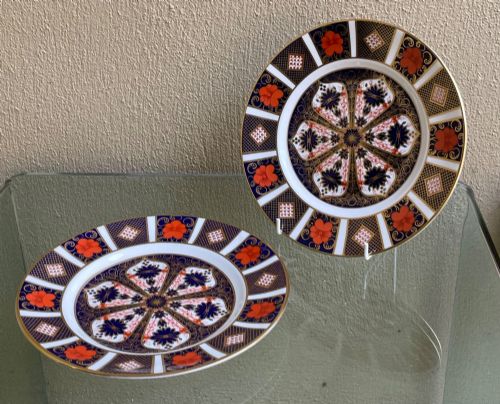
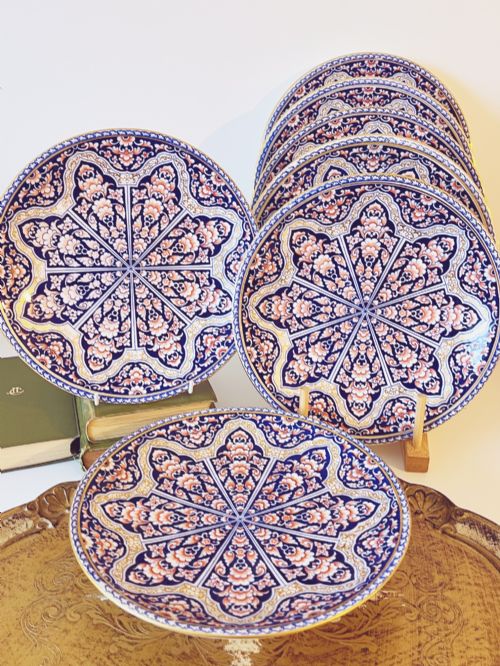
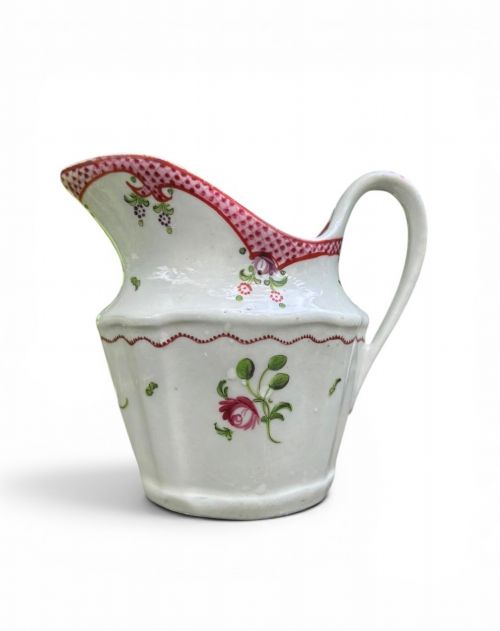
The aesthetic vocabulary draws heavily from Georgian elegance, Regency refinement, Victorian ornamentation, and Imari styles. Pieces often feature botanical studies, oriental figures, and elaborate gilt highlights.
How they were made
The manufacture of these pieces relies upon fine ceramic bodies, predominantly porcelain and ironstone, shaped into vessels such as sauceboats, serving dishes, and tureens. Potters utilised soft-paste porcelain in early factories before developing more durable bodies and felspar compositions.
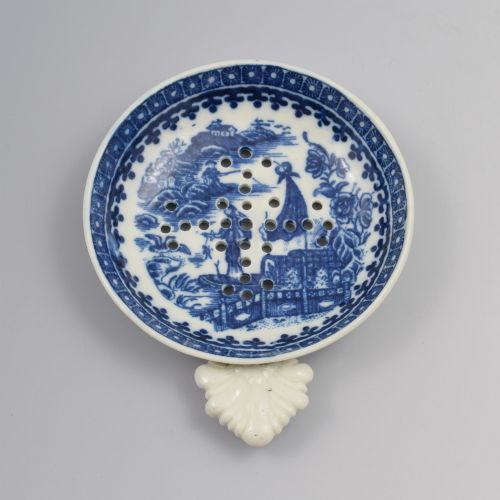
Decoration was achieved through careful glazing combined with enamel painting, gold leaf application, and cobalt designs. Artisans executed intricate patterns including Chinoiserie and Kakiemon styles directly onto the ceramic surface before final firing.
Listings feature porcelain, ironstone, and earthenware pieces decorated with enamel, glaze, and gold leaf across eighteenth and nineteenth-century styles.
What varies in quality
Quality in these ceramics depends upon the fineness of the paste, the precision of the hand-painted brushwork, and the preservation of original gilding and enamel colours. Superior pieces display crisp detailing in complex motifs such as botanical studies or oriental figures.
The reputation of the manufactory and the complexity of the pattern dictate the standing of individual items within the historical range. Intact services and well-preserved decorative details elevate the desirability of the tableware.
Royal Crown Derby·Davenport·Wedgwood·Caughley·Spode·Bow·Worcester·Coalport·Doulton·Minton·Flight Barr And Barr·Mason·KPM·Chamberlain Worcester·Old Derby·Copeland Spode·Meissen
The Patterned Porcelain Tableware Glossary
- Porcelain
- A white, vitrified translucent ceramic material made from clay and minerals. It forms the primary body for fine historic tableware.
- Ironstone
- A heavy, durable type of earthenware patented in the nineteenth century. It provides strength for large dining services and tureens.
- Sauce Tureen
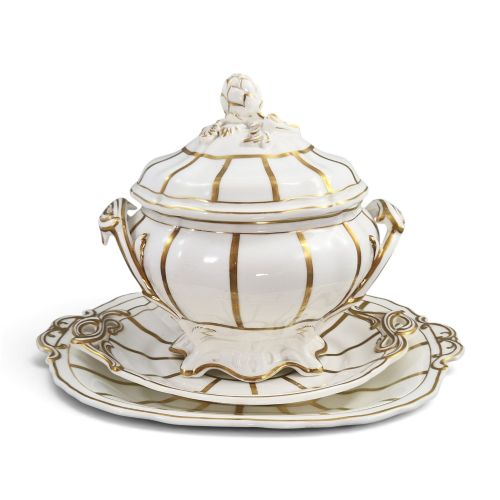
- A small covered serving vessel designed for holding sauces or gravies at the table. These often include matching ladles and stands.
- Imari Style
- A decorative ceramic style featuring rich cobalt blue, iron red, and gold highlights. It draws inspiration from Japanese export wares.
- Gilt
- A thin application of gold leaf or gold paint used to accent handles, rims, and borders. It denotes higher-status tableware items.
Patterned Porcelain Tableware: Frequently Asked Questions
What pieces are included in a dessert service?
A dessert service typically comprises a central comport accompanied by a set of matching plates or desert dishes. These items were designed specifically for serving fruit and sweet courses at the conclusion of a formal meal.
Survival rates for complete sets vary, making individual dessert dishes and comports popular collector pieces today.
How do I identify ironstone from porcelain?
Ironstone presents as a heavier, opaque ceramic body with substantial weight and durability, developed for practical dining use. Porcelain remains lighter in hand and exhibits translucency when held to the light.
Nineteenth-century factories frequently utilised ironstone for robust services while reserving porcelain for finer tablewares.
Can historic tableware still be used today?
Historic tableware can be integrated into modern dining, though hand washing is essential to preserve delicate enamels and gold leaf. Many collectors prefer to display these pieces rather than risk daily wear.
Careful handling ensures that centuries-old glazes and fragile porcelain bodies remain intact for future generations.