


Patterned Fireside Armchair
A patterned fireside armchair brings warmth and character to a room, offering deep comfort upholstered in patterned fabric.
Patterned Fireside Armchair
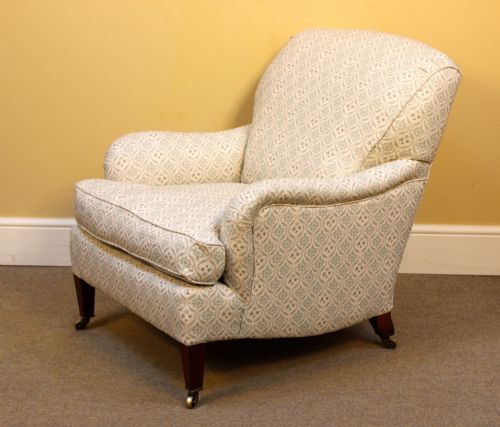
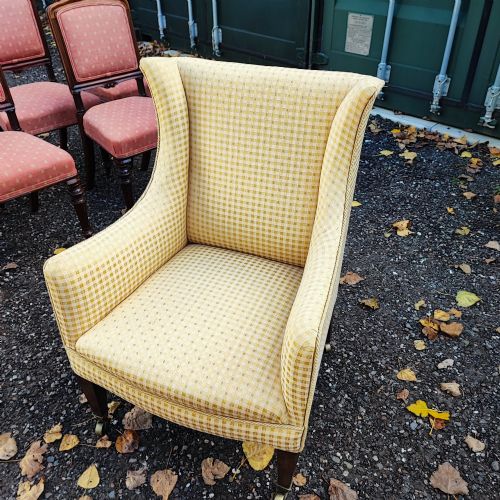
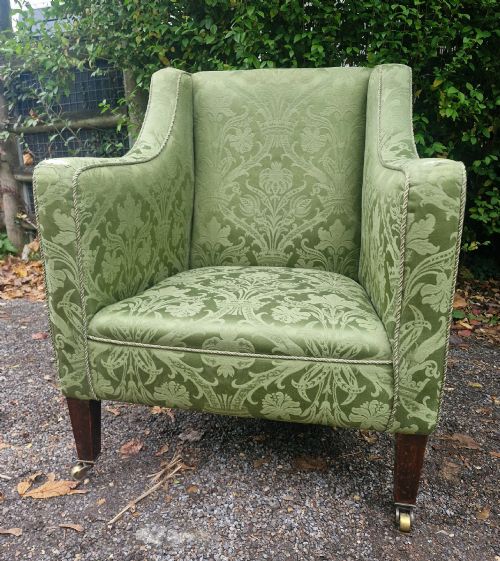
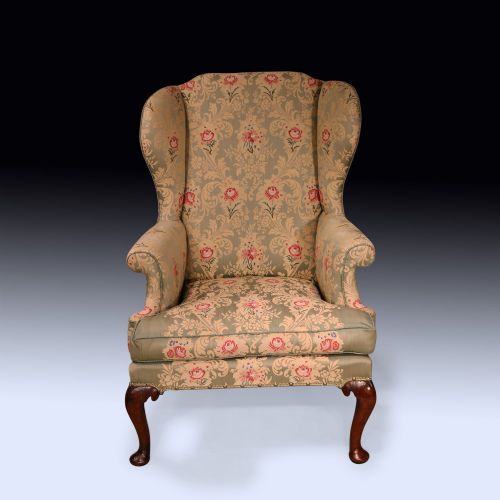
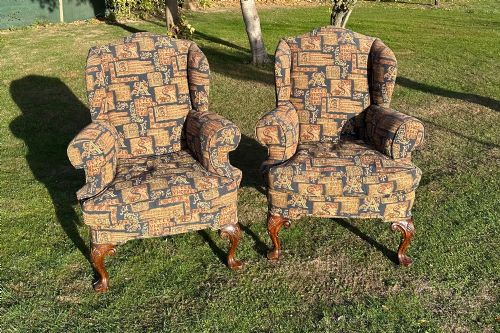
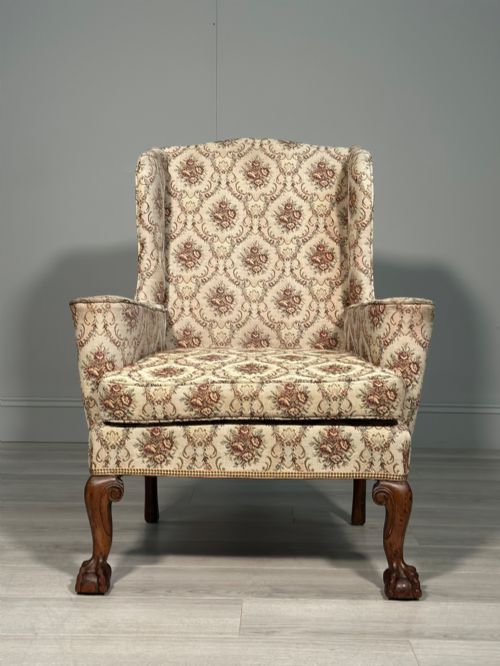
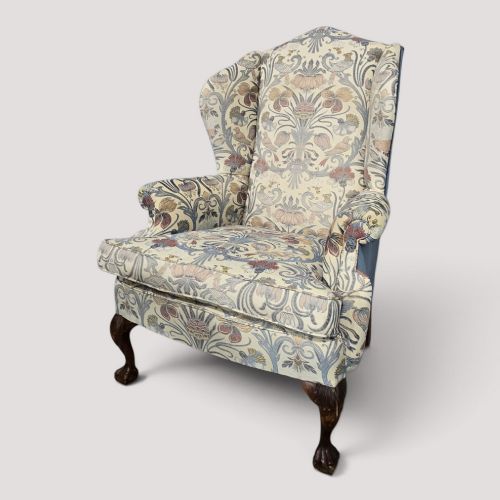
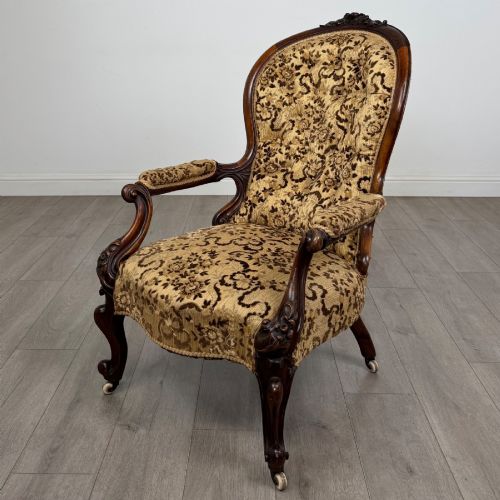
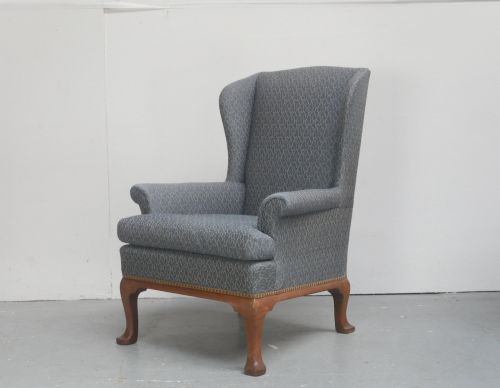
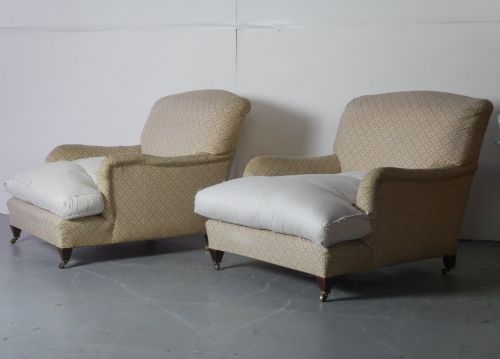
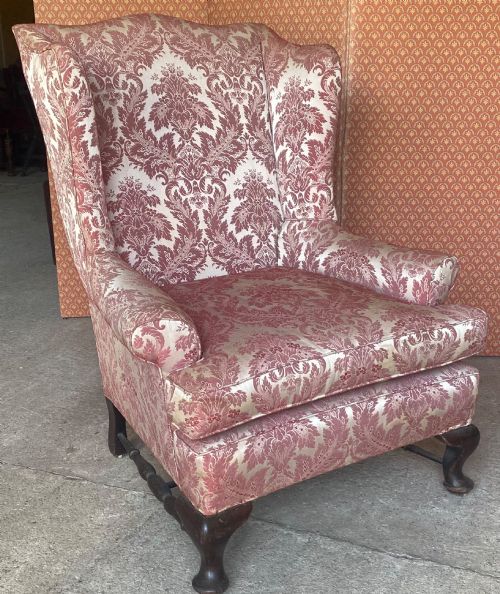
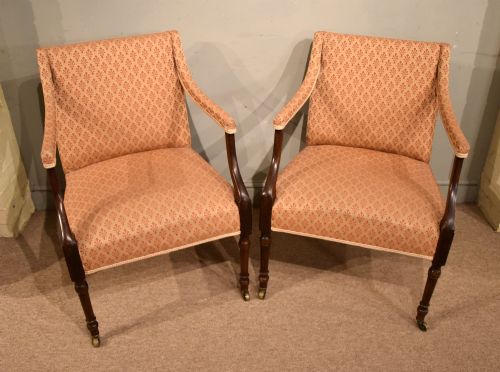
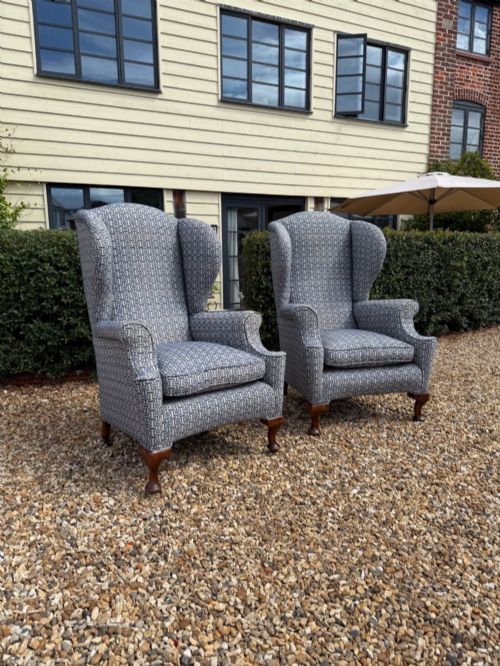
A patterned fireside armchair is designed for comfort near a hearth, appearing across periods from the Victorian era through the Edwardian years and into the 1930s. Buyers searching for a patterned fireside armchair will encounter wingbacks, open armchairs, and slipper chairs shaped by these eras.
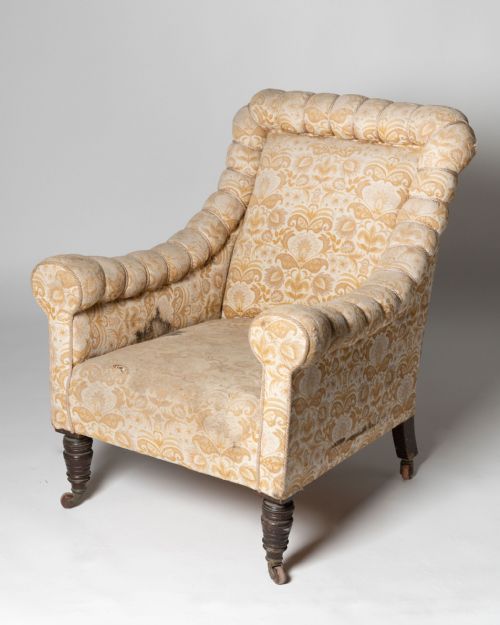
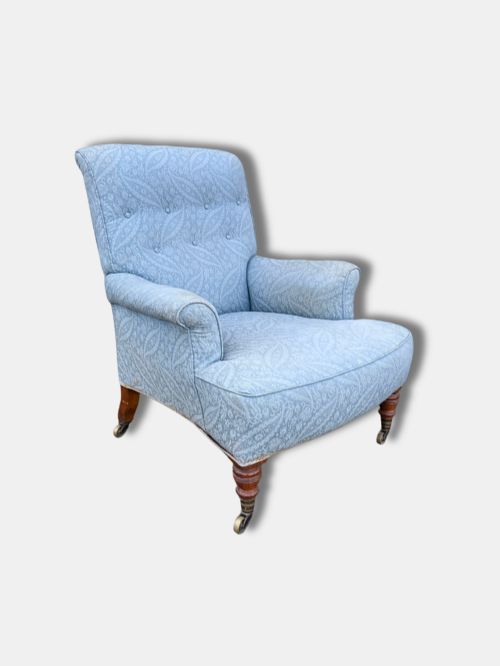
The selections span English country house styles alongside Georgian revivals, utilising timber frames paired with textile upholstery. Makers such as Howard and Sons and Gillows appear among these seating forms, showing both button backs and barrel backs.
Victorian and Edwardian iterations dominate the selection, often featuring walnut, mahogany, or oak structures. These chairs combine upholstered comfort with wooden framing ranging from carved details to simpler lines.
How they were made
Frames rely on hardwoods including mahogany, walnut, oak, and timber, sometimes accented with brass fittings. Structural supports are built to endure, housing feather fillings and supportive cushioning beneath textile coverings.
Upholstery defines the visual character, utilising fabrics such as plaid wool, recycled cotton, and patterned textiles. Woodwork shows craftsmanship through carved frames, barley twist legs, and scroll arms.
Patterned Fireside Armchair Retail Price Guide 2026
Typical asking prices for patterned fireside armchair among the pieces listed under this phrase on Sellingantiques today, from the lower quarter to the upper quarter. They describe what is for sale here now, not the wider market.
A Scottish armchair sits quietly ready for a tartan plaid.
What varies in quality
Quality rests in the integrity of the underlying hardwood frame and the execution of the upholstery work. Pieces bearing maker stamps from established workshops hold distinct standing compared to unmarked seating.
The refinement of carved details on walnut or mahogany frames separates standard examples from finer commissions. Upholstery choice and the retention of original filling materials also influence the character of each chair.
Howard and Sons·Whytock and Reid·Gillows
The Patterned Fireside Armchair Glossary
- Wingback
- An armchair with side panels designed to shield the sitter from drafts. These wings became popular for fireside seating.
- Barley twist
- A form of wood turning resembling a twisted rope. This technique appears frequently on Victorian chair legs and stretchers.
- Button back
- An upholstery style where buttons are pulled deep into the padding to create a quilted diamond pattern. This method secures the filling while adding texture.
- Slipper chair
- A low-seated upholstered chair originally designed for bedrooms. Their compact scale makes them useful for modern firesides.
Patterned Fireside Armchair: Frequently Asked Questions
How do I clean the fabric?
Maintenance depends on the specific textile used on the chair, whether wool plaid or cotton. Gentle brushing helps remove surface dust without disturbing the fibres.
Professional cleaning is advisable for antique textiles to preserve the original material. Avoid harsh chemical cleaners that might damage the vintage fabric.
Are these comfortable for daily use?
Many examples feature generous proportions and feather fillings designed for relaxation. Their traditional construction provides sturdy support for everyday sitting.
Some period pieces may require updated cushioning to suit modern comfort preferences. Checking the internal padding helps determine daily suitability.
How do I date an armchair?
Dating relies on stylistic clues like the curve of the legs, the shape of the wings, and the timber used. Victorian and Edwardian pieces often display distinct carving patterns and structural proportions.
Maker stamps and labels provide the clearest indication of origin and period. Comparing the upholstery style alongside the frame construction clarifies the age.
Will an armchair fit my room?
Armchairs vary from compact slipper chairs to large wingbacks requiring substantial floor space. Measuring the height of the back and the width across the arms ensures proper placement.
Consider the clearance needed for reclining or open arms near other furniture. Fireside placement benefits from allowing adequate room around the hearth.