


English Wingback Chairs
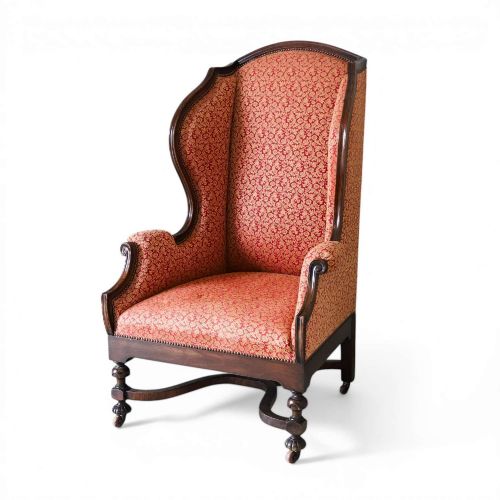
English wingback chairs are draught-excluding fireside seats designed to trap heat, offering deep upholstery and sheltering cheeks that transform any room into a classic study.
English Wingback Chairs
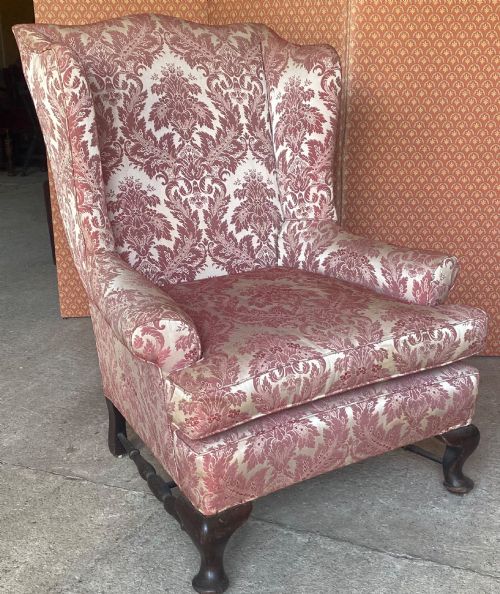
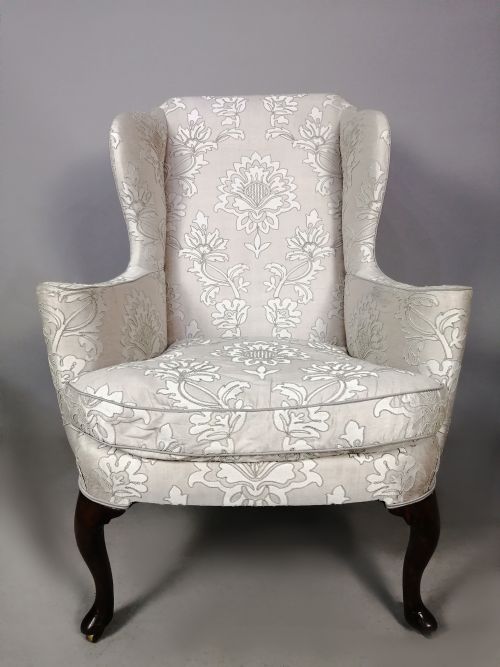
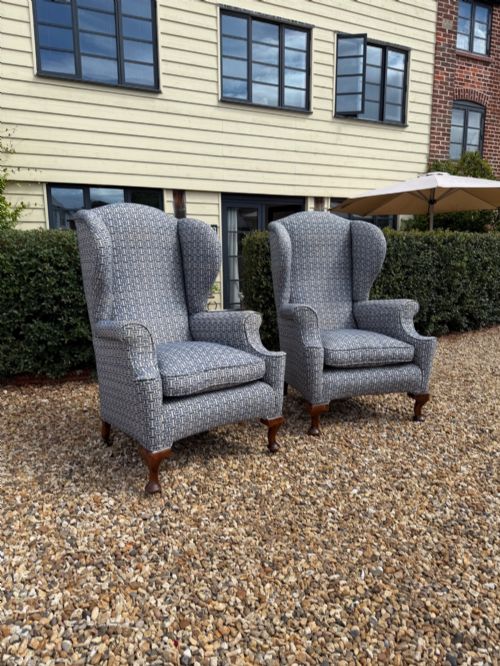
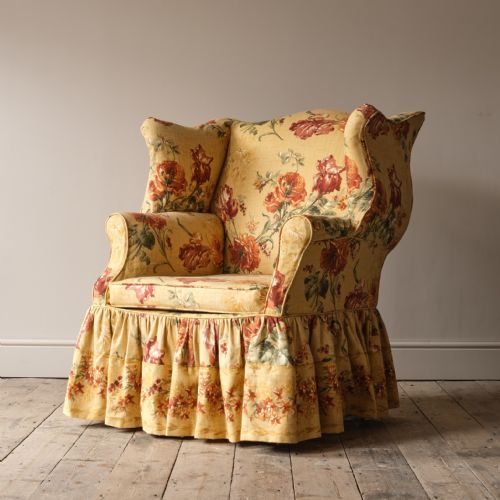
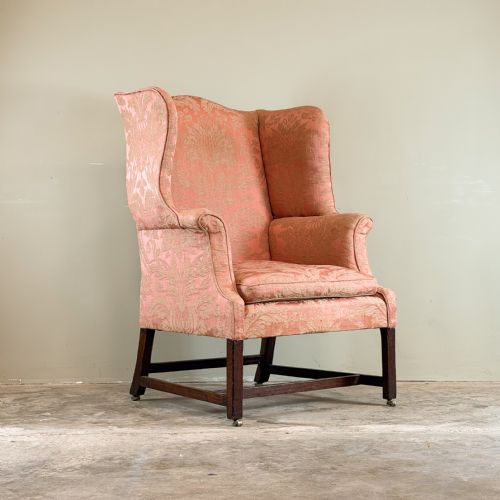
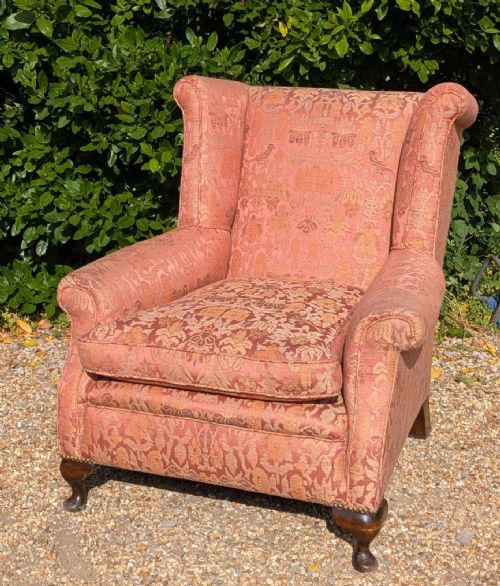
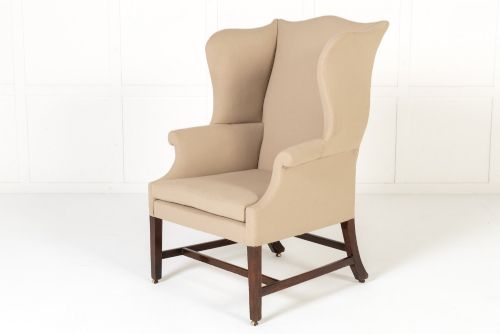
When you search for English wingback chairs, you encounter a lineage stretching from the robust forms of the 18th century through Victorian revivals up to the 1930s. The versions most commonly met here range from substantial Georgian mahogany examples to later Edwardian interpretations and velvet-covered pieces.
The category encompasses traditional armchairs, generous library seats, children's chairs, and related variants like lambing chairs and barrel backs. These pieces span periods including Georgian, Victorian, Edwardian, and the early decades of the 20th century.
Makers and designers from past centuries engineered these high-backed seats primarily for comfort near the hearth, shielding the occupant from drafts. Today, they survive in diverse woods and upholstery states, retaining their traditional silhouettes.
Construction and Materials
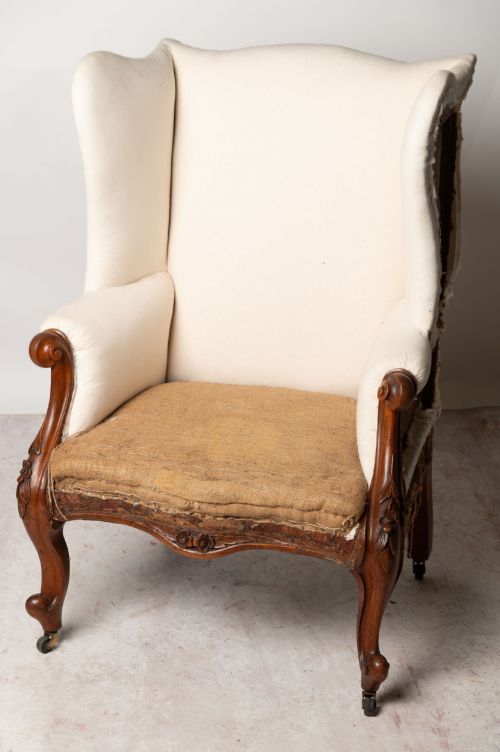
The structural framework relies on traditional timbers such as mahogany, walnut, oak, and general hardwood timber. Artisans shaped these woods to form sturdy underframes, legs, and internal supports.
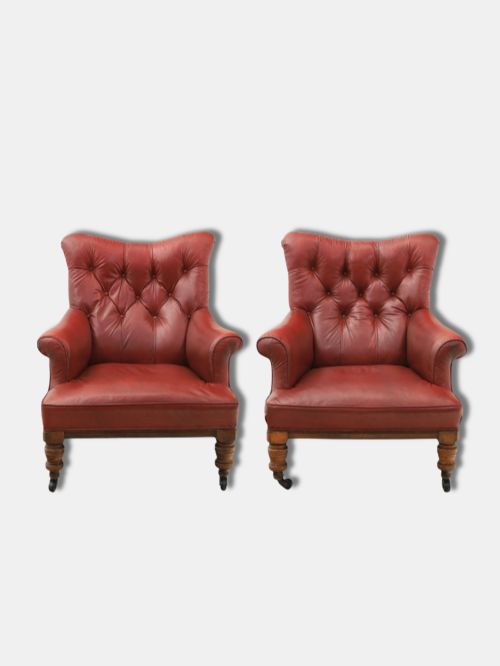
Upholstery methods involved durable fabric, velvet, leather, and rexine, frequently filled with traditional stuffings like feathers. Brass details occasionally appear on castors or nailhead trim securing the fabric coverings.
Materials recorded across these items include mahogany, walnut, oak, leather, velvet, and various fabric covers.
Distinctions in Quality
Quality in English wingback chairs rests upon the integrity of the timber frame, the generosity of scale, and the fidelity of period styling. Pieces showing substantial proportions and refined carving command greater interest.
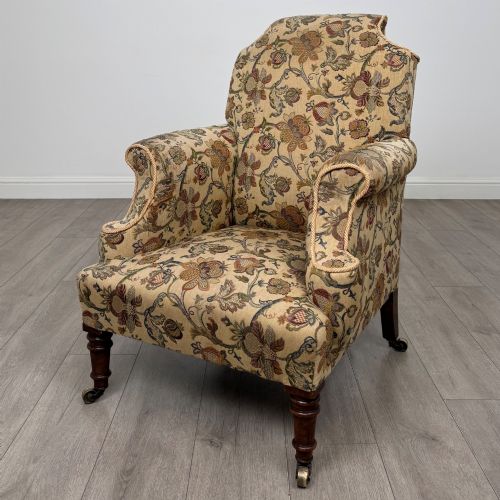
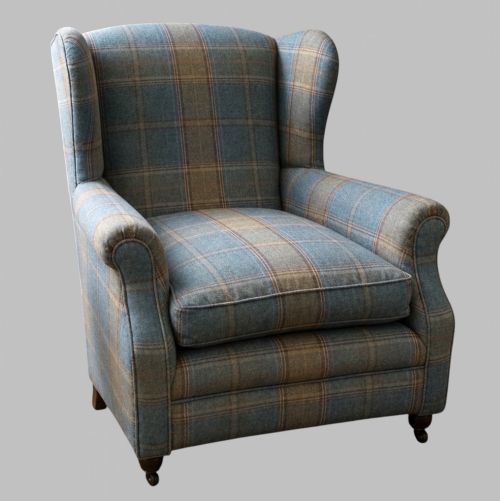
The treatment of the upholstery and the choice of covering material, whether antique velvet or modern plaid, influence the character and execution of the piece. Superior examples maintain balanced proportions between the wings, arms, and back.
Howard and Sons
The English Wingback Chairs Glossary
- Wingback
- An armchair featuring projecting side panels designed to shield the face and body from draughts. These upholstered extensions form the defining characteristic of the type.
- Lambing chair
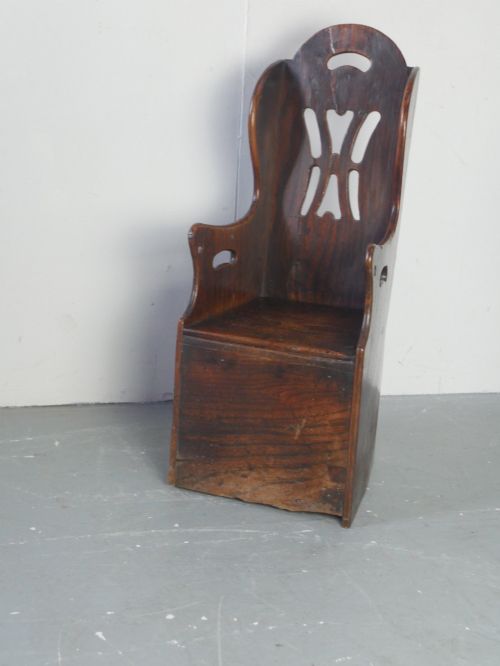
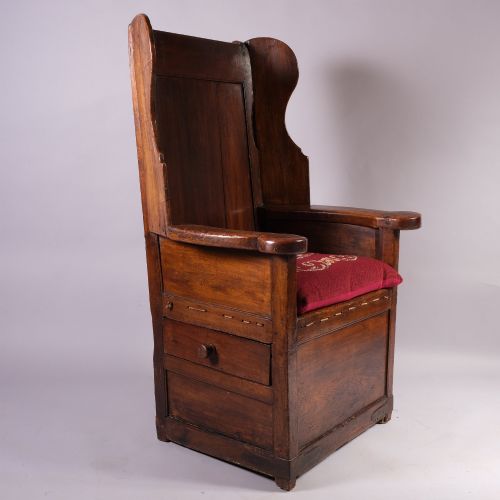
- A traditional enclosed wooden seat, frequently featuring a high back and winged sides, originating in rural districts. They often incorporated a small compartment or drawer beneath the seat.
- Barrel back
- A seating form where the upholstered back curves continuously into the arms in a circular or semicircular sweep. This design provides enclosed comfort similar to a wingback.
- George III
- A design period spanning the late 18th century characterised by classical restraint and refined mahogany craftsmanship. Pieces from this era display balanced proportions and elegant leg forms.
- Howard style
- A late 19th and early 20th century aesthetic known for deep, sprung upholstery and understated comfort. It represents a shift towards relaxed domestic seating.
English Wingback Chairs: Frequently Asked Questions
What is a wingback chair?
A wingback chair is an upholstered fireside armchair featuring prominent side panels attached to the back. These projections were originally intended to trap heat from the fire and block cold draughts.
Over the centuries, cabinetmakers and upholsterers adapted the form across various stylistic periods, resulting in diverse interpretations ranging from formal Georgian mahogany examples to relaxed Edwardian and 1930s variations.
How do I date an old wing chair?
Dating requires examining the timber species, the carpentry of the underframe, and the styling of the legs and arms. Georgian pieces often display distinct mahogany carving, whereas Victorian and Edwardian examples utilise different revival characteristics.
Upholstery materials and internal stuffing methods also provide clues, though many antique chairs have been re-covered multiple times during their lifespan to suit changing domestic tastes.
Where were wing chairs used?
These chairs traditionally occupied positions directly beside the fireplace in English country houses, libraries, and parlours. Their high backs and wings created a private, sheltered microclimate in large, draughty rooms.
Today, they function equally well in studies, living rooms, and reception spaces, serving both as decorative historical pieces and practical reading chairs.
What is a lambing chair?
A lambing chair is an early form of fireside seating, typically constructed from solid wood with a high winged back designed to block severe draughts. They are closely associated with rural 18th-century domestic life.
Unlike fully upholstered wingback chairs, lambing chairs frequently feature wooden panel construction and occasionally include under-seat storage compartments.