

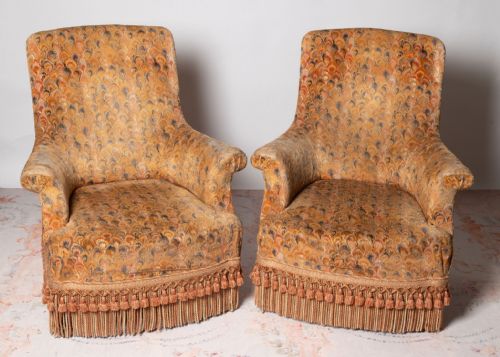


Patterned Easy Chairs
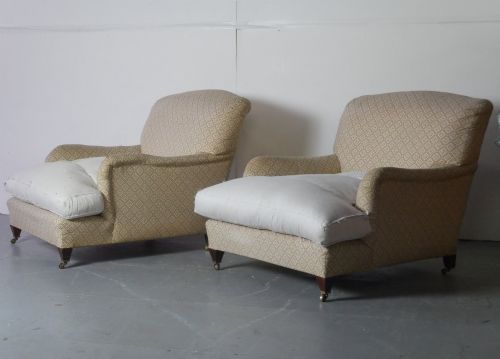
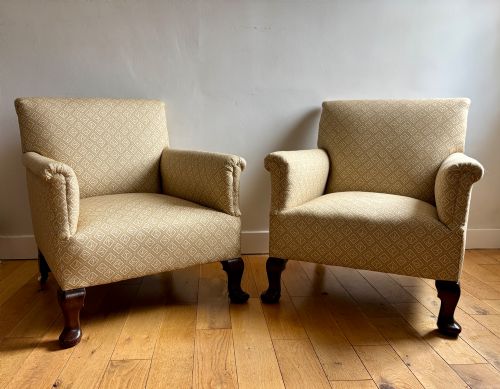
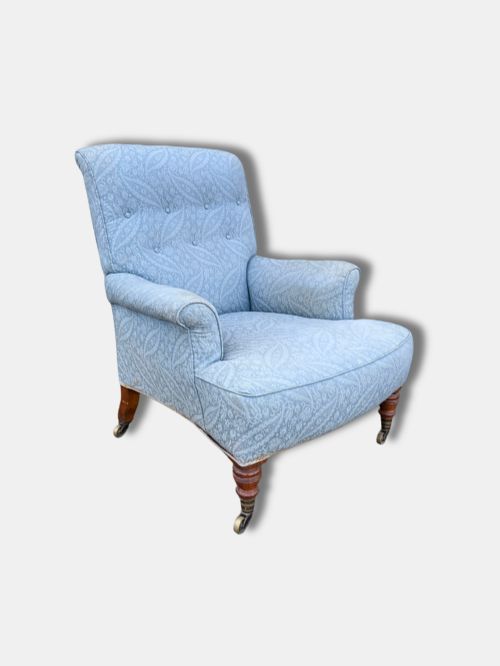
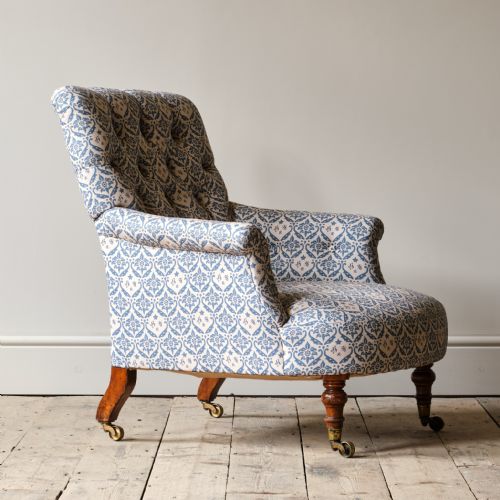
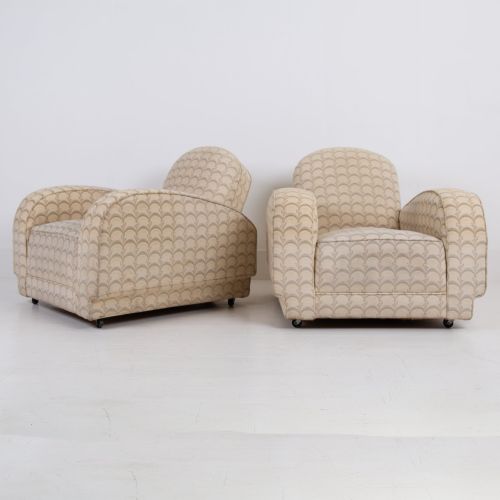
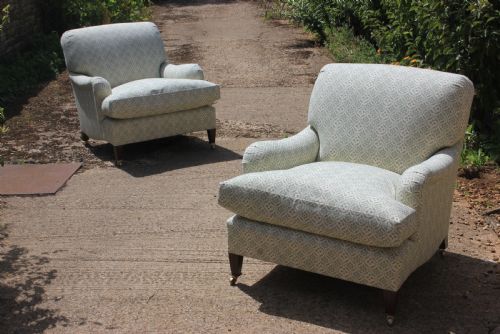
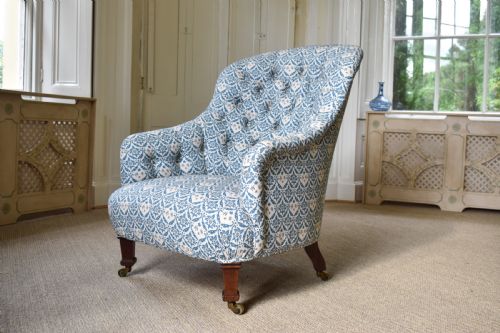
These patterned easy chairs bring together deep upholstery and patterned covers for the living room.
Patterned Easy Chairs
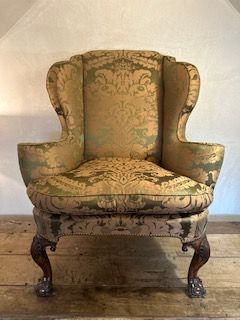
Patterned easy chairs span several centuries of seating design, appearing primarily as upholstered armchairs, club chairs and winged forms. Buyers seeking patterned easy chairs encounter pieces ranging from eighteenth-century wing armchairs to nineteenth-century country house models and twentieth-century art deco designs.
The selection on this page relies heavily on nineteenth-century and Edwardian examples, alongside pieces dressed in printed cottons, ticking, and William Morris fabric. Makers such as Howard and Sons, Whytock and Reid, James Shoolbred and Gillows dominate the traditional forms, while firms like Heals represent later styles.
How they were made
Frames rely on timber construction, utilising mahogany, walnut, oak, rosewood and general wood for structural support. Brass elements frequently appear as castors on the feet of nineteenth-century pieces.
Upholstery forms the primary visual element, combining fabric, cotton, textile and horsehair padding over sprung or webbed bases. Covers range from patterned ticking and horse racing themes to bespoke printed cottons.
One Edwardian armchair arrives upholstered in a spirited horse racing theme.
What varies in quality
The integrity of the underlying timber frame separates standard production from superior workshops. Maker stamps, particularly those found on nineteenth-century pieces, indicate workshop provenance and influence the standing of the chair.
The execution and survival of the upholstery scheme determine the character of each piece. Original textile covers and traditional stuffing methods distinguish pieces that retain their period integrity from those with modern replacements.
Whytock and Reid·Howard and Sons·Heals·James Shoolbred·Gillows
The Patterned Easy Chairs Glossary
- Wingback armchair
- An upholstered seat featuring projecting sides designed to shield the sitter from draughts. These pieces date across the eighteenth, nineteenth and twentieth centuries.
- Club armchair
- A deep, low-seated upholstered chair built for comfort. These forms are frequently associated with nineteenth-century makers.
- Ticking
- A tightly woven cotton or linen textile traditionally used to contain feather or hair stuffing. It appears on country house seating.
- Castor
- A small wheel fitted to the base of chair legs for mobility. Brass examples are common on nineteenth-century seating.
- Open armchair
- A seat design without upholstered side panels, exposing the timber arm supports. Mahogany and walnut frames often employ this format.
Patterned Easy Chairs: Frequently Asked Questions
How do I identify a Howard and Sons chair?
Look for maker stamps on the wooden frame legs and stamped brass castors. These marks confirm workshop origin.
Many pieces also retain specific model names or traditional ticking covers associated with the firm.
What periods do these armchairs cover?
The selection includes eighteenth-century pieces, nineteenth-century Victorian and Edwardian examples, and twentieth-century art deco designs.
Earlier pieces often feature walnut or mahogany frames, while later ones introduce bentwood and new upholstery.
Are these chairs suitable for daily use?
Most upholstered easy chairs are built for comfort with deep padding and sturdy timber frames. Many nineteenth-century and Edwardian examples remain practical for living spaces.
Buyers should consider whether the textile covering suits their domestic environment.
What is a country house armchair?
These comfortable upholstered seats typically date from the nineteenth century and feature loose covers or ticking. They prioritise deep cushioning and relaxed proportions over formal lines.
They pair well with traditional interiors and diverse patterned fabrics.