




Patterned Damask Seating
Patterned damask seating brings textile richness to period rooms, offering substantial comfort upholstered in traditional woven patterns.
Patterned Damask Seating
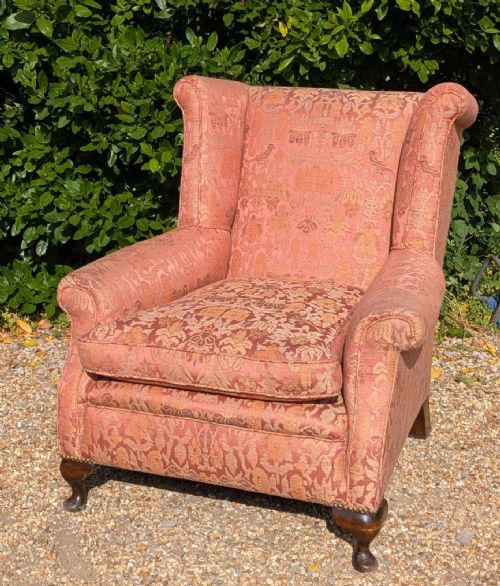
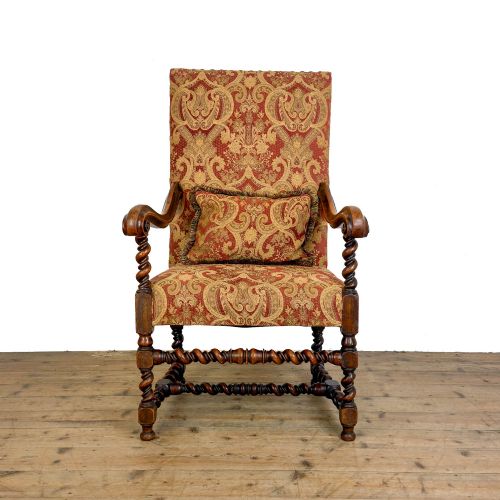
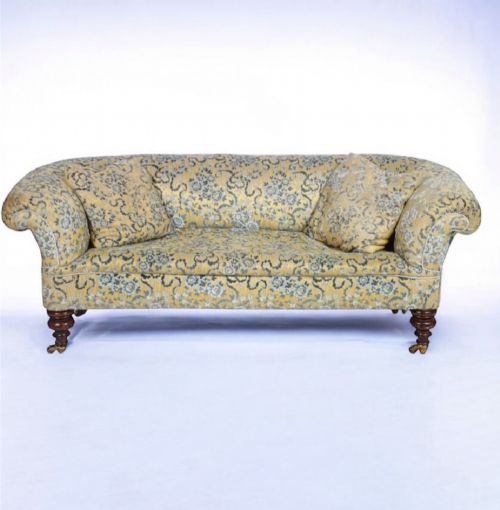
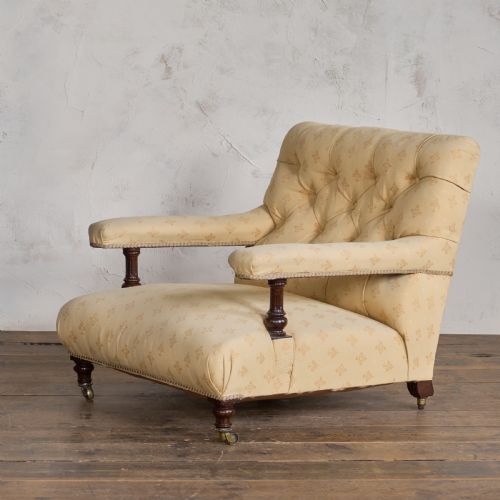
When you search for patterned damask seating, you encounter a selection of historic chairs and settees upholstered in patterned textiles. The pieces span periods from the eighteenth century through to the twentieth century.
The assortment on this page includes Victorian Chesterfield sofas, nineteenth-century armchairs, walnut slipper chairs, and Edwardian suites. Styles range across Victorian, Edwardian, Georgian, and revival designs including Carolean and Chippendale.
Armchairs and sofas dominate the selection, often constructed with feather fill or traditional stuffing. Walnut, mahogany, and hardwood form the structural frames supporting these upholstered forms.
How they were made
Makers built the structural frames of these pieces using hardwoods such as mahogany and walnut, shaping cabriole or straight legs and arm supports by hand. Joinery techniques varied according to the period, from Georgian cabinet-making methods to later nineteenth-century framing.
Upholstery involved internal padding and stuffing, frequently incorporating feather fill for seating comfort. Damask fabric was then applied over the springs and webbing, secured with careful hand-tacking along the rails.
Even eighteenth-century sitters appreciated a soft landing, proving that antique lounging was serious business.
What varies in quality
The distinction between standard and superior pieces rests on the precision of the timber frame carving and the integrity of the underlying construction. Higher-grade items exhibit refined joinery and substantial hardwood frames that maintain their stability over generations.
Upholstery execution also defines the tier of a piece, observable in the alignment of woven damask patterns and the firmness of the internal padding. Original maker attribution, such as pieces bearing specific workshop stamps, elevates the standing of a chair or sofa.
Howard and Sons
The Patterned Damask Seating Glossary
- Damask
- A reversible figured fabric with patterns formed by contrasting warp and weft threads. It provides the characteristic textured surface seen on these historic seats.
- Chesterfield
- A large upholstered sofa traditionally featuring rolled arms and deep buttoning. This form dates back to the nineteenth century.
- Gainsborough chair
- A wide, open-armed armchair with a low seat, designed in the eighteenth century for library use. Examples often feature mahogany frames.
- Feather fill
- Interior cushioning material utilising natural feathers for softness. This filling provides a yielding seat structure found in better-quality armchairs.
- Slipper chair
- A low-seated upholstered chair originally designed for bedrooms. The compact proportion makes it a distinct seating form.
Patterned Damask Seating: Frequently Asked Questions
What is a Chesterfield sofa?
A Chesterfield is a padded sofa type distinguished by low rolled arms and deep buttoned upholstery. These pieces became prominent during the nineteenth century.
They offer generous proportions and work well as central seating items in traditional drawing rooms.
How do I identify a Georgian armchair?
Georgian armchairs display the classical proportions, timber carving techniques, and structural restraint characteristic of the eighteenth century. Makers utilised sturdy mahogany and walnut for frames.
Look for design details such as cabriole legs and scroll arm terminals which indicate the period of manufacture.
What does feather fill mean?
Feather fill refers to cushion stuffing composed of natural feathers rather than synthetic alternatives. This material offers a softer and more conforming sit.
Chairs utilising this filling often date to the later nineteenth and early twentieth centuries.
Where should I place a slipper chair?
A slipper chair has a low seat height originally intended for bedroom use during the Victorian era. Their compact scale suits smaller spaces.
They function effectively as occasional seating in studies, bedrooms, or dressing rooms.