




Pattern Upholstered Bench
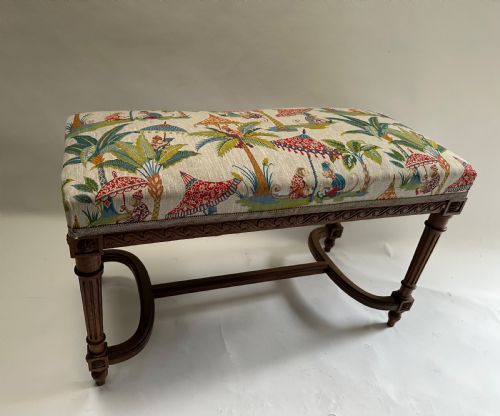
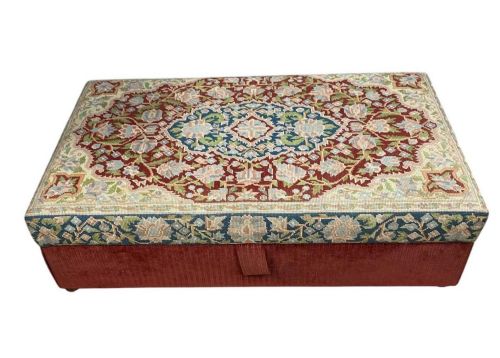
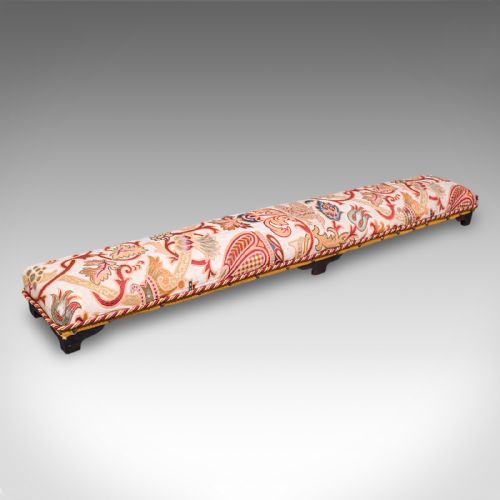
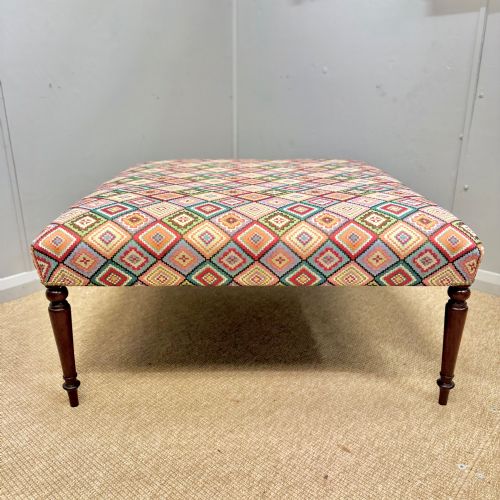
Pattern upholstered bench encompasses long carriage stools, ottomans and carved settees covered in crewelwork, kilim and geometric textiles.
Pattern Upholstered Bench
A pattern upholstered bench takes many forms across the selection, ranging from long carriage stools and fireside foot rests to large country house ottomans and walnut settees. These pieces serve multiple domestic functions as footstools, window seats and end of bed couches.
The version most likely to appear on this page is a Victorian mahogany or walnut frame paired with patterned textile upholstery. Examples stretch from the eighteenth century through the art deco period, taking in English country house, Anglo-Indian and French styles.
How they were made
Frames are constructed from hardwoods such as mahogany, oak, walnut, rosewood and giltwood, often shaped through hand carving or turning. Wood elements display structural joinery suited to the period of origin.
Upholstery relies on textiles including fabric, wool, crewelwork, kilim and specialised printed designs. Brass components sometimes accent the wooden frames or feet.
Pattern Upholstered Bench Retail Price Guide 2026
Typical asking prices for pattern upholstered bench among the pieces listed under this phrase on Sellingantiques today, from the lower quarter to the upper quarter. They describe what is for sale here now, not the wider market.
Listings feature oak, mahogany, walnut, rosewood and giltwood frames paired with wool, fabric, brass and textile upholstery.
What varies in quality
Quality rests in the execution of the timber frame, distinguishing deeply carved mahogany or giltwood and well-turned walnut structures from simpler frameworks. The integrity of the original construction dictates the physical stability of each piece.
The distinction also lies in the textile choice and application, separating standard fabric coverings from intricate crewelwork, kilim or specialised designer fabric like Vaas by Emma Grant.
The Pattern Upholstered Bench Glossary
- Crewelwork
- Embroidery executed with wool yarn on a plain-weave fabric ground. This technique often appears on fireside foot rests and carriage stools.
- Kilim
- A flatwoven textile traditionally used as a durable covering for footstools and benches. It introduces geometric motifs and rich colour to nineteenth-century frames.
- X-frame
- A furniture base formed by intersecting diagonal stretchers creating an X shape. This configuration provides sturdy support for mid-nineteenth-century stools.
- Canapé
- An upholstered sofa or settee featuring an exposed wooden frame. French examples frequently showcase carved walnut and decorative backrests.
- Ottoman
- A low upholstered seat or footstool without a back or arms. Large country house versions provide substantial surface area for seating or resting feet.
Pattern Upholstered Bench: Frequently Asked Questions
What is a pattern upholstered bench?
A pattern upholstered bench is a seating or resting piece featuring a textile covering placed over a wooden frame. These items include carriage stools, ottomans, footstools and settees.
They utilise various woods like mahogany, oak and walnut combined with fabrics such as crewelwork, wool and kilim.
How were these benches used?
These pieces served multiple domestic purposes in historic interiors, functioning as fireside foot rests, window seats and end of bed couches. Large ottomans provided flexible seating in country house rooms.
Smaller stools accommodated carriage travel or served as moveable foot supports.
How do I identify a Victorian piece?
Victorian pieces often display carved and turned mahogany or walnut frames with button-backed upholstery or heavy textile coverings. The construction reflects mid to late nineteenth-century craftsmanship.
Design influences range from standard English styles to elaborate aesthetic and revival movements.
What styles are available?
The selection includes English country house, Victorian, Jacobean Revival, Rococo Revival, Queen Anne, Art Deco and Anglo-Indian designs. French oak and walnut frames also appear alongside Italian giltwood.
Textiles span geometric prints, kilim flatweaves and embroidered wool.