
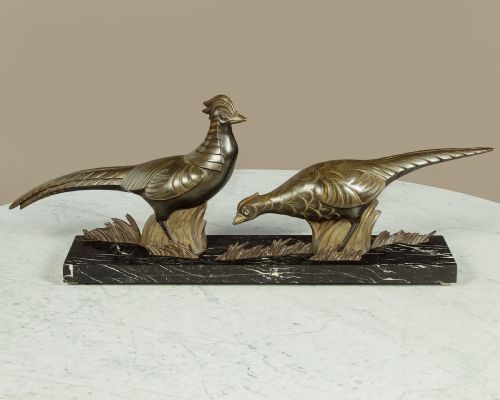
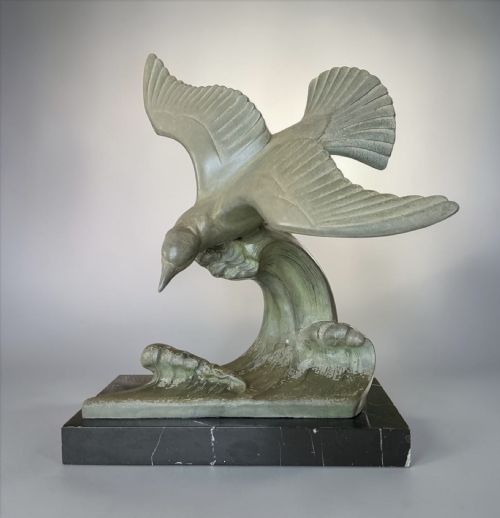


Patinated Spelter Figurine
A patinated spelter figurine offers the sculptural presence of bronze without the weight or cost, capturing domestic, animal, and figurative subjects across nineteenth-century and twentieth-century design.
Patinated Spelter Figurine
A patinated spelter figurine is a sculptural object cast in a zinc-based alloy, finished with a dark or coloured surface treatment to simulate bronze. These works span the nineteenth century into the twentieth century, appearing frequently as figures of animals, female models, and groups.
The version most commonly met on this page is the Art Deco figure from the nineteen-thirties, capturing dancers, animal groups, and human forms. Alongside these, nineteenth-century French models, Victorian pieces, and table lamps demonstrate how makers adapted the alloy for domestic display.
Art Nouveau female models and realist studies of woodsmen or hunters show the wide range of subjects executed in this medium. Each piece relies on the casting of the alloy and its subsequent patination to define the contours of clothing, hair, and muscle.
How they were made
Spelter pieces are produced by pouring molten zinc into moulds, capturing fine details in the metal before cooling. Because the alloy is softer than bronze, carvers and finishers often chased the surface by hand to sharpen lines and textures.
The finished casting receives a patinated coating, applied to give the appearance of aged bronze, gilt, or painted metal. Bases of marble or onyx frequently support these figures, anchoring the lighter metal sculpture with a dense stone foundation.
Listings feature items spanning the nineteenth century and twentieth century, with materials including spelter, bronze, marble, and onyx.
What varies in quality
The integration of the figure with its mounting alters the overall success of the piece, particularly where spelter meets marble or onyx bases. Stronger sculptures display balanced proportions and secure fixings, whereas lesser works may show clumsy joints or heavy-handed surface repairs.
Geo Maxim·H. Bal·Chiparus
The Patinated Spelter Figurine Glossary
- Spelter
- A zinc-based alloy utilised as an economical alternative to bronze for nineteenth-century and twentieth-century sculptures. It accepts patination well but remains softer than bronze.
- Patination
- The surface treatment or chemical coloration applied to metal to simulate age or create specific metallic tones. It enhances the visual depth of cast details.
- Art Deco
- A design style prominent in the nineteen-thirties characterised by streamlined forms, stylised figures, and geometric patterns. It appears frequently in figures of dancers and animals.
- Art Nouveau
- A turn-of-the-century aesthetic favouring flowing lines, organic plant motifs, and naturalistic female forms. French models from this period often employ patinated spelter.
Patinated Spelter Figurine: Frequently Asked Questions
What is patinated spelter?
Patinated spelter is a cast zinc alloy treated with a surface coating to resemble aged bronze or other metals. It served as a popular, accessible material for decorative figures and lamps.
Because the metal is relatively soft, makers could achieve intricate detail in casting, which was then enhanced by the dark or coloured finish applied to the exterior.
How do I care for my figure?
Keep spelter figures away from direct sunlight, moisture, and extreme temperature changes to protect the patinated surface. Dust them gently with a soft, dry cloth without using cleaning agents.
Avoid abrasive polishes, as these can strip away the original patination and expose the bright zinc metal underneath.
How do I distinguish spelter from bronze?
Spelter is lighter in weight than bronze and tends to feel slightly softer if scratched, though testing is rarely necessary once you know the surface feel. The metal is also magnetic in some reinforced parts or shows a greyish-white metal beneath worn areas of patination.
Bronzes generally show a warm golden-brown metal beneath losses, whereas spelter reveals a dull grey substrate.
Why are marble bases used?
Marble and onyx bases provide necessary weight and stability to balance the relatively light spelter figures mounted upon them. They also elevate the sculpture visually, functioning as an integral part of the design.
During the Art Deco period, contrasting stone plinths added a clean geometric contrast to the metallic figures above.