







Vintage Spelter Mantel Sculpture
A vintage spelter mantel sculpture brings unmistakable geometric energy and figurative drama to a room, defined here largely by French Art Deco works.
Vintage Spelter Mantel Sculpture
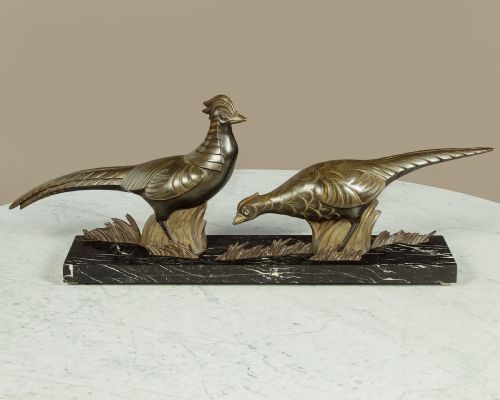
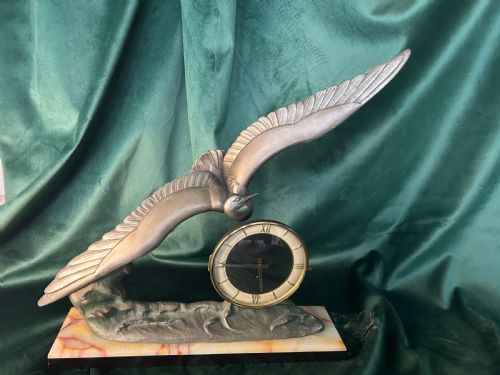
When you search for vintage spelter mantel sculpture, you encounter figural representations and decorative objects produced predominantly during the Art Deco period alongside turn of the century pieces. These works range from solitary animal studies of pheasants and seagulls to complex human groupings and figural ladies.
The objects commonly take the form of standalone mantel sculptures, clock sets, lamps, and figural groups mounted on contrasting plinths. Most examples originate from French workshops and capture the dynamic aesthetic of the early decades of the twentieth century.
How they were made
These sculptures are cast in spelter, a zinc-based alloy that served as a cost-effective alternative to bronze, and frequently finished with patinated metal surfaces to simulate heavier metals. The figures are paired with heavy stone plinths and bases formed from marble, onyx, or alabaster.
Makers utilised patination techniques to give the base metal distinct metallic or coloured tones, enhancing the garments and plumage of the subjects. The resulting metal figures were then secured directly onto the stone bases, often integrating clock movements or lamp fittings.
Golden pheasants and seagulls share mantel space with human figures.
What varies in quality
Quality also depends on the selection and matching of the mounting materials, where dense black marble or veined onyx bases exhibit finer polish and cleaner joints. The integrity of the original patination and the harmony between the metal figure and its stone base dictate the overall success of the piece.
Josef Lorenzl·P. Sega·Chiparus·Geo Maxim
The Vintage Spelter Mantel Sculpture Glossary
- Spelter
- A zinc alloy commonly used in European metalwork as a substitute for bronze. It allows for sharp casting detail while remaining lighter and softer than bronze.
- Patinated metal
- Metal treated with chemicals or heat to alter its surface colour and finish. This process creates an aged appearance or highlights the contours of a sculpture.
- Alabaster
- A fine-grained, translucent stone used for carving decorative bases and sculptural elements. Its softness permits delicate shaping.
- Art Deco
- A design style spanning the 1920s and 1930s characterised by streamlined geometric forms, stylised figures, and modern materials.
Vintage Spelter Mantel Sculpture: Frequently Asked Questions
What is spelter?
Spelter is a zinc-based white metal alloy that manufacturers cast into decorative figures and lamps during the nineteenth and twentieth centuries.
Because the metal is softer and more brittle than bronze, makers often applied patinated finishes to protect the surface and mimic richer materials.
How do I clean them?
Dust these sculptures gently with a dry, soft cloth to avoid disturbing the patinated metal surface or scratching the softer alloy.
Harsh chemical polishes or water will damage the finish, so cleaning should remain strictly superficial.
Are these French?
Many examples originate from French workshops operating during the Art Deco period and the turn of the century.
France dominated the production of decorative spelter figures and clock garnitures during these decades.
How were they mounted?
The metal figures are typically secured to heavy stone bases made from marble, onyx, or alabaster.
These dense stone plinths provide stability and contrast with the lighter patinated metal above.