

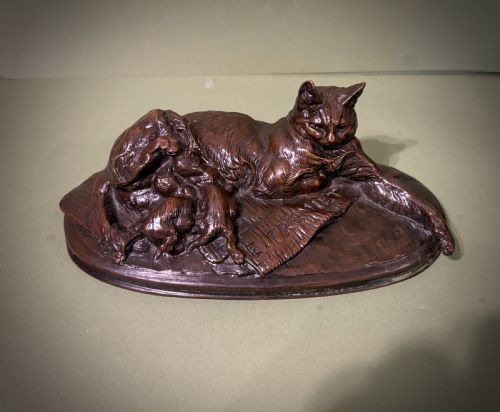
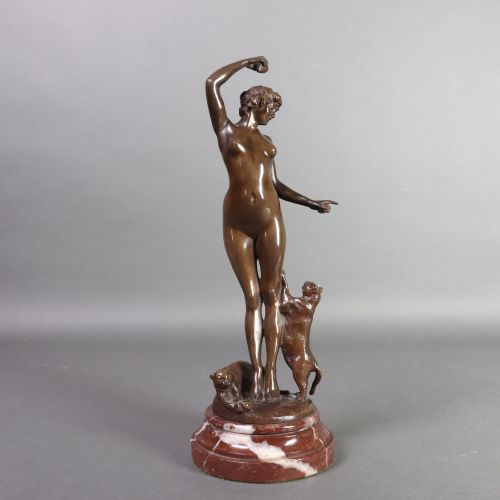
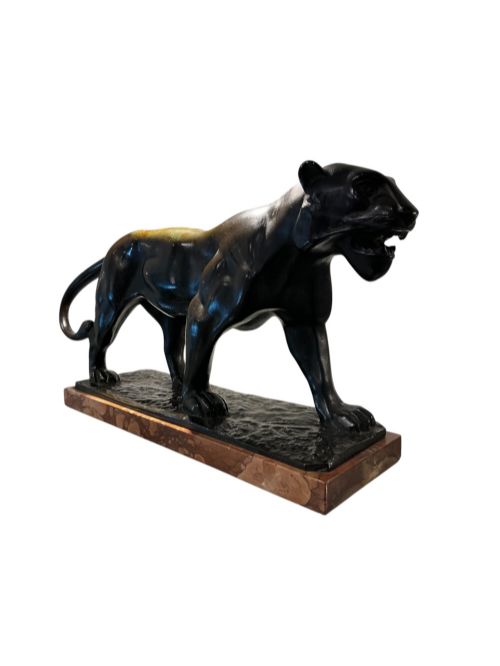


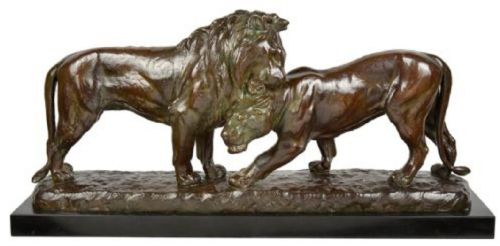

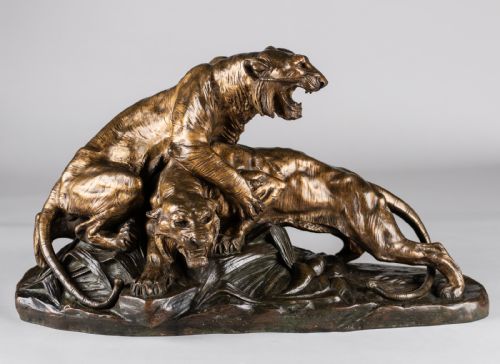
Patinated Bronze Cat Statue
A patinated bronze cat statue brings feline grace and sculptural strength into a room, capturing wild predators and domestic pets alike.
Patinated Bronze Cat Statue
When you search for a patinated bronze cat statue, you are looking at cast metal animal figures spanning the nineteenth and twentieth centuries, predominantly featuring French foundry work in styles from Animalier to Art Deco. The examples on this page encompass domestic felines alongside powerful big cats such as panthers, tigers, and lions.
The most common formats on offer include single predatory cats in prowling or drinking poses, often mounted on marble bases, as well as multi-figure compositions involving cubs or prey. Dating ranges from mid nineteenth century pieces through to Art Deco works from the nineteen thirties.
How they were made
These works are created using traditional metal casting techniques, primarily utilising bronze and occasionally spelter as an alternative alloy for figures mounted on marble plinths. The metal is poured into moulds to capture fine muscular detail and fur texture before receiving chemical surface treatments.
Makers applied patination directly to the bronze surface to achieve dark brown, green, or tonal finishes that accentuate the contours of the animal. Founders like Siot also utilised specialised casting methods to produce complex compositions involving multiple figures and integrated bases.
Patinated Bronze Cat Statue Retail Price Guide 2026
Typical asking prices for patinated bronze cat statue among the pieces listed under this phrase on Sellingantiques today, from the lower quarter to the upper quarter. They describe what is for sale here now, not the wider market.
The listings span from eighteen-eighty to nineteen-thirty, uniting nineteenth-century French Animalier bronzes with twentieth-century Art Deco interpretations.
What varies in quality
Quality in these sculptures rests upon the crispness of the cast and the sensitivity of the chasing work done after metal leaves the mould. Superior examples retain sharp musculature and facial expressions without losing definition in the fur or the surrounding base.
The depth and richness of the patination significantly influence the visual impact of the piece, alongside the quality of the marble used for mounting. Foundry marks and artist signatures further distinguish the standard of production across different periods.
Gustave Dussart·G.Gardet·Dumond·Clovis Masson·Georges Gardet·Louis Riche·E.Drouot
The Patinated Bronze Cat Statue Glossary
- Animalier
- A nineteenth-century artistic movement focused on the realistic portrayal of animals, particularly wild beasts in motion. Sculptors in this tradition studied anatomy closely at menageries.
- Patinated bronze
- Bronze metal treated with chemical solutions to produce a specific surface colour and tone. This treatment protects the metal and highlights sculptural details.
- Spelter
- A zinc-based alloy often used as a more affordable substitute for bronze, frequently given a bronze-like finish. It appears in twentieth-century decorative figures.
- Art Deco
- A design style from the nineteen twenties and thirties characterised by streamlined geometric forms and stylised depictions of animals. Panther and tiger motifs were especially popular in this period.
Patinated Bronze Cat Statue: Frequently Asked Questions
Where should I place a heavy sculpture?
Position the piece on a stable, level surface such as a wooden sideboard or a dedicated display pedestal that can comfortably support the combined weight of the bronze and marble. Ensure the furniture does not wobble or risk tipping from foot traffic.
Keep the sculpture away from direct heat sources like radiators and out of prolonged direct sunlight to protect both the metal patina and any stone base.
How can I tell a bronze from spelter?
Bronze is a heavier, denser metal that feels cool to the touch and rings with a distinct tone when lightly tapped, whereas spelter is softer and more brittle. Examining the underside or unpainted areas often reveals a different base metal colour beneath the surface finish.
Spelter figures may also show signs of fatigue or stress cracks around mounting bolts due to the softer nature of the alloy.
What does an Animalier sculpture mean?
An Animalier sculpture depicts animals with a strong emphasis on anatomical accuracy and natural behaviour, often capturing predators in tense moments of action. This genre gained immense popularity in nineteenth-century France through specialised bronze founders.
These pieces reflect contemporary scientific interest in zoology and the romantic fascination with untamed wildlife.