




Bronze Cat Figurine
A bronze cat figurine captures the fierce grace of felines in cast metal, bringing movement and character to any desk or shelf.
Bronze Cat Figurine
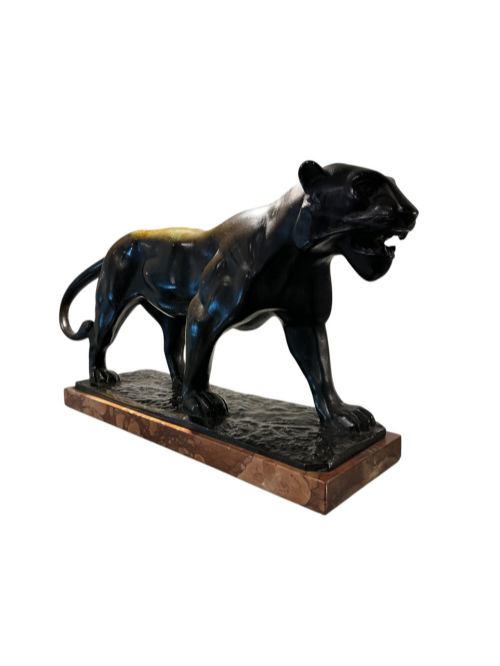
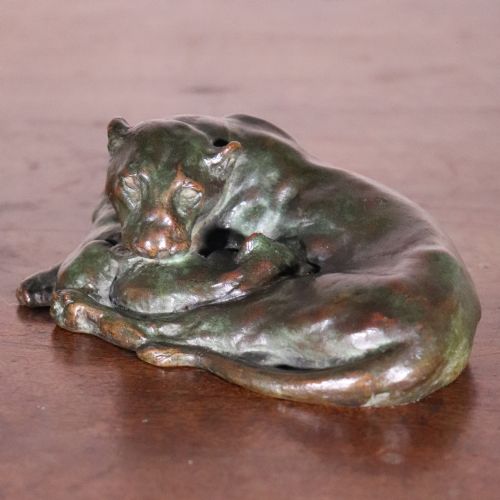
A bronze cat figurine is a cast metal sculpture representing domestic felines, panthers, lions, tigers, and leopards across various historic periods. These pieces range from small desk ornaments to substantial sculptures, often mounted on stone bases.
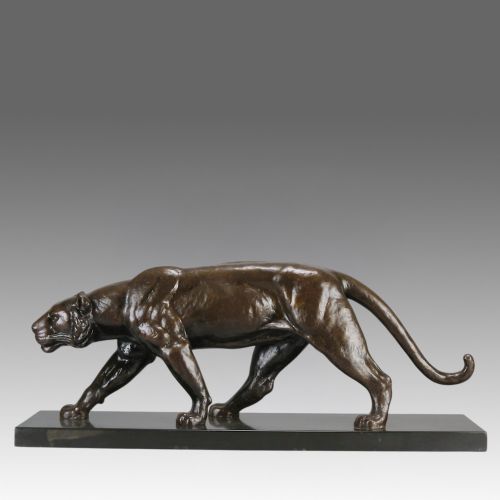
Most examples found here date from the nineteenth and twentieth centuries, incorporating styles such as Art Deco, Animalier, and the Austrian school. The selection includes individual animals as well as pairs, hunting scenes, and domestic groupings.
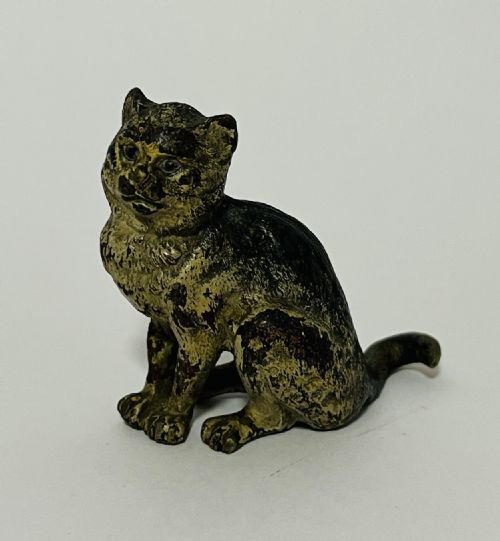
French makers dominate the nineteenth-century material, whilst Austrian workshops specialise in polychrome painted surfaces. Art Deco interpretations from the early twentieth century lean heavily towards sleek, stylized big cats.
How they were made
Foundries utilised the traditional lost-wax technique or sand casting to create these figures from copper alloys. Molten metal poured into moulds produced detailed fur and muscle definition before finishing work began.
Surfaces received various treatments including chemical patination to darken the bronze, silvering, or detailed cold painting by hand. Many figures were permanently mounted onto marble or slate bases after casting.
Cats share shelf space here with panthers and tigers, proving that even domestic figurines occasionally harbour wild ambitions.
What varies in quality
The sophistication of the surface finish dictates overall merit, whether through subtle patination or expertly preserved cold-painted polychromy. Original mounting and the quality of the supporting marble base also contribute significantly to desirability.
Alexandre Ouline·Franz Bergman·G. Gardet·Vannetti·Anna Vaughn Hyatt Huntington·Clovis Masson·Michel Decoux·Georges Gardet·Louis Riche·Barye·Barbedienne·E. Drouot
The Bronze Cat Figurine Glossary
- Animalier
- A nineteenth-century artistic movement focused on the realistic portrayal of animals. Sculptors in this tradition studied anatomy closely at menageries.
- Cold-painted bronze
- A method where polychrome paint is applied to a bronze object without subsequent kiln firing. This fragile technique is particularly associated with Austrian workshops.
- Lost-wax casting
- A process where a wax model is melted from a clay mould to leave a cavity for molten metal. It allows for intricate undercuts and fine surface detail.
- Spelter
- A zinc alloy commonly used as a cheaper alternative to bronze during the nineteenth and twentieth centuries. It is lighter and softer than copper alloys.
- Patination
- The chemical coloration applied to the surface of bronze to simulate natural ageing. These finishes range from deep black to warm brown and green.
Bronze Cat Figurine: Frequently Asked Questions
How do I clean a bronze cat?
Dust gently with a soft brush and avoid all chemical cleaning products that might strip the historic patination.
Waxing is rarely necessary unless the metal is completely dry, and even then, use a specialised microcrystalline wax very sparingly.
What is cold-painted bronze?
Cold-painting refers to pigment applied directly to cured metal without heat baking, a method perfected by Viennese workshops.
Because the paint sits on the surface rather than fusing with the metal, these pieces require careful handling to prevent flaking.
Are spelter and bronze the same?
Spelter is a zinc-based alloy whilst bronze is primarily copper and tin, though both were cast into animal figures. Spelter is lighter, softer, and typically displays a painted or plated finish rather than a chemical patina.
How do I spot Art Deco style?
Art Deco feline figures emphasise streamlined geometries, sleek surfaces, and dramatic stretching postures that reflect 1920s design aesthetics.
These pieces are frequently mounted on thick black or multi-coloured marble bases.