


Patinated Bronze Candlesticks
Patinated bronze candlesticks bring heavy neoclassical gravitas and dark metallic warmth to a mantelpiece, prized for their sculptural weight and contrast against gleaming ormolu highlights.
Patinated Bronze Candlesticks
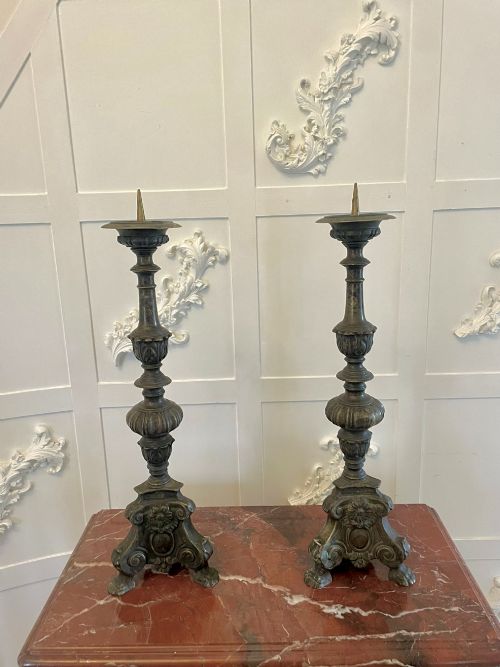
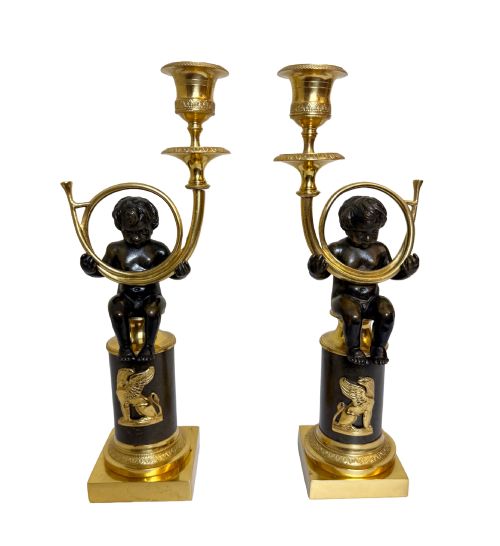
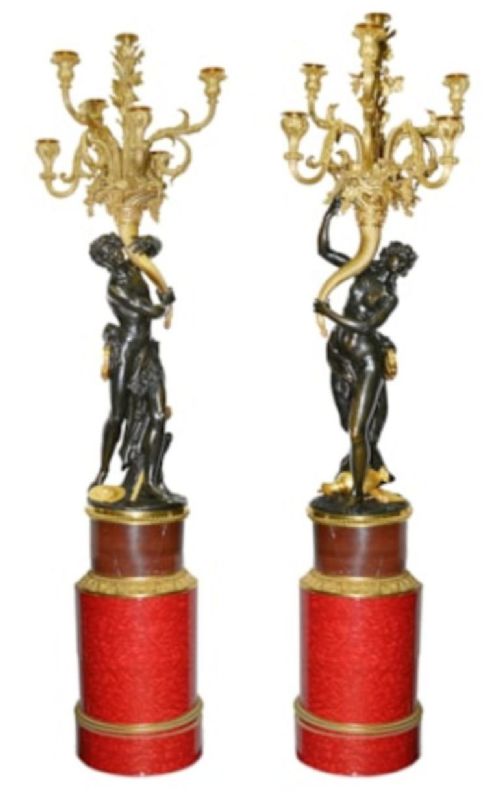
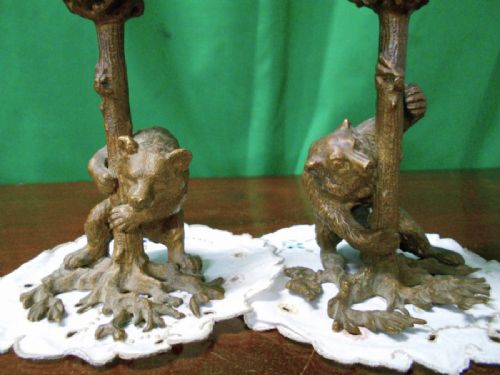
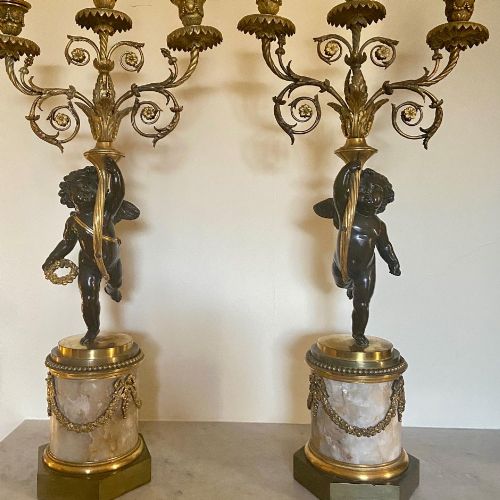
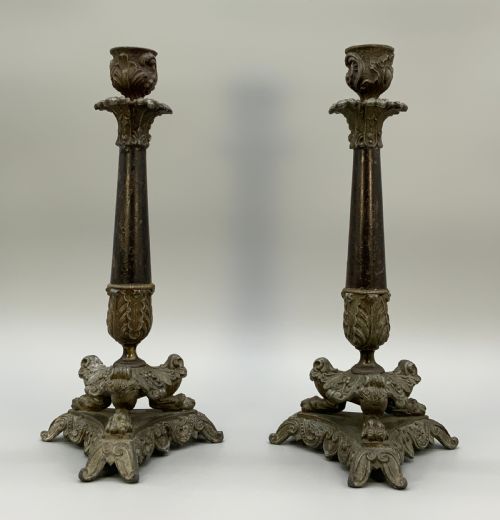
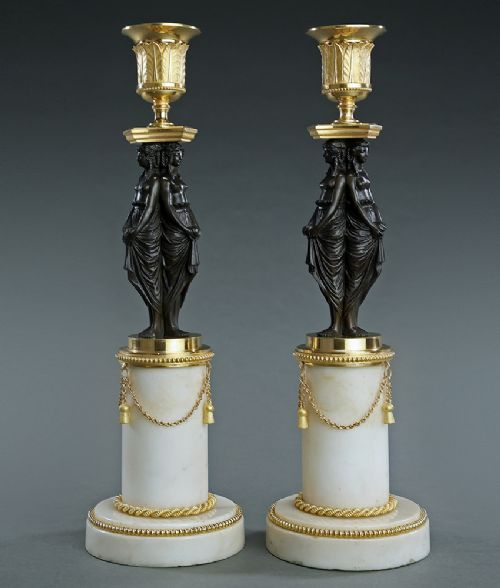
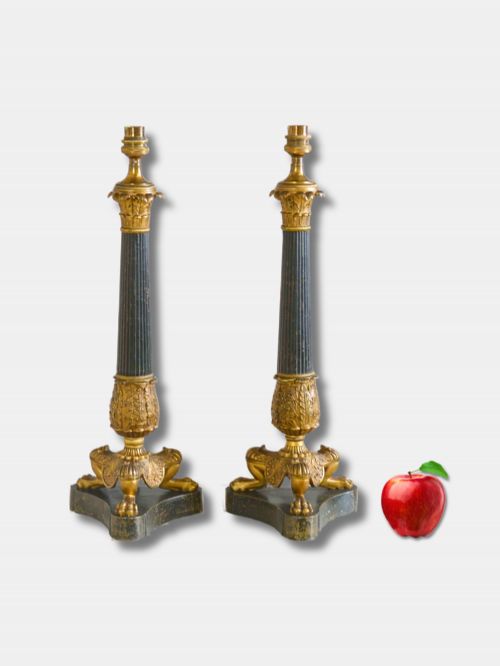
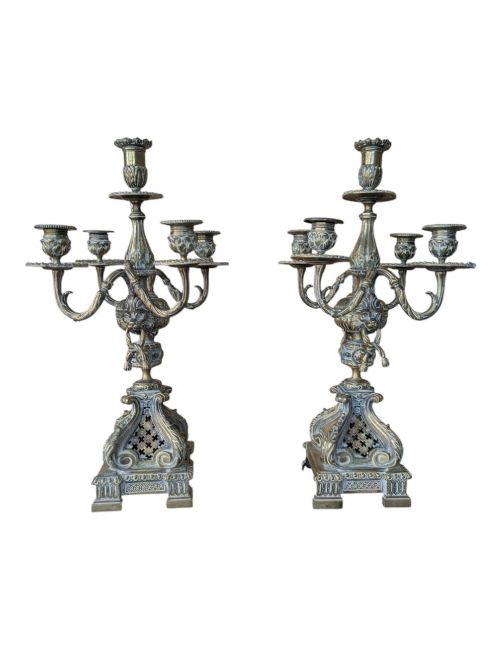
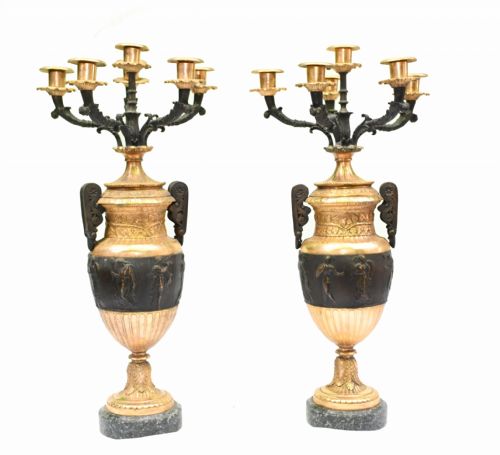
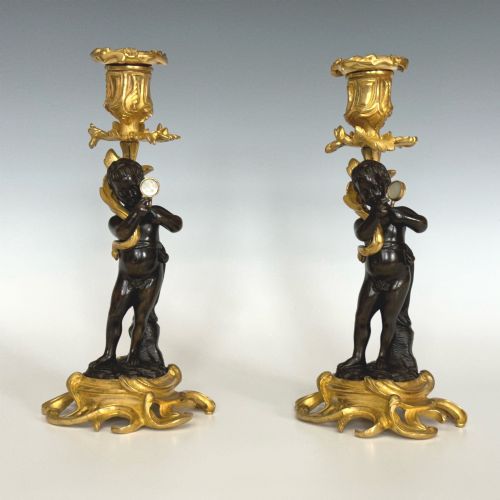
Patinated bronze candlesticks are sculptural lighting supports cast from copper alloys, frequently encountered as pairs originating from nineteenth-century French and English workshops. These pieces range from simple classical columns and reeded shafts to elaborate figural compositions depicting putti, caryatids, and mythological figures.
The selection here heavily favours continental output from the Regency, Empire, and Victorian periods, often combining dark patinated metal with contrasting gilt bronze or ormolu mounts. Alongside standard single-light sticks, buyers will frequently find multi-branch candelabra and converted table lights utilising marble, onyx, or slate bases.
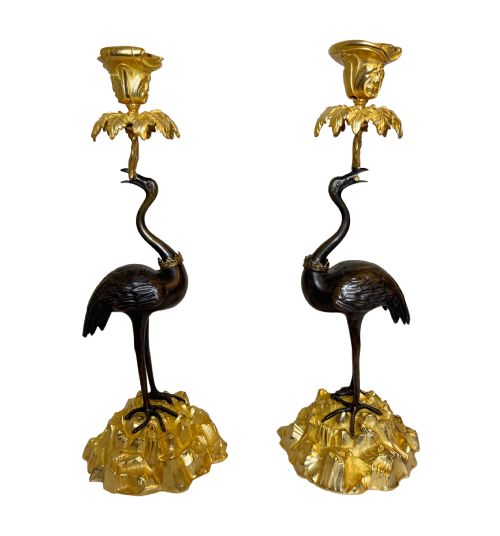
Makers drew on diverse decorative vocabularies spanning French Rococo Revival, Louis XVI style, Egyptian Revival, and even Japanese motifs. Forms extend beyond traditional domestic lighting to incorporate specialised pieces such as inkstands and garniture sets.
How They Were Made
Foundries produced these items using traditional lost-wax or sand-casting methods, yielding thick-walled metal components that were subsequently filed and chased by hand to sharpen surface detail. Cast bronze elements were then treated with chemical solutions to achieve the characteristic dark patination, creating a stable oxide layer over the metal.
Gilding was applied via mercury amalgamation or fire-gilding techniques to produce the bright ormolu sections that contrast with the dark patinated surfaces. Stonework elements such as marble, fluorspar, and onyx were turned on lathes and incorporated into bases and columns to add structural weight and colour variation.
Patinated Bronze Candlesticks Retail Price Guide 2026
Typical asking prices for patinated bronze candlesticks among the pieces listed under this phrase on Sellingantiques today, from the lower quarter to the upper quarter. They describe what is for sale here now, not the wider market.
Listings span the nineteenth century predominantly, featuring Regency, French Empire, and Victorian aesthetics alongside materials including marble, onyx, ormolu, and brass.
What Varies in Quality
Material combination and structural integrity also divide the range, with better items utilising heavy mounted marble or slate plinths paired with substantial fire-gilded ormolu rather than lightweight brass alloys or painted spelter. The harmony of the proportions and the weight of the bronze determine whether a pair maintains its presence on a large table or mantel.
The Patinated Bronze Candlesticks Glossary
- Patinated bronze
- Bronze that has been chemically treated to darken the surface metal into deep browns, blacks, or greens. This dark skin protects the underlying metal and provides a quiet background for gilt highlights.
- Ormolu
- Finely ground high-carat gold amalgamated with mercury and applied to bronze through intense heat. The mercury burns away, leaving a durable, brilliant golden skin on the mount.
- Candelabra
- A branched candlestick holding multiple candles from a single central stem. These multi-light fixtures often feature removable arms to convert into single sticks.
- Pricket candlestick
- A candlestick featuring a sharp central spike designed to impale the base of a candle rather than a socket that grips the sides. This medieval form reappears in nineteenth-century revival pieces.
- Garniture set
- A matched grouping of three or more decorative objects, typically comprising a central clock flanked by matching candlesticks or candelabra for a mantelpiece.
Patinated Bronze Candlesticks: Frequently Asked Questions
Can these antique candlesticks be wired for electricity?
Many examples on the market have been professionally converted into table lamps over the decades to suit modern lighting needs. Such conversions often utilise the central column channel without drilling destructive new holes through the main bronze casting.
Buyers preferring traditional candle use can frequently find unconverted pairs that retain their original drip pans and sockets. Inspecting the base reveals whether any alterations were made to accommodate modern electrical fittings.
How do I distinguish bronze from spelter?
Bronze is a heavy copper and tin alloy that rings with a clear, resonant tone when tapped gently and resists magnetic pull entirely. Spelter, a cheap zinc-based alloy commonly used in Victorian figural casting, feels lighter and often shows grey metal beneath worn paint or plating.
Close inspection of the underside or mounting points usually exposes the distinct weight and hardness differences between the two materials. Bronze accepts sharper hand-chasing detail, whereas spelter tends to show softer, more rounded contours.
What does French Empire style look like?
French Empire pieces draw heavily from classical Roman, Greek, and Egyptian motifs popularized during the Napoleonic era. Expect to see strict symmetrical columns, sphinxes, caryatids, and laurel wreaths rendered in dark patinated bronze contrasted against bright ormolu.
These designs project monumental stability and architectural authority, standing in stark contrast to the earlier playful curves of Rococo revival work. The silhouette relies on clean geometric lines and military-inspired iconography.