


Pastoral Scene Watercolour Painting
A pastoral scene watercolour painting captures rural life and agricultural landscapes on paper using water-based pigments.
Pastoral Scene Watercolour Painting
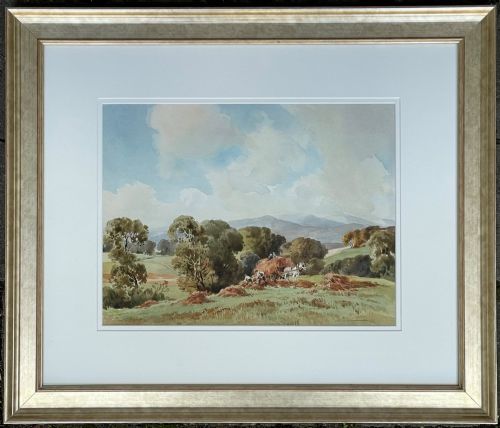
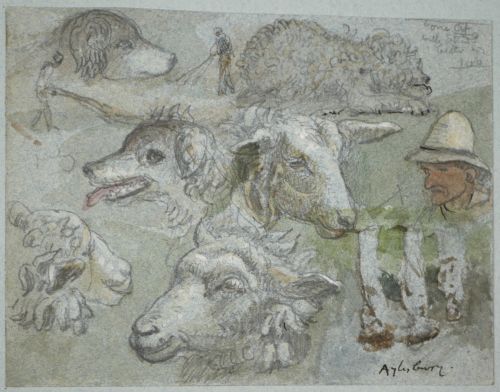
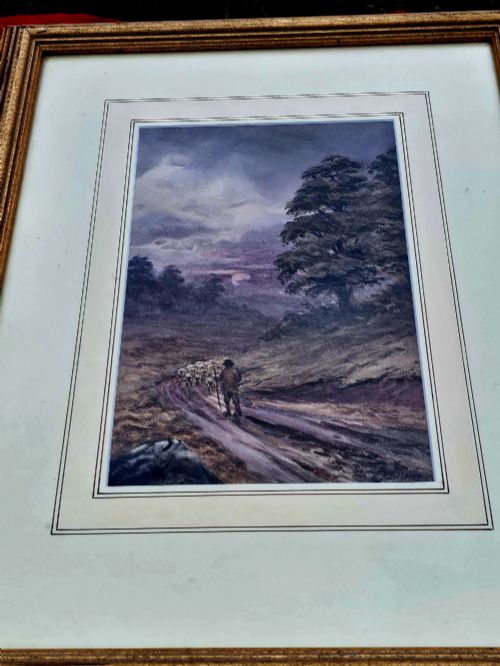
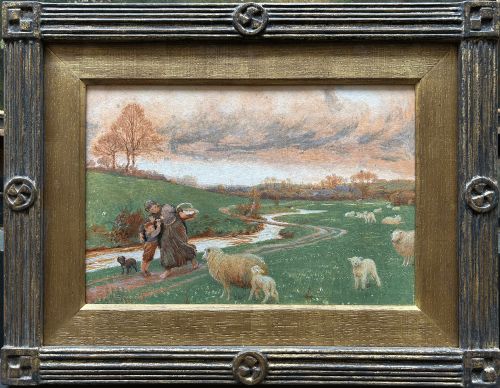
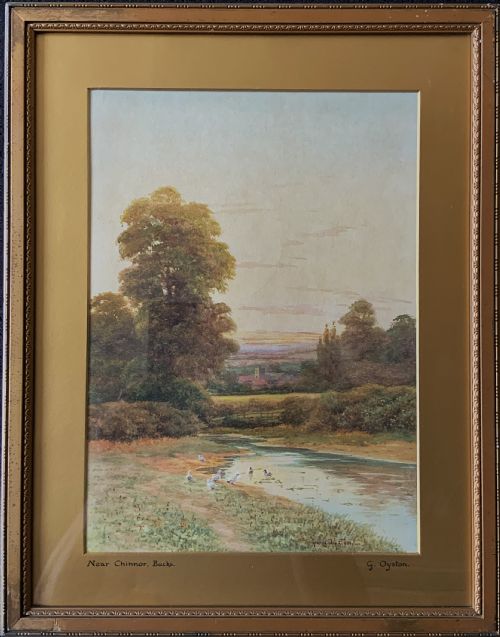
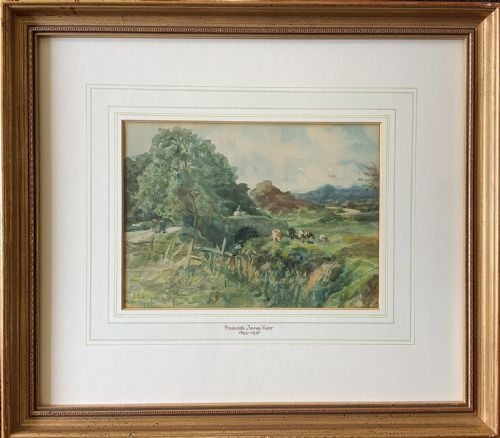
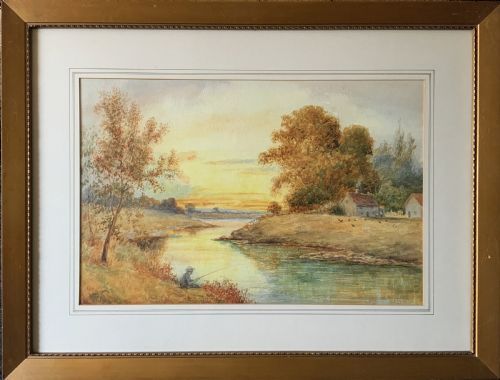
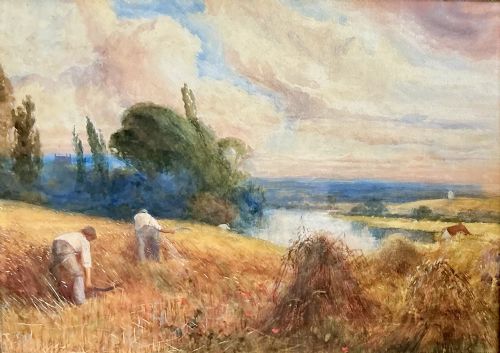
A pastoral scene watercolour painting depicts traditional country life, agricultural labour, and river landscapes across British regions. These works typically feature subjects such as shepherds with flocks, harvest gatherings, cattle watering by rivers, and thatched cottages in rural settings.
The selections span from the late nineteenth century through to the Edwardian period and the early decades of the twentieth century. Common formats include framed artwork presented behind glass, often retaining original wooden or gilt frames from the period of creation.
Makers and artists documented in these pieces range from professional Royal Academy exhibitors to regional painters working during the Victorian and Edwardian eras. Buyers encounter varied compositional styles, from detailed traditional British depictions to impressionist watercolours.
Pigment and Paper
Artists applied watercolour pigment suspended in water directly onto paper sheets or boards to build transparent washes and opaque bodycolour highlights. This technique allowed painters to capture shifting light across fields, rivers, and skies.
Finished works received protection behind glass within wooden frames, occasionally embellished with gold leaf or burr wood mouldings. Original framing materials frequently survive alongside the paper paintings.
The selection includes works executed on paper using watercolour pigment, housed in wood and gilt frames dating from the Victorian era to the 1940s.
Composition and Execution
Quality rests upon the artist's handling of light, atmospheric depth, and tonal gradation within the landscape. Superior examples demonstrate confident brushwork in complex figure and animal groupings, such as cattle, horses, and farm workers.
The preservation of the paper and the vibrancy of the original watercolour pigments determine the visual impact of the work. Retaining an original period frame also contributes to the integrity of the piece.
Percy Lancaster·James Smetham·George Oyston·Frederick James Kerr·Frederick Hines·Henry John Kinnaird·James William Booth·Ernest Pile Bucknall·Robert Thorne Waite·John Atkinson·Helena Maguire·Alfred Grey·George Soper·Edmund George Warren·William Stephen Coleman·Harry Sylvester Stannard·Henry Charles Fox·Will Anderson·Robert Hollands Walker·Basil Bradley·Augustus Jules Bouvier·Thomas James Lloyd·Joseph Kirkpatrick·Henry Sykes·John R K Duff
The Pastoral Scene Watercolour Painting Glossary
- Watercolour
- A painting method where natural pigments are ground in a water-soluble binder and applied to paper. The technique relies on the white of the paper showing through translucent washes of colour.
- Bodycolour
- Watercolour paint mixed with a white pigment to make it opaque. Artists used this method to add highlights and solid details to landscape scenes.
- Gilt
- A thin layer of gold applied to wood framing. This finish provides a reflective border around the painted paper.
- Burr frame
- A wooden picture frame constructed from burr wood veneers, showing swirling grain patterns. These frames often encase early twentieth-century rural watercolours.
- Pastoral
- Pertaining to the countryside, farming, and rural life. Such subjects formed the primary focus for traditional British landscape artists of the nineteenth and early twentieth centuries.
Pastoral Scene Watercolour Painting: Frequently Asked Questions
What subjects appear in these watercolours?
These works depict rural British countryside scenes, including farm laborers, shepherds with flocks of sheep, and cattle near rivers. Cottages, harvest fields, and village waterways also recur frequently across the compositions.
Artists recorded agricultural tasks and pastoral gatherings in various regional settings throughout Britain during the nineteenth and early twentieth centuries.
How should I display a watercolour painting?
Watercolours require placement away from direct sunlight to prevent the pigments from fading over time. Maintaining stable indoor humidity levels protects both the paper support and the surrounding wooden frame.
Displaying these pieces behind glass shields the delicate painted surface from dust, airborne pollutants, and physical contact.
How do I identify the period of a painting?
Dating relies on stylistic markers, framing materials, and documentation associated with the artist's working dates. Victorian works often display different framing conventions and palette choices compared to Edwardian or 1930s examples.
Signatures, dates inscribed on the paper, and exhibition labels on the reverse provide further evidence of the creation period.
Are these paintings original works?
The inventory consists of hand-painted original watercolours executed directly onto paper by individual artists. Each piece represents a unique composition rather than a mechanical reproduction or print.
Artists signed many of these works individually, while others retain period attribution details and gallery or exhibition records.