







Thatched Cottage Wall Artwork
These thatched cottage wall artwork pieces capture rural pastoral life in watercolours and oils across several centuries.
Thatched Cottage Wall Artwork
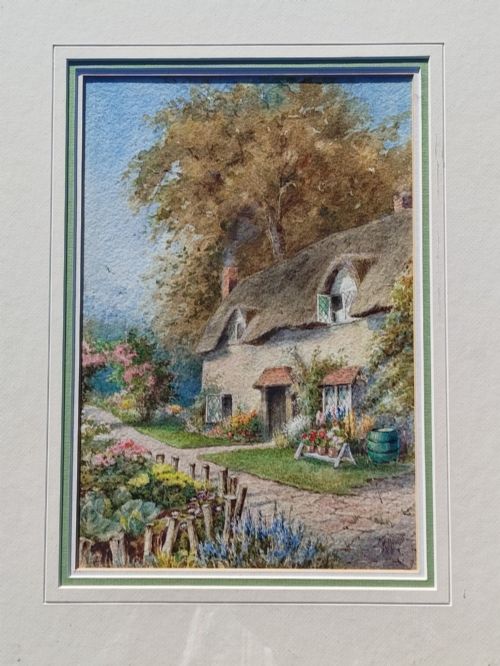
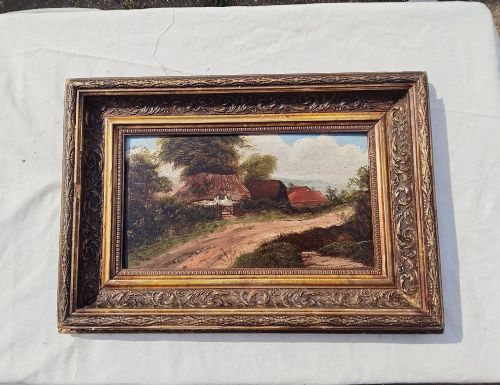
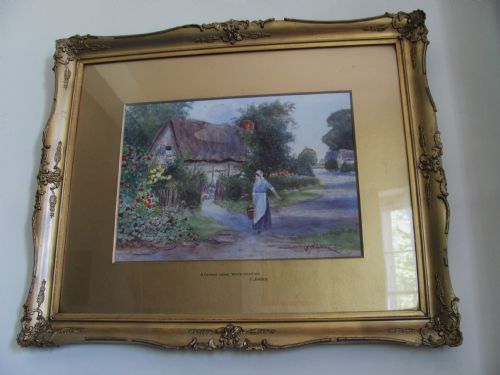
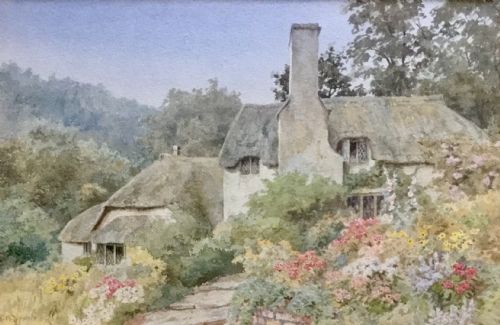
When you search for thatched cottage wall artwork, you encounter framed paintings depicting traditional rural buildings in various English and Scottish settings. The selection on this page relies heavily on 19th-century and early 20th-century watercolours alongside mid-century oil paintings on canvas or card.
Most examples lean towards English Pastoral Realism, Edwardian pastoral scenes, and Victorian landscape traditions. These works frequently incorporate gardens, streams, and figures near the cottage door, reflecting a romanticised view of the countryside.
You will find formats ranging from small Scottish oil paintings to expansive watercolours signed by known regional artists. The overall focus remains firmly on historic domestic architecture integrated into rural landscapes.
How they were made
The physical objects utilise traditional painting media such as oil paint and watercolour applied to paper, card, or canvas supports. Watercolours often employ delicate washes to capture atmospheric light, whilst oil works build richer textures across the surface.
Framing materials commonly involve gilt wood and standard timber mouldings designed to protect the paper or canvas beneath glass. These frames range from period-appropriate ornate gilding to simpler wooden surrounds added later.
Thatched Cottage Wall Artwork Retail Price Guide 2026
Typical asking prices for thatched cottage wall artwork among the pieces listed under this phrase on Sellingantiques today, from the lower quarter to the upper quarter. They describe what is for sale here now, not the wider market.
Materials documented in these listings include watercolour, oil paint, canvas, paper, glass, and gilt wood across multiple historical periods.
What varies in quality
The distinction between ordinary and superior pieces rests on the artist's handling of light, shadow, and architectural perspective within the rustic scene. Stronger works demonstrate confident brushwork and a balanced composition that brings depth to the landscape.
Material preservation significantly shapes the overall merit of each piece, particularly regarding the vibrancy of watercolour pigments and the stability of oil paint on canvas or card. Well-preserved framing and clean paper supports elevate the visual impact of the artwork.
Harry Sylvester Stannard·Thomas Nicholson Tyndale·Theresa Sylvester Stannard·Joseph Hughes Clayton·Arthur Claude Strachan·Thomas Rowlandson·Joseph Paul
The Thatched Cottage Wall Artwork Glossary
- Watercolour Painting
- A work executed with water-soluble pigments on paper. This medium allows for translucent washes that define delicate skies and rustic thatched roofs.
- Oil on Canvas
- A traditional painting method utilising pigments suspended in a drying oil applied to stretched fabric. It provides rich colour saturation and varied surface texture.
- English Pastoral Realism
- An artistic style focusing on rural scenes and country life. It depicts agricultural landscapes and traditional cottages with careful attention to naturalistic detail.
- Gilt Wood
- Timber framing finished with a thin layer of gold leaf or metallic gilt. This finish adds decorative brilliance around the perimeter of the artwork.
- Scottish Impressionism
- A regional painting approach characterised by loose brushwork and vibrant light effects. It captures northern landscapes and rustic settings with expressive freedom.
Thatched Cottage Wall Artwork: Frequently Asked Questions
What periods do these cottage paintings span?
The available selection covers works from the Georgian era through the Victorian period and into the mid-twentieth century.
Earlier pieces often reflect traditional English school techniques, whilst later twentieth-century examples embrace modernist oil painting styles.
Are these artworks framed?
Most pieces arrive within protective surrounds, frequently featuring gilt wood or standard timber mouldings.
These frames range from original Victorian designs to simpler contemporary presentations chosen to safeguard the canvas or paper.
What is the difference between watercolour and oil pieces?
Watercolour works utilise paper or card supports to achieve light, translucent washes typical of nineteenth-century landscape traditions.
Oil paintings employ canvas or board, allowing for thicker impasto application and deeper colour saturation.
Where do these pastoral scenes originate?
The depictions draw heavily on English and Scottish countryside locations, including Somerset, Devon, and Surrey.
Artists frequently recorded specific regional architecture, such as West Country thatched dwellings and rural gardens.