



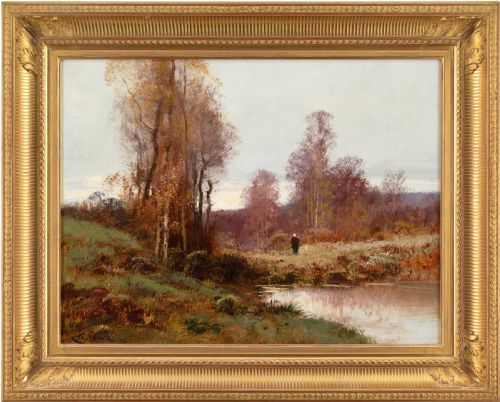


Pastoral River Painting
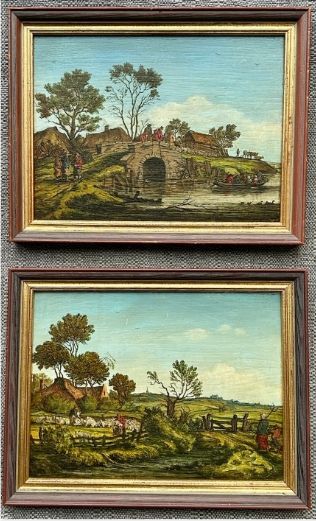
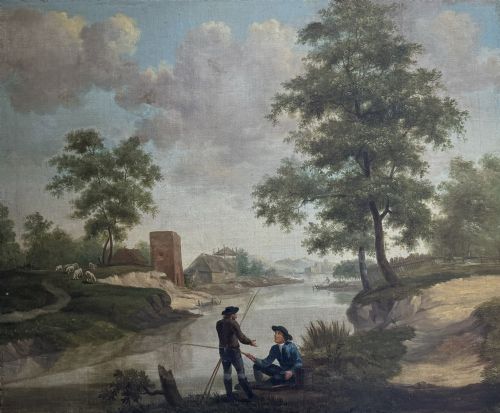
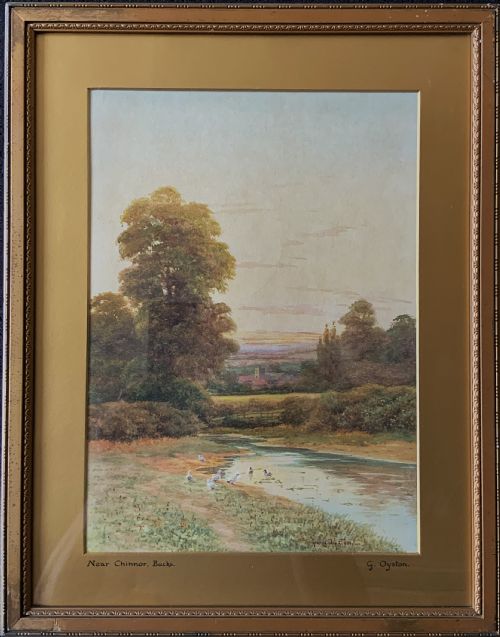
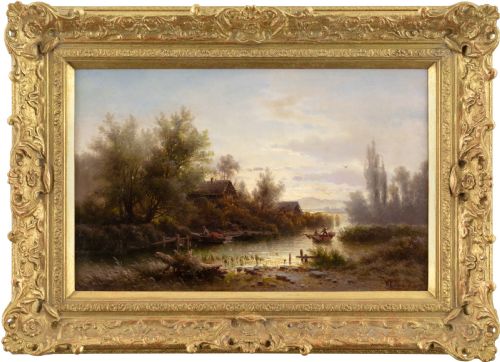
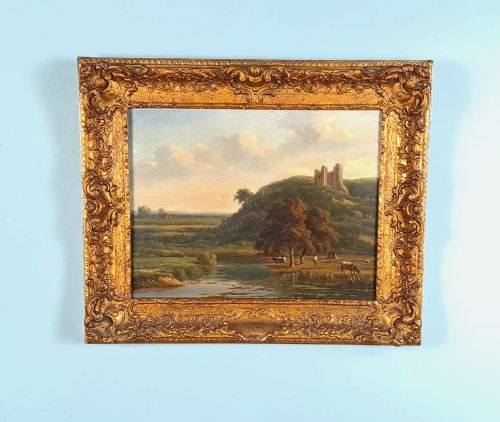
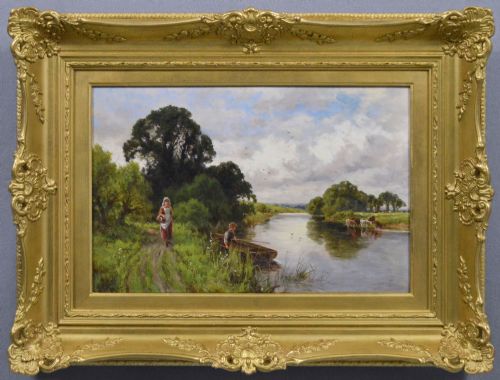
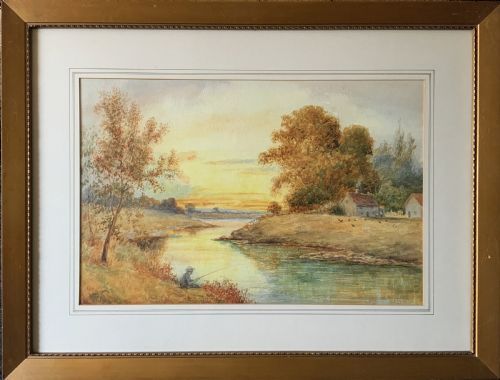
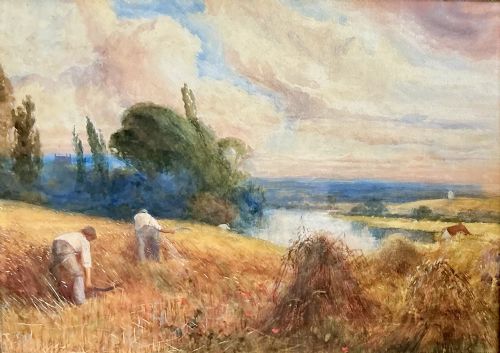
When you search for a pastoral river painting, you are looking at nineteenth- and early-twentieth-century watercolours and oils depicting British and European waterways, cottages, and cattle.
Pastoral River Painting
A pastoral river painting depicts rural watercourses, riverbanks, and estuaries, frequently populated by figures fishing, harvesting, or driving cattle. The examples found here span the Victorian and Edwardian eras, encompassing works by provincial British artists, the British School, and continental European painters.
These works range from intimate watercolour studies on paper to substantial oil paintings on canvas and wood panels. Common subjects include identifiable locations along the Thames, Severn, and Welsh rivers, captured during the nineteenth and early twentieth centuries.
How they were made
Artists of this period utilised oil paint on stretched canvas, wood panels, and occasionally milk glass, building up rich textures with brushes and sometimes gesso underlayers. Alternatively, watercolours were painted on paper, employing washes and fine line work to capture atmospheric effects like morning mist or evening dusk.
Many of these paintings survive in their original giltwood or carved frames, which were designed to complement the palette and style of the artwork.
Several canvases capture cows pausing mid-river, proving that nineteenth-century livestock were equally fond of a paddle on a warm afternoon.
What varies in quality
Quality in these pastoral scenes rests upon the artist's handling of light, atmosphere, and naturalistic detail in the water and foliage. Signed works by documented nineteenth-century painters command greater attention than anonymous examples from the British School.
The sophistication of the composition, particularly the integration of human figures or livestock into the river landscape, distinguishes a standard decorative painting from a finely observed artistic study.
George Graham·W Klombeck·George Oyston·Albert Rieger·T C Hofland·Henry H Parker·Frederick Hines·John Horace Hooper·Charles Clair·Cornelius Pearson·Thomas Baker of Leamington·Henry John Kinnaird·Alfred Augustus Glendening Jnr·William Sydney Cooper·George Vicat Cole·Robert John Hammond·Sidney Richard Percy·Robert Thorne Waite·Walter J Watson·James Gunson Atkinson·Alfred Grey·Benjamin Williams Leader·Peter Deakin·Harold Lawes·Maud Raphael Jones
The Pastoral River Painting Glossary
- Oil on Canvas
- A painting medium where pigments bound in drying oil are applied to woven fabric stretched across a wooden frame. This was the preferred method for many nineteenth-century landscape artists seeking durability and depth of colour.
- Watercolour Painting
- An artwork created using water-soluble pigments on paper. These pieces often rely on the white of the paper to provide luminosity and highlights.
- Giltwood
- Wood that has been coated with a thin layer of gold leaf or gilt powder, commonly found on nineteenth-century picture frames. It adds a warm, reflective border to the artwork.
- British School
- A term used to classify artists trained or working within Britain whose specific identities are undocumented or grouped by regional tradition. It denotes origin rather than a formal academy.
- Gesso
- A plaster-like mixture used as a base coat on wood panels or frame mouldings before gilding or painting. It provides a smooth surface for the artist or gilder.
Pastoral River Painting: Frequently Asked Questions
Where were these river scenes painted?
The paintings depict various waterways across Britain and Europe, including specific locations along the Thames, Severn, and Welsh river valleys. Artists frequently recorded rural life near recognizable towns, bridges, and agricultural estates.
Many works document local landscapes from the nineteenth and early twentieth centuries, offering a record of rural topography before modern development.
Are these paintings signed by the artists?
Many works bear the signature or monogram of the artist, while others include inscriptions on the stretcher bars or reverse detailing the title and location. Signed pieces frequently connect to documented nineteenth-century painters.
Unsigned works are often attributed to regional British or European schools based on style, technique, and period characteristics.
How should I frame and display an antique painting?
These works are often housed in their original giltwood or carved frames, which complement the period aesthetic. Displaying them away from direct sunlight and damp environments helps preserve the canvas, paper, and gilt finishes.
Wall placement should account for the weight of the frame, particularly for large oil paintings on canvas or wood panels.
What is the difference between oil and watercolour river paintings?
Oil paintings utilise pigments bound in oil on canvas, wood, or glass, allowing for thick impasto and deep, layered colours. Watercolours employ water-soluble pigments on paper, creating lighter, translucent atmospheric effects.
Both mediums were widely used during the Victorian and Edwardian periods to capture pastoral scenes, but they require different conservation considerations.