





Pastoral River Oil Painting
A pastoral river oil painting brings the quiet charm of nineteenth-century waterways and willow-lined banks directly into a room.
Pastoral River Oil Painting
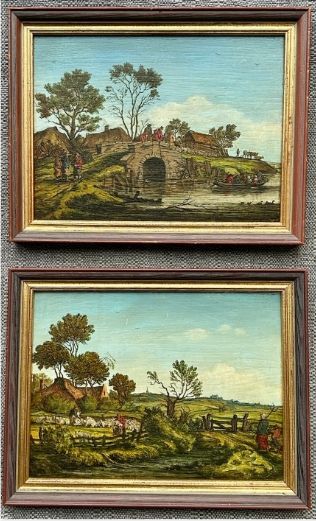
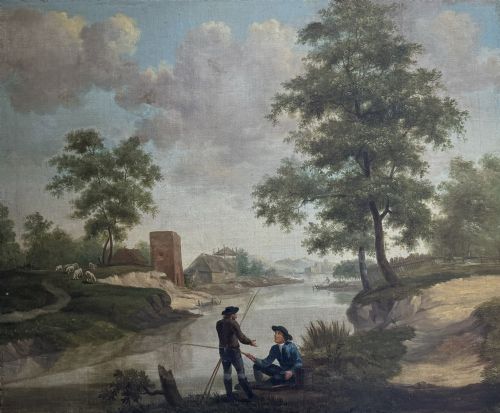
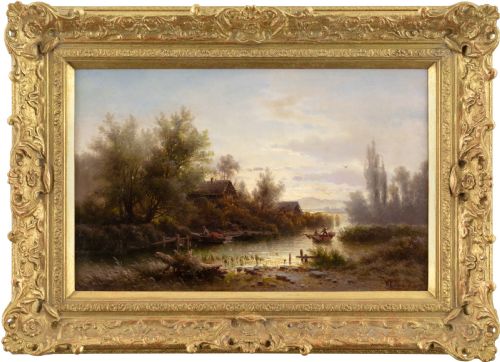
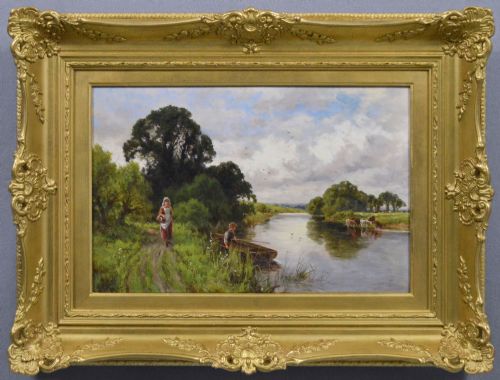
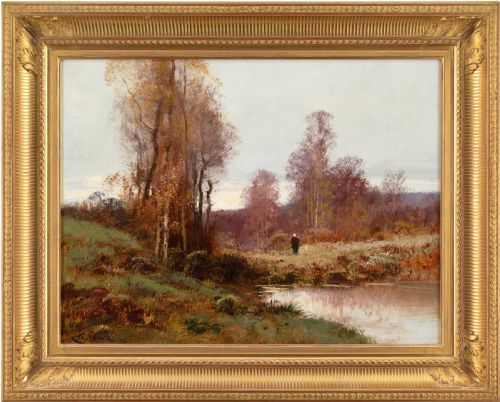
A pastoral river oil painting depicts tranquil rural waterways, featuring figures, livestock, and country cottages set along gentle riverbanks. These works capture the nineteenth-century fascination with untouched countryside and agrarian life, moving from early Victorian interpretations to later Impressionist treatments.
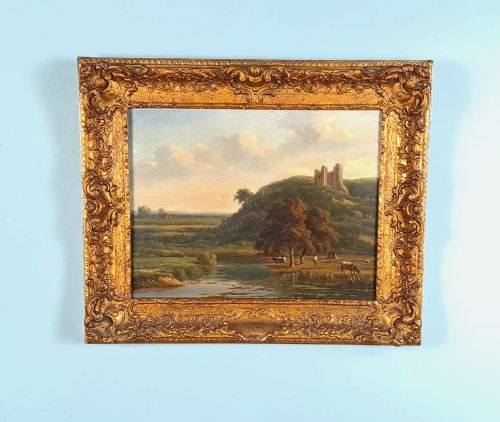
The version most commonly met on this page is an oil on canvas or wood panel, often housed within its original giltwood and gesso frame. Painters of the period favoured scenes derived from British and European river valleys, recording local tributaries, locks, and pastoral animals with careful observation.
Such canvases range from intimate cabinet pieces to expansive wall art, reflecting the diverse scale demanded by nineteenth-century collectors. Each composition balances naturalistic topography with an idealized rural calm characteristic of the genre.
How pastoral river oil paintings were made
Artists built these compositions using oil paint applied to stretched canvas, prepared wood panels, or occasionally milk glass. Grounds were laid to receive successive layers of pigment, allowing painters to build depth in water surfaces and atmospheric skies.
Framing played an integral part in the presentation, employing carved wood enriched with gesso and gilt finishes to catch ambient light. Stretchers and panel backs frequently bear period inscriptions, artist signatures, or studio stamps that record the physical history of the object.
Listings feature works executed in oil on canvas, wood panels, and milk glass, spanning the Georgian to the 1930s periods.
What varies in quality
Quality rests upon the artist's handling of light, atmospheric perspective, and the structural integrity of the painted surface. Superior examples demonstrate confident brushwork and precise tonal control, particularly in the rendering of reflective water and shifting daylight.
The preservation of the original canvas, pigment stability, and the condition of the accompanying giltwood frame also distinguish finer works. Evidence of careful conservation and legible stretcher inscriptions add historical weight to a composition.
Thomas Baker of Leamington·Sidney Richard Percy·William Sidney Cooper·Benjamin Williams Leader·Walter J Watson
The Pastoral River Oil Painting Glossary
- Gesso
- A plaster-like mixture applied to wood frames to create a smooth surface for gilding. It provides the crisp relief found on period mouldings.
- Giltwood
- Wood carved and covered with thin gold leaf or metal leaf. This finish defines the traditional frames associated with nineteenth-century fine art.
- Impressionism
- An art movement focusing on transient effects of light and spontaneous brushwork. In river scenes, it translates to broken colour and lively surface texture.
- Stretcher
- The wooden frame upon which a canvas is stretched taut. Inscriptions found here often reveal the original title and artist attribution.
- Provenance
- The documented history of ownership surrounding a painting. It establishes the authenticity and exhibition record of the artwork.
Pastoral River Oil Painting: Frequently Asked Questions
What subjects appear in these paintings?
These works typically show rivers, streams, and locks accompanied by figures, cattle, or horse-drawn carts. Painters focused on recognizable rural regions across Britain and Europe.
Common motifs include stone bridges, willow trees, and distant hills under morning or autumnal light.
How do I date a pastoral river oil painting?
Dating relies upon stylistic markers, framing techniques, and inscriptions found on the canvas stretcher or reverse of the panel. Victorian and Georgian conventions often dictate the palette and clothing styles of any figures depicted.
Dealer records and artist biography dates further narrow the period of creation.
Where should I hang a landscape painting?
These artworks suit principal living spaces, libraries, or studies where traditional lighting enhances the gilt frame and oil pigments. They pair well with period interiors and neutral wall colours.
Direct sunlight and damp environments should be avoided to protect the canvas and gesso frame.
Are these paintings signed by the artist?
Many examples feature visible signatures, monograms, or studio inscriptions on the front or verso. Unsigned works are frequently attributed through stylistic comparison and period records.
Exhibition labels on the reverse provide additional clues to authorship and provenance.