



Pastoral Oil Art
Pastoral oil art brings rural serenity, rustic farmyards, and gentle figures into interior spaces through centuries of painted canvas and wood panel.
Pastoral Oil Art
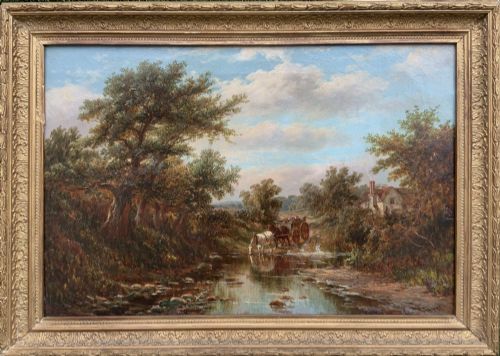
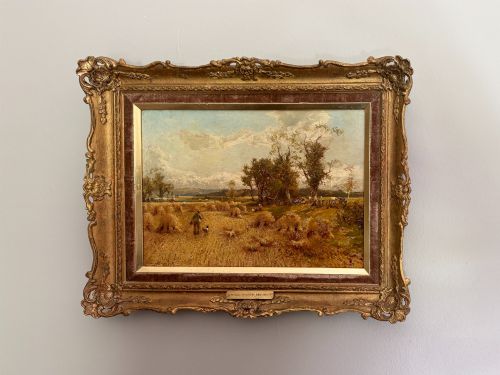
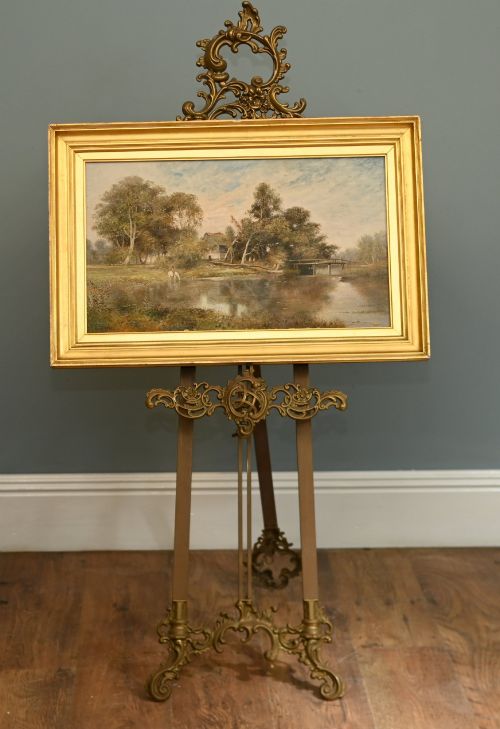
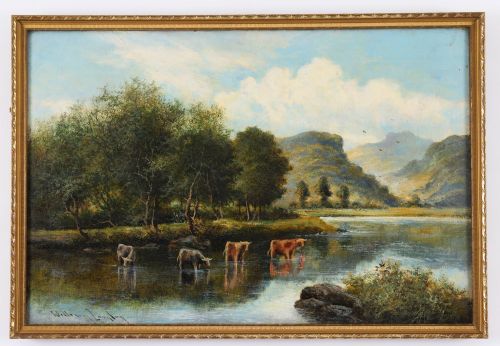
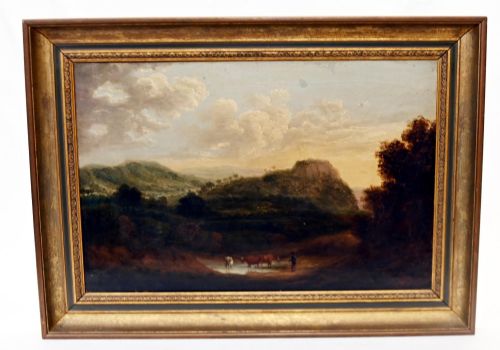
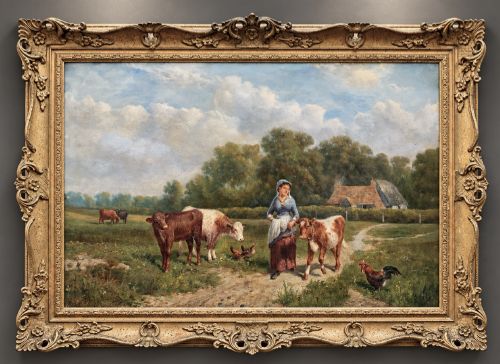
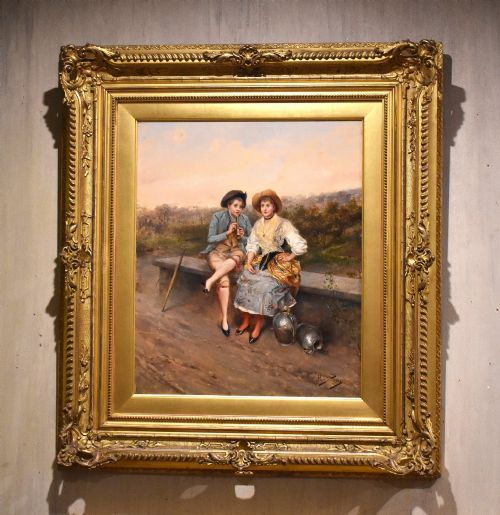
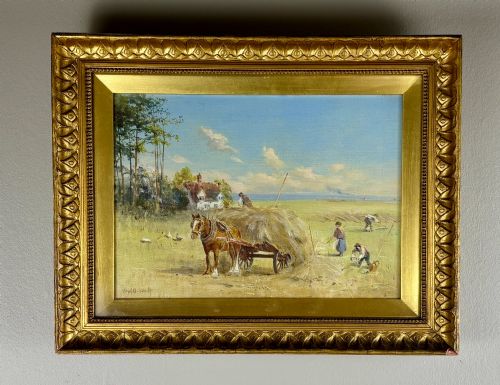
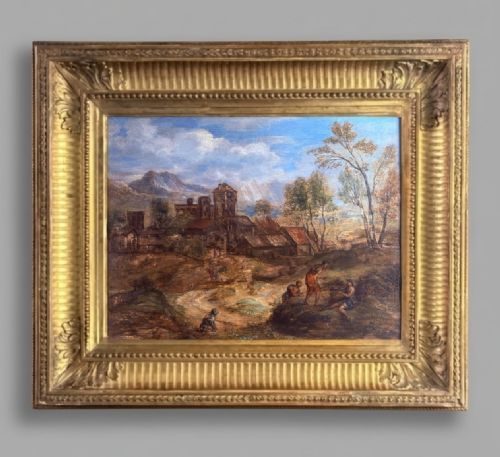
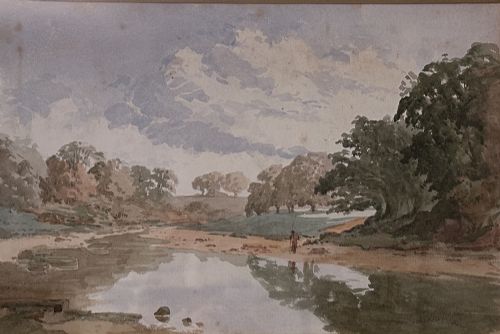
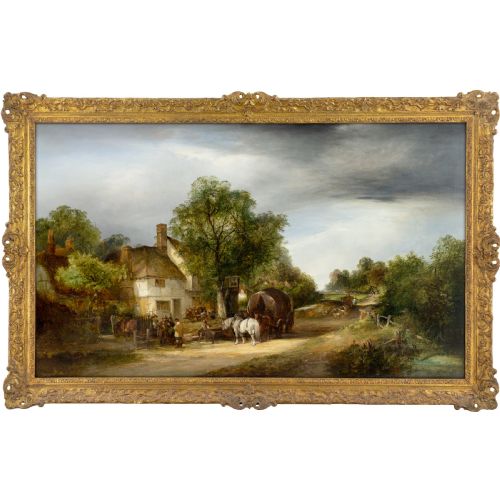
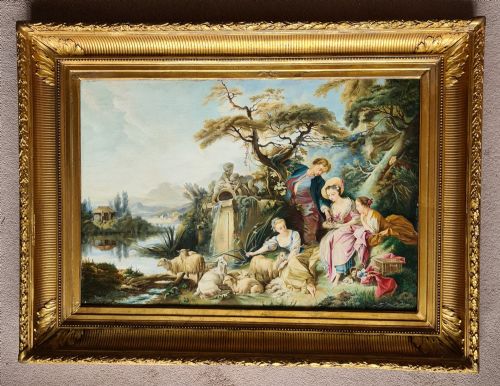
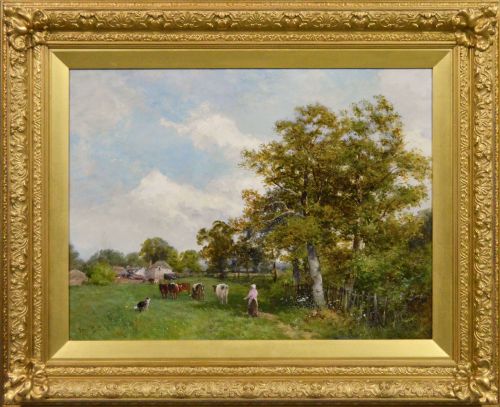
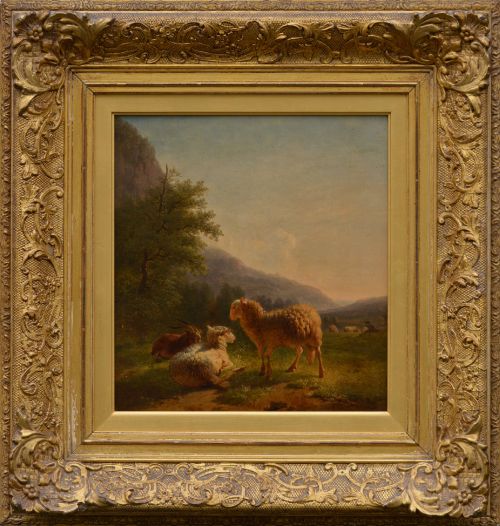
When searching for pastoral oil art, collectors encounter framed canvases and wood panels depicting rural landscapes, riverbanks, farmyards, and herding scenes. These works capture agricultural life, livestock, and idyllic countryside settings through various historical lenses.
The pieces on this page span several centuries, reaching from the seventeenth century through the Victorian era into the early twentieth century. British, Flemish, French, and Italian schools are represented alongside provincial folk art.
Rural landscapes featuring cattle, sheep, and figures near harvest fields dominate the selection. Buyers regularly meet works by named nineteenth-century practitioners alongside pieces from the British and European schools.
Materials and methods
Artists painted primarily with oil paint on stretched canvas or wooden boards. Gesso layers often prepared wooden panels and frames to receive the paint.
Frames frequently incorporate giltwood, providing a traditional decorative border around the painted surface. Wood panels and canvas supports show the physical age of each composition.
Pastoral Oil Art Retail Price Guide 2026
Typical asking prices for pastoral oil art among the pieces listed under this phrase on Sellingantiques today, from the lower quarter to the upper quarter. They describe what is for sale here now, not the wider market.
Listings feature works spanning from the seventeenth century through the Victorian era, utilising oil on canvas and wood panel.
Judging quality in pastoral oil art
Quality separates through the handling of light, atmosphere, and natural detail within the rural scene. Skilled brushwork defines the texture of foliage, water, and animal coats.
The integrity of the canvas or wood panel, alongside the preservation of the original paint layer, dictates the condition of the artwork. Period frames finished in giltwood also contribute to the overall preservation of the piece.
Alonso Perez·William Langley·Samuel Joseph Clark·Hugh Barry-Scott·William Manners·F Staple·Thomas Thomas·Edward Charles Williams·William Shayer·Eugène Verboeckhoven·William H Myers·George Graham·Tom Campbell·W Klombeck·Francois Boucher·John Horace Hooper·William Joseph Shayer Senior·Hendrik Willem Schweickhardt·Thomas Barker of Bath·Mark William Langlois·David Bates·Walter Heath Williams·Thomas Sidney Cooper·Frederick Walker·Richard Redgrave
The Pastoral Oil Art Glossary
- Oil on Canvas
- Pigment mixed with drying oil applied to a woven fabric support. This remains the most common medium for European paintings from the seventeenth century onward.
- Pentimento
- An alteration in a painting, evidenced by previous strokes visible through the upper layers of paint. Such changes reveal the artist working out the composition directly on the canvas.
- School
- A group of artists working in a similar style or region during a specific period. These groupings help historians classify unsigned regional works.
- Board
- A rigid wooden panel utilised as a painting support instead of fabric canvas. Artists often selected wood for smaller or earlier cabinet paintings.
Pastoral Oil Art: Frequently Asked Questions
What defines pastoral art?
Pastoral art depicts rural life, agricultural scenes, and idealized countryside landscapes with figures, cattle, or sheep. These works focus on quiet natural settings away from urban environments.
Artists across the seventeenth, eighteenth, and nineteenth centuries returned to these peaceful rustic themes to evoke harmony between humans and the natural world.
How should I hang an oil painting?
Oil paintings require stable indoor environments away from direct sunlight and damp walls. Hanging them securely on a wall using appropriate fixings protects both canvas and frame.
Keeping the artwork away from direct heat sources prevents the wooden panels or stretchers from warping over time.
How do I identify the period of a painting?
Dating relies on examining the stretcher frames, canvas preparation, pigments, and the style of the clothing or architecture depicted. Details such as artist signatures and biographical dates offer further clues.
Secondary evidence like old exhibition labels or framing techniques also assists in placing the work within a specific century.
What is the difference between canvas and panel?
Canvas consists of woven fabric stretched over a wooden frame, allowing for larger compositions with flexible surfaces. Wooden boards provide rigid surfaces favoured for smaller, portable works.
Both supports carry oil paint effectively, though panel paintings often point towards specific regional or earlier historical traditions.