





Pastoral Livestock Artwork
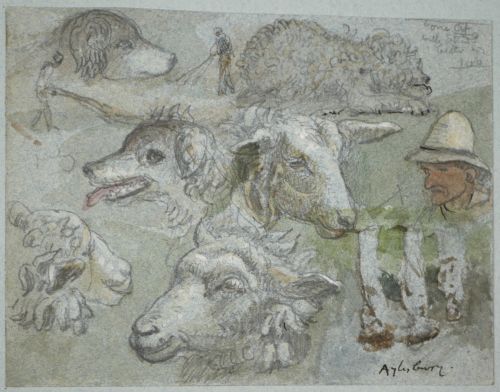
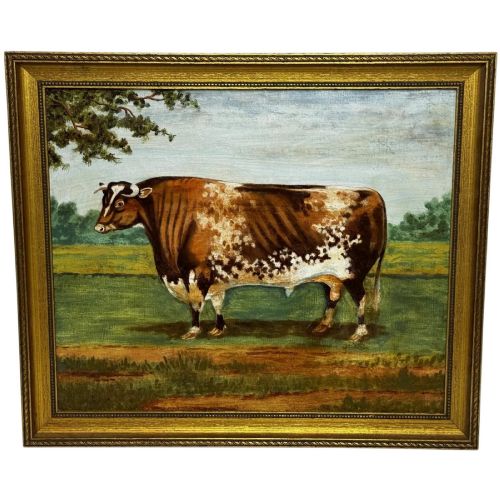
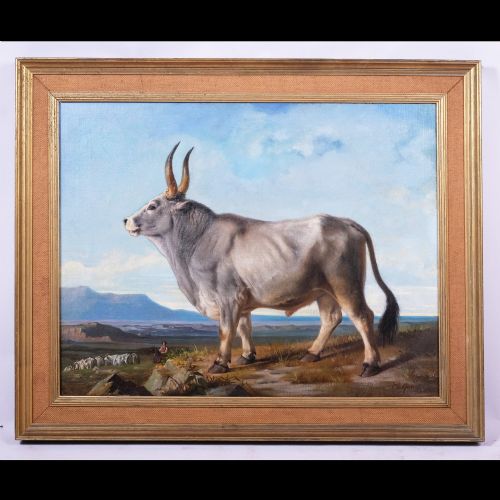
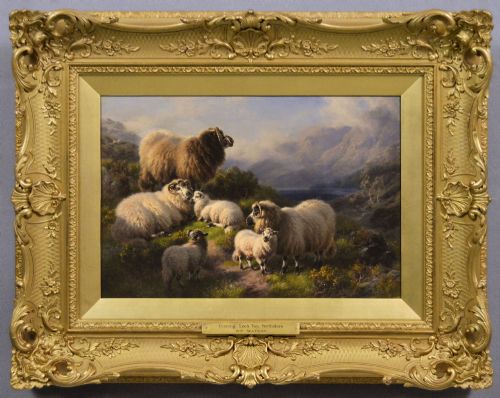
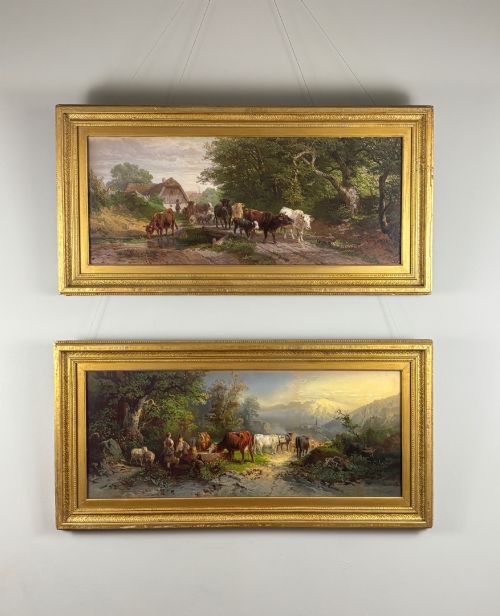
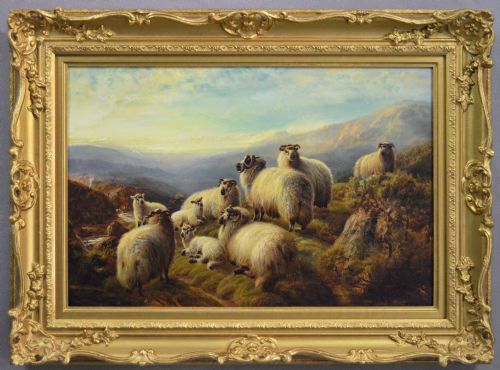
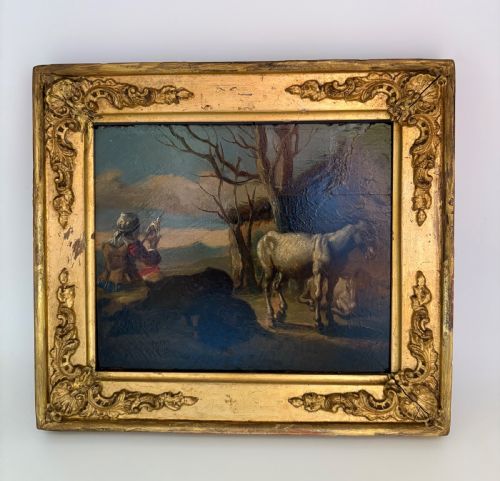
These pastoral livestock artwork pieces capture rural scenes of cattle, sheep, and horses set within expansive nineteenth-century and early twentieth-century landscapes.
Pastoral Livestock Artwork
When you search for pastoral livestock artwork, you encounter framed paintings that portray cattle, sheep, and horses resting or grazing in rural landscapes. These works span the eighteenth, nineteenth, and early twentieth centuries, reflecting changing British and European artistic approaches to countryside subjects.
The most common versions on this page are nineteenth-century oil paintings on canvas and framed watercolours. They range from intimate watercolours of sheep to large oil depictions of shorthorn bulls and highland cattle.
Subjects frequently combine farmyard animals with shepherds, farmers, or coastal and mountainous backdrops. Works often originate from British, Dutch, Belgian, and German artistic traditions.
Materials and construction methods
Artists painted primarily with oil paint on stretched canvas or oak panels, while others worked in watercolour and mixed-media on paper. Canvases received layers of pigment to build texture in animal coats and atmospheric skies.
Frames form an integral part of these pieces, constructed from wood, gesso, and gold leaf, or burr wood. Many retain their original nineteenth-century gilt frames, which contribute to the physical structure and presentation of the artwork.
Several sheep manage to look profoundly philosophical while standing near nineteenth-century Scottish lochs.
Distinctions in quality
Quality rests upon the artist's ability to render animal anatomy and texture with precision, distinguishing accomplished animal portraits from generic farmyard scenes. Stronger pieces display careful handling of light across wool, hide, and surrounding landscape elements.
The harmony between the livestock and the landscape dictates the strength of a composition. Works by recognised painters or well-documented followers demonstrate superior brushwork and depth compared to anonymous studio output.
Eugène Verboeckhoven·James Smetham·William Watson Jnr·Johann Friedrich Voltz·Robert Watson·A M Gauci·William Henry Mander·Thomas Sidney Cooper·Franz van Severdonck·Frederick Septimus Lewis·Ernest Pile Bucknall·Andre de Moller·Eugene Joseph Verboeckhoven·Heinrich Harder·James de Rijk·Julius Caesar Ibbetson·Basil Bradley·Arthur Charles Dodd·Claude Cardon·John W Morris·Frederick Richard Lee·W A Clark
The Pastoral Livestock Artwork Glossary
- Oil on Canvas
- Pigment mixed with drying oil applied to a woven fabric support stretched across a wooden frame. This medium allowed artists to achieve rich colour depth and blended textures.
- Giltwood
- Wood carved and coated with gold leaf or gold paint to create a decorative frame finish. It defines the ornate borders typical of nineteenth-century picture frames.
- Gesso
- A plaster mixture applied to wood panels or frames as a smooth base for gilding or painting. It provides a solid foundation for the decorative mouldings.
- Watercolour Painting
- Pigments suspended in a water-soluble vehicle applied to paper. This technique produces translucent washes and delicate detail often seen in smaller rural studies.
- Oak Panel
- A rigid wooden support used for early paintings before canvas became standard. It offers a stable, durable surface for detailed brushwork.
Pastoral Livestock Artwork: Frequently Asked Questions
What subjects appear in pastoral livestock artwork?
These pieces focus primarily on farm animals such as cattle, sheep, horses, and calves positioned within rural, mountainous, or coastal settings. Human figures like shepherds or farmers often accompany the herds.
The compositions range from quiet pastoral resting scenes to busy farmyard gatherings and Highland landscapes.
How do I identify the period of these paintings?
Dating relies on stylistic clues, framing materials, artist signatures, and inscriptions recorded on the canvas or reverse. Nineteenth-century works often exhibit realist or romantic tendencies in their handling of light and atmosphere.
Victorian and Edwardian pieces frequently pair specific animal breeds with period-appropriate giltwood or burr frames.
Are these works original paintings or prints?
The listings consist entirely of original hand-painted works, including oil paintings on canvas or panel, and original watercolours on paper. Each piece represents a unique creation by an artist or follower.
Signatures, brushstroke textures, and canvas stamps confirm their status as unique historical artworks.
How should I display framed paintings at home?
Display these works on interior walls away from direct sunlight and moisture to protect the oil paint, paper, and giltwood frames. Stable room temperatures prevent the canvas or wooden panels from warping over time.
Matching the period frame to a balanced wall space enhances the visual impact of the artwork.