


Belgian Pastoral Oil Painting
A belgian pastoral oil painting captures the quiet rhythm of nineteenth-century rural life, offering buyers a window into historic agricultural scenes framed in original giltwood.
Belgian Pastoral Oil Painting
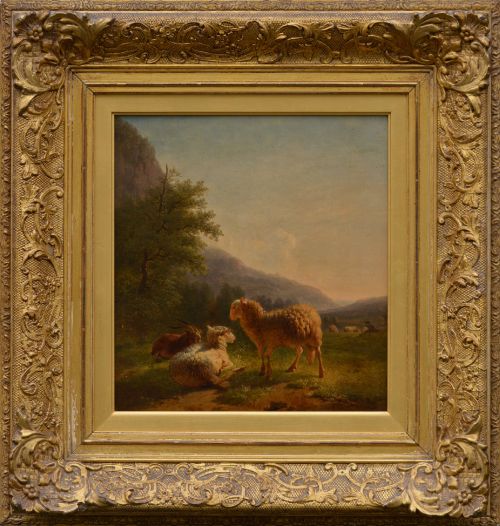
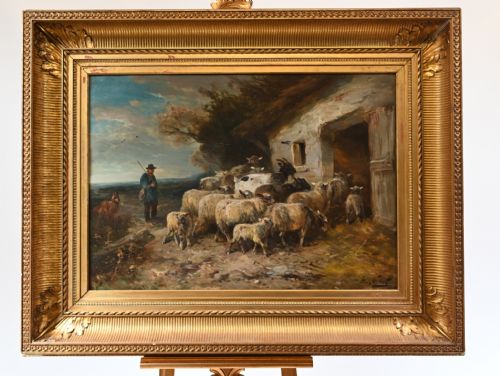
A belgian pastoral oil painting presents rural and agricultural subjects, most frequently featuring sheep, goats, ponies, and poultry set within quiet landscapes or farmyards. These works capture nineteenth-century realism and romanticism through carefully observed farm animals and rustic settings.
Buyers browsing this selection will most frequently meet nineteenth-century canvases depicting flocks with shepherds or farmyard scenes. The creators range from listed Belgian masters to contemporary followers and period studio hands.
The physical form is typically an oil painting on canvas, housed within its period frame of wood, gesso, and gold leaf. These works span dates such as eighteen-ninety, eighteen-seventy, and eighteen-sixty alongside broader nineteenth-century attributions.
How they were made
The primary technique relies on oil paint applied to canvas, capturing the fine textures of animal wool, feathers, and rustic landscapes. Artists built up these compositions using traditional nineteenth-century painting methods to create depth in skies and pastures.
Frames play a structural role in the presentation, constructed from wood finished with layers of gesso and gold leaf or gilt. These giltwood surrounds complete the physical object as framed artwork, preserving the canvas integrity over generations.
Specific dates in the evidence span the years eighteen-sixty, eighteen-seventy, and eighteen-ninety alongside general nineteenth-century attributions.
What varies in quality
Quality rests upon the precision of brushwork in rendering animal anatomy, texture, and light within the landscape. Works by primary hands demonstrate superior command over the subject compared to follower pieces or studio productions.
The condition and execution of the original giltwood and gesso frame influence the integrity of the piece. Superior examples retain their harmonious relationship between the canvas artwork and the period frame without heavy restoration.
Eugène Verboeckhoven·Henry Schouten·Franz van Severdonck·Pierre Emmanuel Dielmans·J L VAN Leemputten·Louis Marie Dominique Robbe
The Belgian Pastoral Oil Painting Glossary
- Oil on Canvas
- Pigment mixed with drying oil applied to a woven fabric support. This primary medium defines the surface of these historic artworks.
- Giltwood
- Wood carved and covered with a thin layer of gold leaf or gilt paint. This material forms the decorative period frames enclosing the paintings.
- Gesso
- A paint mixture consisting of a binder mixed with chalk, gypsum, or pigment. It provides the smooth preparation layer beneath the gold leaf on frames.
- Nineteenth Century Realism
- An artistic movement focused on accurate, unidealised depiction of everyday subjects. Rural farmyards and livestock serve as common motifs in this style.
- Follower
- An artist whose work closely emulates the style of a master without being an exact copy. These pieces reflect the broader influence of prominent painters.
Belgian Pastoral Oil Painting: Frequently Asked Questions
What subjects appear in these paintings?
The compositions focus heavily on domestic animals, including sheep, goats, poultry, and ponies placed within pastoral landscapes or farmyard settings.
Human figures occasionally appear as shepherds tending their flocks, though the animals remain the central focus of the canvas.
Are the frames original to the canvases?
Many works retain their period wooden frames finished with gesso and gold leaf. These giltwood surrounds complement the nineteenth-century aesthetic of the paintings.
Buyers should examine both canvas and frame to understand the complete historic object.
How do followers differ from original works?
Follower pieces emulate the composition and style of established masters like Eugène Verboeckhoven while being painted by contemporary or later hands.
These works offer a similar aesthetic and nineteenth-century origin at a different level of attribution.
How should I care for an oil painting?
Keep the canvas away from direct sunlight and steady fluctuations in humidity to protect both the oil paint and the wooden stretcher.
Dust the giltwood frame gently with a dry, soft cloth without applying liquid cleaners to the gold leaf.