


Pastoral Landscape Watercolour
When you search for a pastoral landscape watercolour, you are looking at British country life rendered in pigment on paper through the nineteenth and early twentieth centuries.
Pastoral Landscape Watercolour
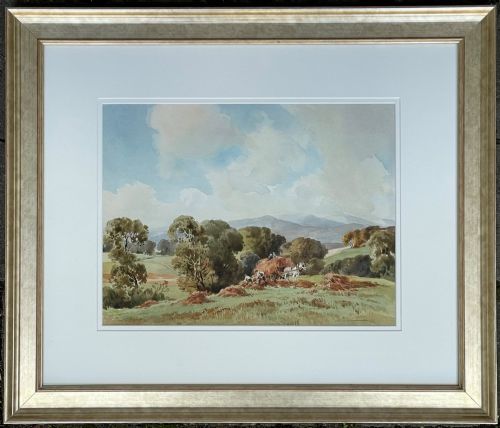
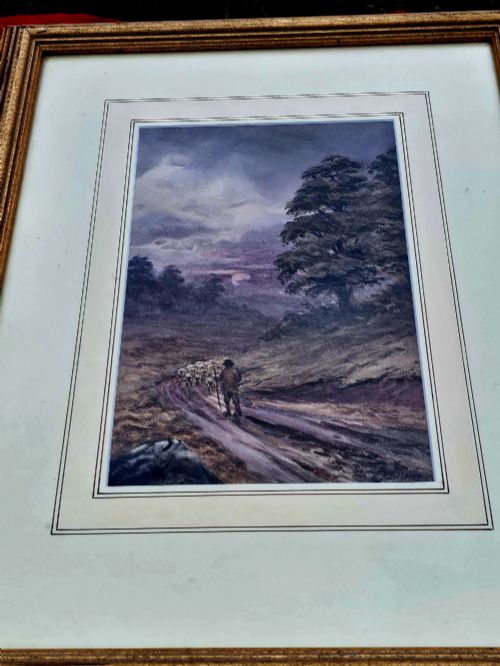
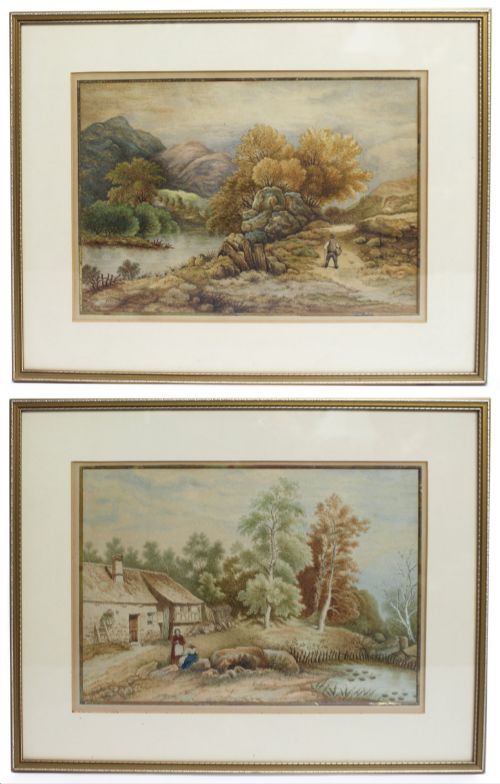
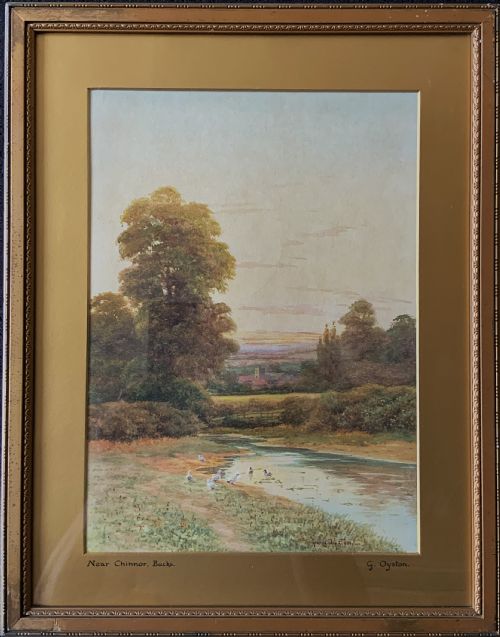
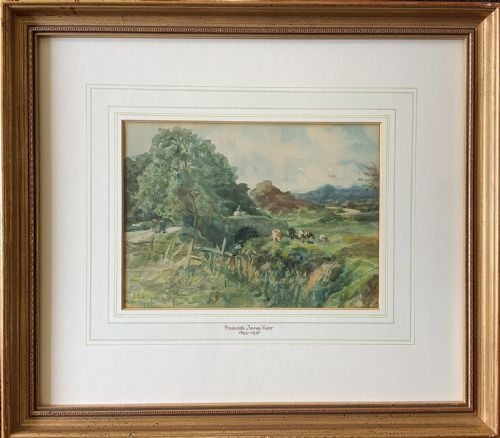
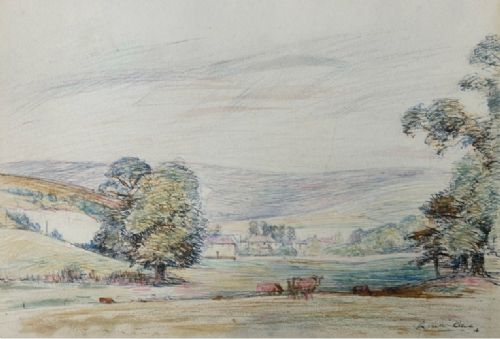
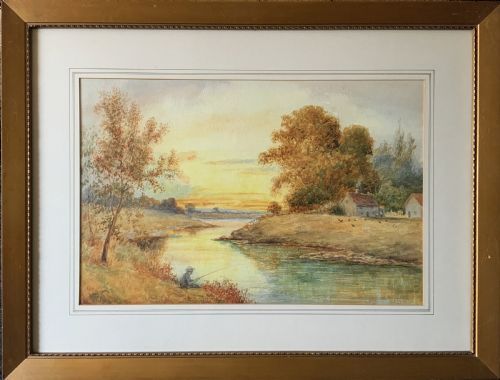
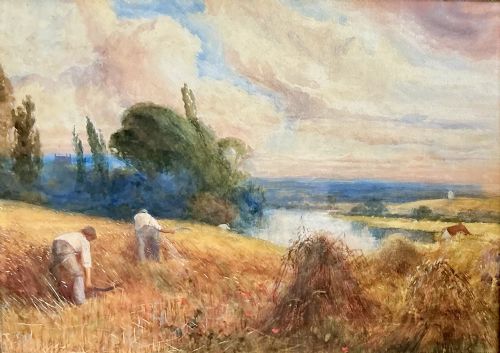
A pastoral landscape watercolour depicts rural scenes of agriculture, rivers, cottages, and livestock set within the British countryside. These framed works span the Victorian, Edwardian, and early twentieth-century periods, capturing an agrarian world through traditional fine art methods.
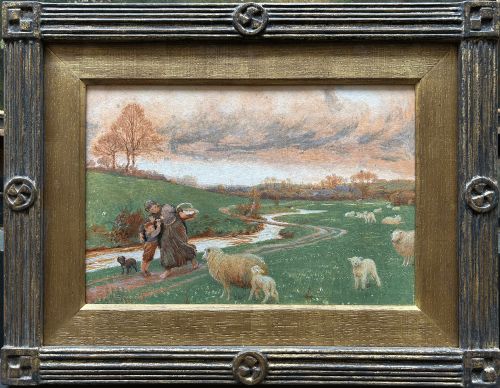
The versions most commonly met on this page originate from the later nineteenth century and the decades leading up to nineteen thirty. They frequently feature farming activities such as haymaking, herding sheep, and cattle watering by rivers.
Makers and regional schools represented in the selections include artists associated with traditional British fine art and idyllic rural subjects. Works range from intimate countryside sketches to large exhibition pieces housed in original gilt frames.
How They Were Made
These works utilise watercolour pigment applied to paper sheets, often combined with pencil underdrawing and occasionally accented with gold leaf. Artists worked with water-soluble paints to achieve transparent washes and fine opaque details.
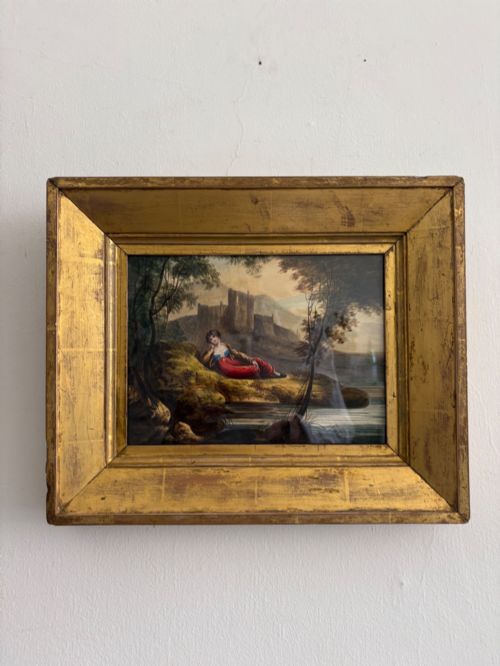
Completed paintings were traditionally protected beneath glass and mounted within timber frames, frequently decorated with gold leaf or gilt finishes.
Pastoral Landscape Watercolour Retail Price Guide 2026
Typical asking prices for pastoral landscape watercolour among the pieces listed under this phrase on Sellingantiques today, from the lower quarter to the upper quarter. They describe what is for sale here now, not the wider market.
Common subjects in these watercolours include sheep herding, cattle watering, haymaking, and rural cottages by rivers.
What Varies in Quality
The strength of the composition and the precision of the brushwork distinguish the finest examples from standard provincial work. Master painters handled light, atmosphere, and animal anatomy with confidence that brings depth to the rural scene.
The condition of the paper and the preservation of the original pigment influence the visual impact. Works protected well away from damp retain their original colour intensity and tonal contrast.
Percy Lancaster·EJ Letheren·Th Thibault·Frederick Walker·George Oyston·Frederick James Kerr·Russell Sidney Reeves·Frederick Hines·Philip Richard Morris·Oswald Garside·Cornelius Pearson·Henry Charles Fox·Henry John Kinnaird·James William Booth·Frederick Septimus Lewis·Ernest Pile Bucknall·Thomas Hunn·James Orrock·James Hardy Junior·Robert Thorne Waite·John Atkinson·Alfred Grey·George Soper·Harold Lawes·Bernard Walter Evans
The Pastoral Landscape Watercolour Glossary
- Watercolour pigment
- The finely ground colour substance mixed with a water-soluble binder used by artists on paper.
- Gilt frame
- A wooden picture surround coated with a thin layer of gold leaf or gold-coloured metallic finish.
- Wash
- A thin, semi-transparent layer of diluted watercolour paint spread across the paper to create skies or water.
- Pastoral school
- An artistic tradition focusing on idealized rural, agricultural, and rustic landscape subjects.
- Grisaille
- A painting executed entirely in shades of grey or neutral monochrome pigments.
Pastoral Landscape Watercolour: Frequently Asked Questions
What is a pastoral landscape watercolour?
A pastoral landscape watercolour is a work of art on paper depicting British rural life, farms, rivers, and livestock from the nineteenth and early twentieth centuries.
These paintings record traditional agricultural scenes, cottage life, and countryside views created by period artists.
How do I hang a watercolour?
Watercolours require careful placement away from direct sunlight to prevent the pigments from fading over time. Ensure the room has stable humidity levels to protect the paper and the wooden frame.
Mount the painting securely using appropriate wall fixings suited to the weight of the glass and timber frame.
How do I tell Victorian watercolours apart?
Victorian watercolours often display detailed brushwork, narrative elements of rural labour, and rich earth tones. Later Edwardian works can show lighter palettes and impressionistic handling.
Examine the framing style, paper type, and artist signatures where available to help determine the period.
Were these watercolours always framed?
Most finished watercolours were framed shortly after completion to protect the delicate paper surface from dust and damage. Original Victorian and Edwardian frames often feature moulded wood and gilt finishes.
Some pieces retain their original frames from the nineteenth or early twentieth century, complete with historical backing boards.