

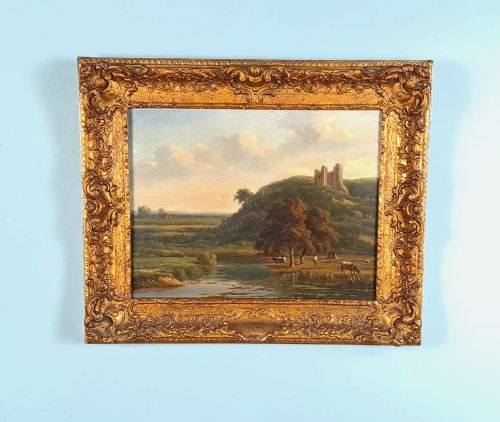


Pastoral Cattle Scene Artwork
Pastoral cattle scene artwork captures rural tranquility through depictions of livestock grazing in British and European countryside landscapes.
Pastoral Cattle Scene Artwork
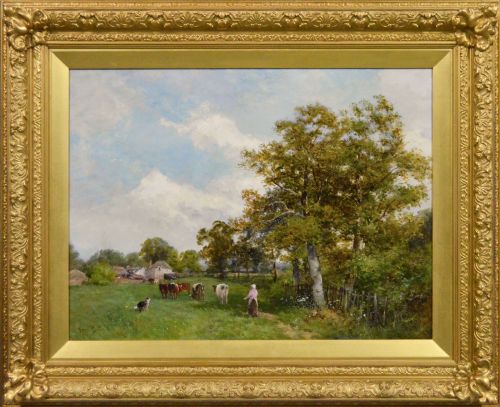
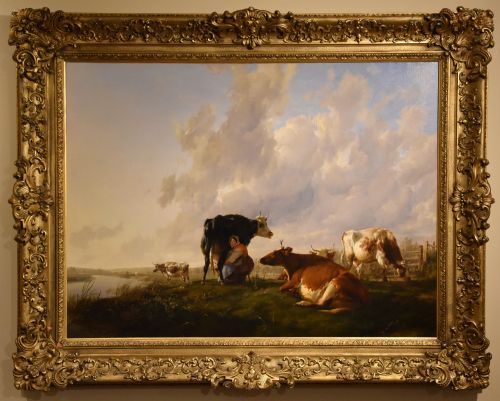
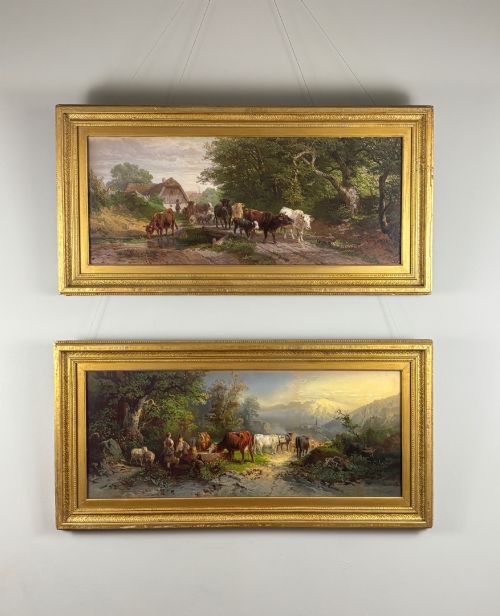
Pastoral cattle scene artwork depicts rural farm life, featuring cows, rivers, and herdsmen within traditional landscapes. These pieces predominantly date from the nineteenth and early twentieth centuries, reflecting Victorian and Edwardian artistic tastes.
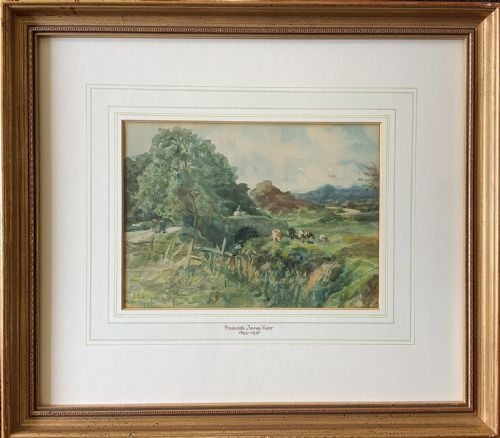
Buyers will encounter both oil paintings on canvas and delicate watercolour paintings framed in period wood and giltwood. The subjects range from quiet riverbanks and milking scenes to rugged highland pastures.
Most examples originate from British and European painters who specialised in realism and impressionist landscape traditions. The works vary from intimate watercolours to large oil paintings suited for prominent wall display.
How They Were Made
Artists applied oil paint and gouache onto stretched canvas, wooden boards, or heavy paper supports. Canvas pieces often retain their original gesso grounds and period giltwood frames.
Watercolour paintings utilise fluid pigments on paper, frequently protected behind glass within burr wood or moulded frames. Painters built up texture using fine brushwork to render animal coats, foliage, and water reflections.
Common subjects include cows, sheep, and horses resting near rivers or working within farmyard settings.
What Varies in Quality
Quality rests upon the artist's ability to render the anatomy and posture of the cattle convincingly within a natural light. Stronger works demonstrate careful handling of atmosphere, distance, and the interplay of water and sky.
The survival of the original frame contributes significantly to the integrity of the piece. Contemporary framing or cleaned surfaces distinguish deeply preserved historic works from those with modern restoration.
William H Myers·David Bates·Thomas Sidney Cooper·Frederick James Kerr·Johann Friedrich Voltz·T C Hofland·Ernest Pile Bucknall·Samuel Joseph Clark·Andre de Moller·Frederick James Knowles·Robert Thorne Waite·Pierre Emmanuel Dielmans·George Cole·Thomas Baker of Leamington·Basil Bradley·John Inigo Richards·Arthur Charles Dodd·Claude Cardon·John W Morris·Henry Brittan Willis·John R K Duff·Henry Cheadle·John Percy Cooke·Frederick William Jackson·William Sidney Cooper
The Pastoral Cattle Scene Artwork Glossary
- Giltwood
- Wood carved and coated with a thin layer of gold leaf or gilt finish. These frames often accompany nineteenth-century oil paintings.
- Gouache
- An opaque water-based paint that dries to a matte finish. It allows artists to build dense highlights in landscape and animal studies.
- Impressionism
- An art movement focusing on transient effects of light and spontaneous brushwork. British impressionist works capture outdoor farming scenes with loose strokes.
- Provenance
- The documented history of ownership of an artwork. It helps establish authenticity and trace the exhibition record of a painting.
- Realism
- The precise and unidealized representation of subject matter. Nineteenth-century realism portrays rural life and livestock with botanical and anatomical accuracy.
Pastoral Cattle Scene Artwork: Frequently Asked Questions
What periods do these paintings come from?
Most works date from the nineteenth and early twentieth centuries, spanning the Victorian and Edwardian eras. Painters of this time frequently recorded agrarian life before mechanisation changed the countryside.
Examples range from early nineteenth-century Romantic landscapes to later impressionist interpretations of cattle by rivers and in farmyards.
How should I hang and light oil paintings?
Hang paintings away from direct sunlight and steady moisture to protect the canvas and traditional giltwood frames. Stable indoor temperatures prevent the gesso and wood from cracking.
Use dedicated picture lights with low heat emission to illuminate the surface without damaging the oil paint over time.
What is the difference between oil and watercolour versions?
Oil paintings feature thick pigments on canvas or board, offering rich textures and deep colours. They were typically created for formal display in substantial rooms.
Watercolours use translucent pigments on paper and are sensitive to light. They are traditionally framed behind glass, presenting a lighter and more intimate view of the landscape.
How can I tell a genuine period frame from a modern replacement?
Period frames often display age-related wear to the giltwood and gesso, along with older fixings on the reverse. Hand-carved or moulded details reflect nineteenth-century framing techniques.
Modern replacements tend to look uniform and lack the subtle patination accumulated across generations of display.