


Parquetry Table Cabinet
When you search for parquetry table cabinet, you enter a field of intricate geometric woodwork and compact storage forms spanning the nineteenth and early twentieth centuries.
Parquetry Table Cabinet
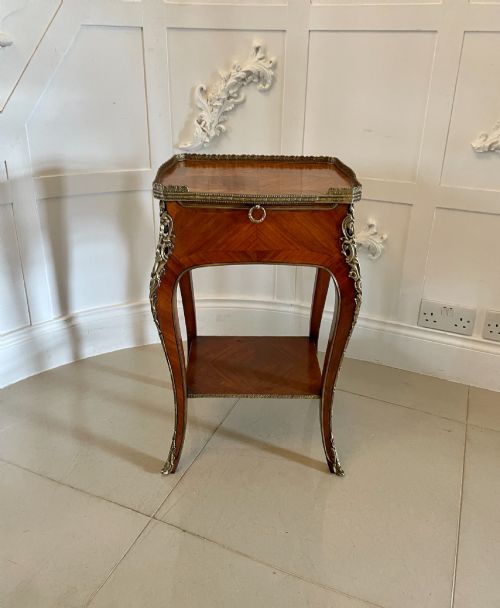
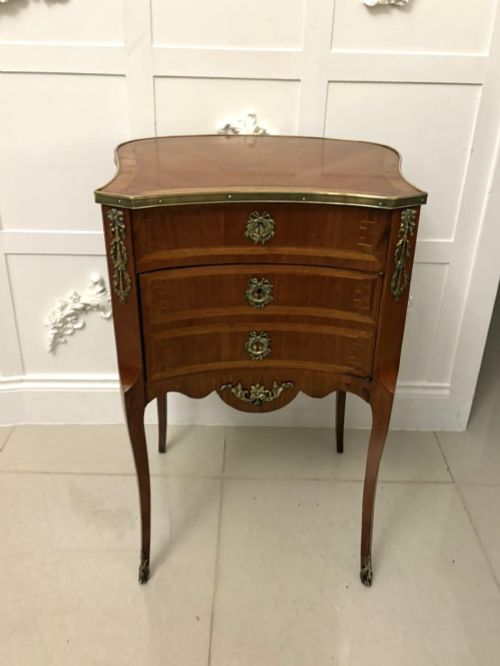
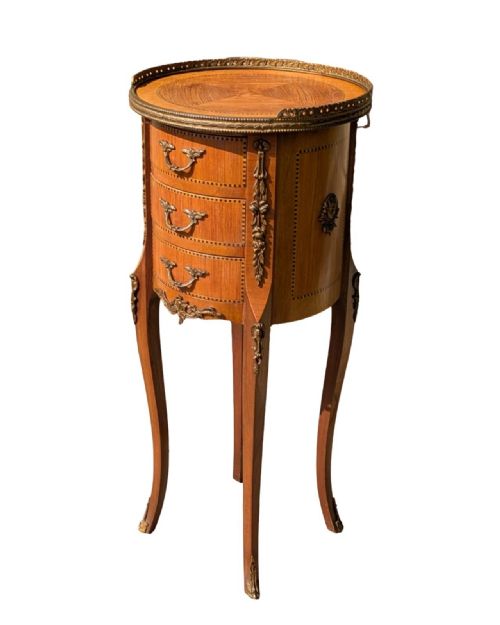
A parquetry table cabinet brings together small-scale cabinetry and geometric veneer patterns, often taking the form of tabletop boxes or compact night furniture. The pieces available span the Victorian era, the nineteenth century, and the early twentieth century up to nineteen thirty.
You will encounter bedside cabinets, side tables, and small commodes alongside tabletop caskets and writing desks. French provincial and revival influences dominate the items recorded, particularly Louis XV and Louis XVI styles.
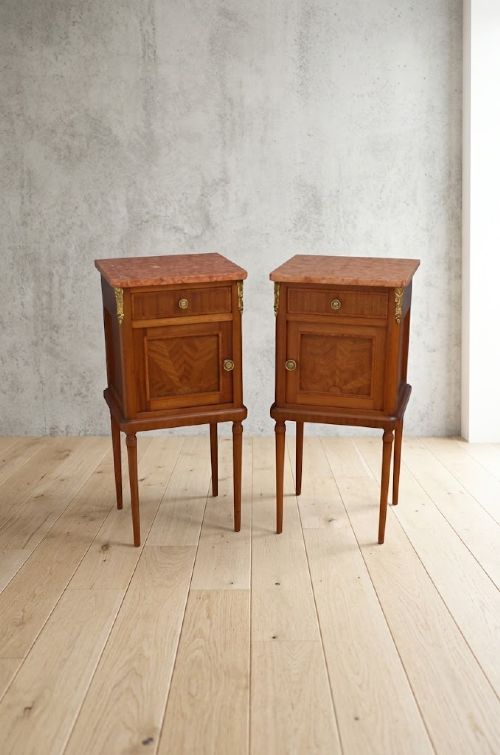
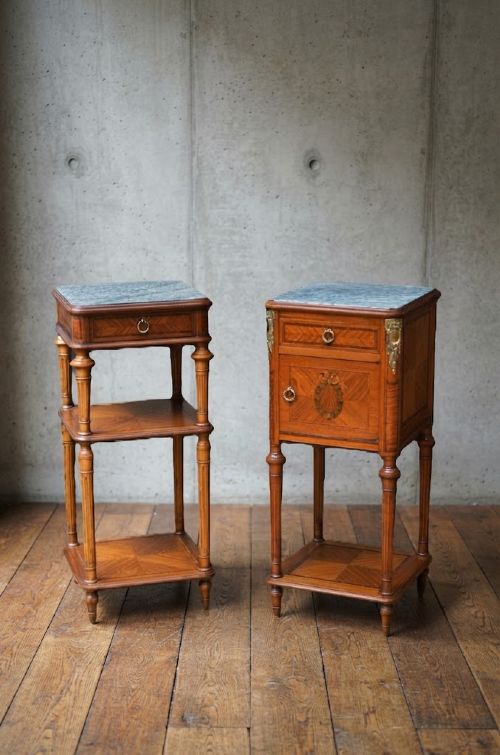
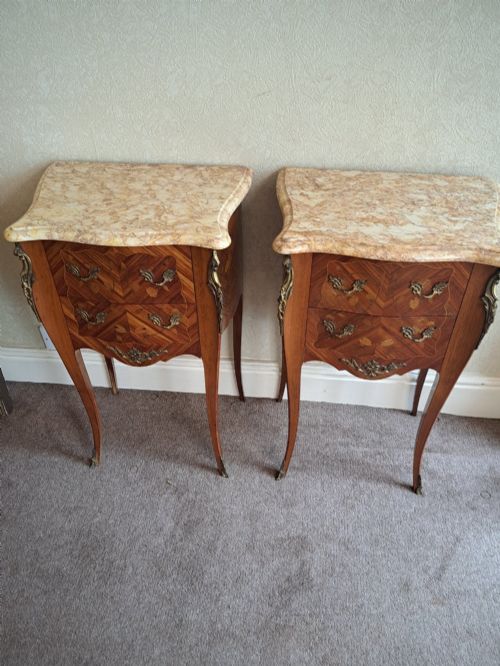
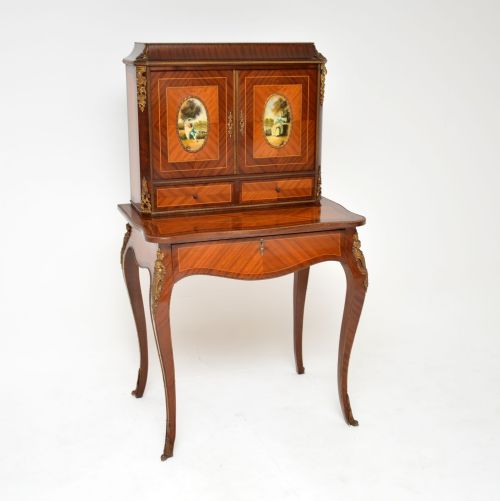
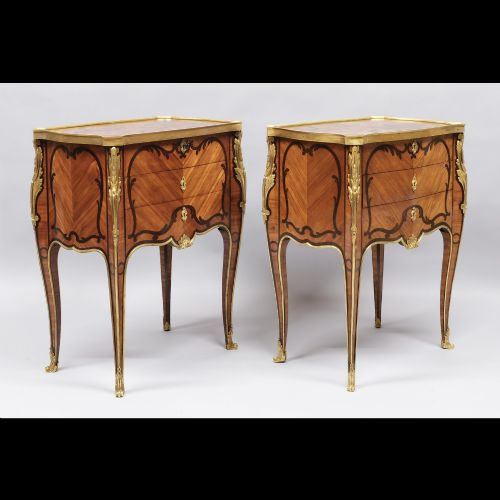
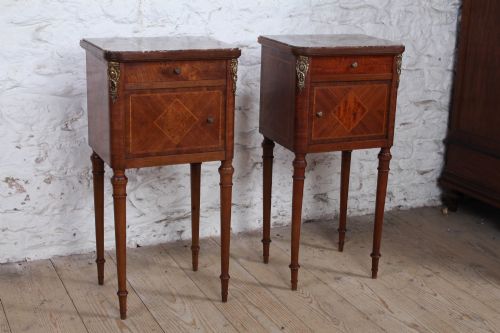
The selection ranges from simple walnut or fruitwood nightstands to elaborate kingwood, satinwood, and ormolu-mounted writing cabinets. Pairs of bedside cabinets frequently appear, showing matching veneer work designed for flanking a bed.
How they were made
Makers constructed these cabinets using dense structural timbers like walnut or mahogany as a carcase, then applied fine decorative veneers such as kingwood, satinwood, rosewood, and burr fruitwood in geometric parquetry patterns. The precision of the wood mosaic relies on exact cutting and fitting of contrasting grain directions.
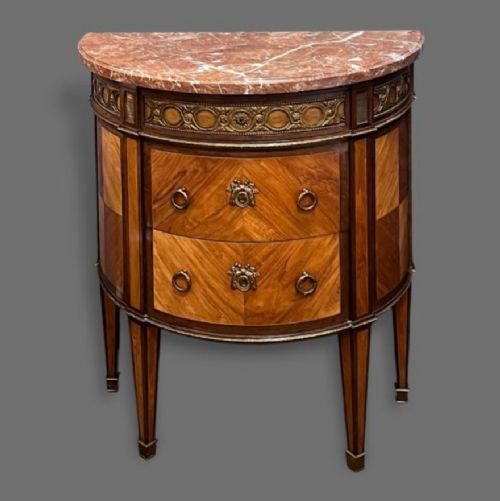
Metal components played a structural and decorative role, with cast brass and ormolu mounts fitted to corners, handles, and feet. Marble tops in white or coloured varieties were frequently added to commodes and bedside tables to provide a durable and weighty surface.
Some nineteenth-century makers hid small sliding shelves inside bedside cabinets for holding morning tea cups.
What varies in quality
The standard of a parquetry table cabinet depends on the precision of the veneer work and the crispness of the geometric pattern. Closer alignment of the wood blocks and tighter joints indicate superior workmanship by the cabinetmaker.
The quality of the secondary materials distinguishes different tiers of production. Heavy, finely chased ormolu mounts, thick slab marble tops, and substantial use of solid kingwood or satinwood rather than thinner washes separate the finer examples from standard commercial output.
Sormani
The Parquetry Table Cabinet Glossary
- Parquetry
- A geometric mosaic of wood veneer arranged in repeating patterns such as cubes, chevrons, or triangles. This technique creates patterned surfaces across tabletops, drawer fronts, and cabinet doors.
- Ormolu
- Gilt bronze mounts applied to furniture for decorative enrichment and edge protection. The metal is cast and then gilded to resemble gold.
- Kingwood
- A dense, heavy tropical timber with rich brown and violet-black tones, frequently used for high-end French veneer work. It forms the primary ground for many nineteenth-century pieces.
- Chevet
- A French term for a bedside table or small night cabinet. These compact storage pieces often feature a marble top and a small cupboard door.
- Marquetry
- The art of forming decorative designs by fitting together pieces of veneer of different woods, colours, or shell. Unlike parquetry, it typically depicts pictorial or floral motifs rather than strict geometry.
Parquetry Table Cabinet: Frequently Asked Questions
What is a parquetry table cabinet?
A parquetry table cabinet is a small tabletop storage piece or compact furniture item decorated with geometric wood veneer mosaics. These items combine utility with intricate decorative surfaces.
The materials typically include hardwoods like walnut, kingwood, and satinwood arranged to form repeating patterns across the exterior surfaces.
How were bedside cabinets used historically?
Bedside cabinets served as functional nightstands for holding personal items, chamber pots, or lighting within a bedroom. Their compact proportions made them suitable for placement beside period bed frames.
Many examples feature a marble top to resist spills and an enclosed cupboard or drawer for discreet storage.
How do I care for a marble top?
Marble tops require gentle cleaning with mild soap and water, avoiding acidic cleaners that can etch the polished stone surface. Use coasters and mats to prevent staining from liquids.
Regular dusting with a soft cloth keeps the stone clean without wearing down the natural finish.
How do I distinguish French revival styles?
French revival styles from the nineteenth and early twentieth centuries draw upon eighteenth-century court designs. Louis XV revival pieces typically show curved cabriole legs and flowing asymmetrical mounts, while Louis XVI styles favour straighter lines and neoclassical symmetry.
The use of kingwood, marquetry, and ormolu mounts remains consistent across both periods.