
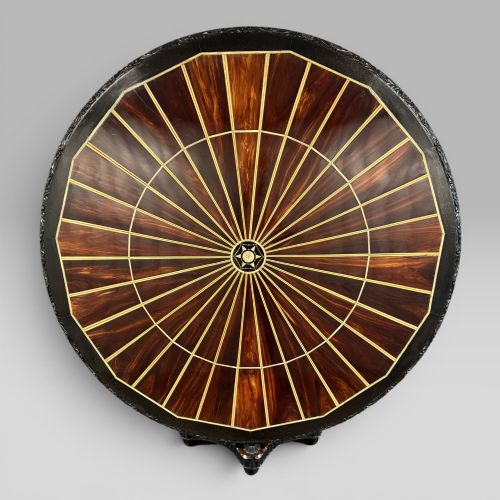
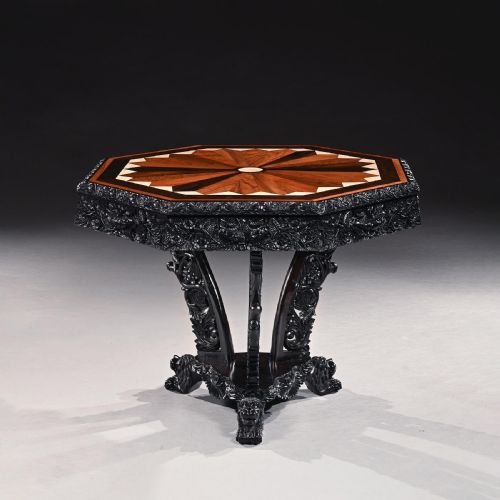


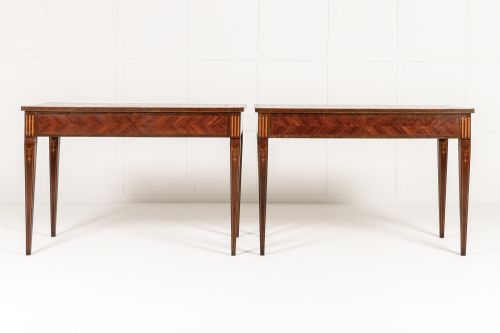


Parquetry Hall Tables
Parquetry hall tables bring geometric wooden inlay into everyday circulation, offering a durable surface built from walnut, oak, kingwood and specimen woods.
Parquetry Hall Tables
Parquetry hall tables combine geometric wood veneer surfaces with sturdy structural forms designed for entranceways and reception rooms. These pieces appear across several distinct historical periods, stretching from the seventeenth century through the Victorian era.
The selections available here lean heavily toward nineteenth-century French and Ceylonese examples alongside seventeenth-century Dutch and English formats. Buyers encounter side tables, centre tables, and console tables utilising timbers such as ebony, walnut, kingwood and oak.
Makers adapted these geometric wooden surfaces to various classical shapes, including occasional tables and serving formats. Each item relies on the careful arrangement of contrasting wood grains to create visual depth on the top surface.
How they were made
Craftsmen built these tables by applying thin veneers of contrasting hardwoods, including kingwood, ebony, walnut and specialist specimen woods, onto stable foundational timbers like oak. The individual geometric pieces were cut by hand and fitted tightly together to form complex tessellated patterns across the surface.
Metal mounts in ormolu and brass occasionally reinforced structural joints and enhanced the decorative borders of French neoclassical and Louis-inspired designs. Joinery techniques relied on traditional framing methods to support the weight of dense hardwood tabletops without warping.
Seventeenth-century makers occasionally hid humble oak beneath extravagant geometric veneers, proving that historic carpenters loved a good disguise just as much as we do.
What varies in quality
The sophistication of the timber selection dictates the visual success of the surface, with complex specimen woods and contrasting grains separating standard items from finer works. The precision of the geometric inlay work reveals the hand of the maker through tight joints and aligned patterns.
Structural integrity depends on the underlying timber used for the carcase and legs, where dense woods like oak and walnut provide lasting stability. The integration of decorative metal elements, such as brass and ormolu mounts, shows varying degrees of sculptural finish.
Francoise Linke
The Parquetry Hall Tables Glossary
- Parquetry
- A geometric mosaic of wood veneers used to cover floors or furniture surfaces. It creates patterned motifs through the arrangement of contrasting timber pieces.
- Console table
- A table designed to be fixed against a wall, frequently supported by decorative brackets or legs. These items often feature elaborate front ornamentation.
- Veneer
- A thin slice of superior or figured wood applied to a core of a cheaper timber. This technique allows makers to display striking grain patterns economically.
- Ormolu
- Gilded bronze used for decorative mounts and furniture hardware. It became popular in French neoclassical and revival furniture production.
Parquetry Hall Tables: Frequently Asked Questions
Where should I place a parquetry table?
These tables suit entrance halls, corridors, and principal reception rooms where their decorative tabletops remain visible. They function well against plain walls that allow the geometric wood patterns to stand out.
Placing them away from direct heat sources protects the timber veneers and prevents the underlying wood from drying out or splitting over time.
How do I care for antique wood inlay?
Maintain the surface by applying natural beeswax sparingly and buffing gently with a soft cloth to nourish the historic timber. Avoid chemical polishes and keep the furniture out of direct sunlight to prevent the specimen woods from fading.
Stable room temperatures and consistent humidity levels protect the glue joints holding the delicate veneer pieces in place.
What is the difference between a console and a side table?
Console tables traditionally stood against walls and often required physical fastening or specific leg placement to remain stable. Side tables are free-standing items designed to sit against a wall or float within a room.
Both forms utilise parquetry tops, but console frames frequently display more decorative carving on the front apron.
How do I identify seventeenth-century pieces?
Seventeenth-century examples often utilise solid oak or walnut carcases with heavier framing and simpler structural lines compared to later nineteenth-century revival works. The geometry of the inlay work tends to feature robust rectilinear patterns rather than elaborate floral marquetry.
Examination of the underside and drawer construction reveals hand-cut joinery typical of early workshop practices.