

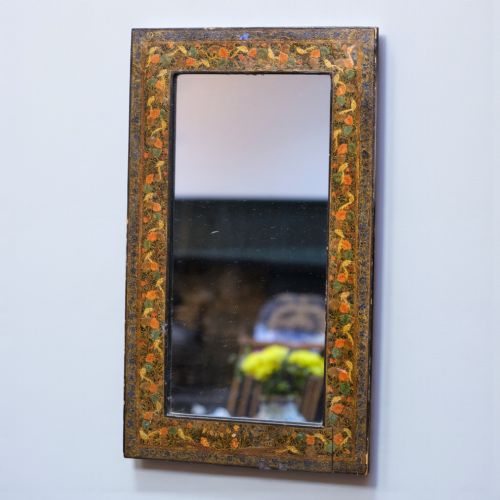
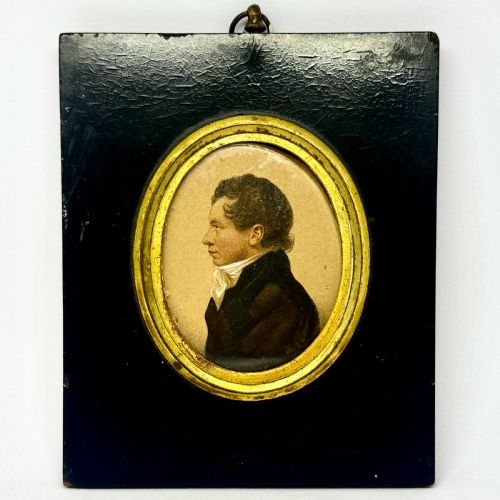
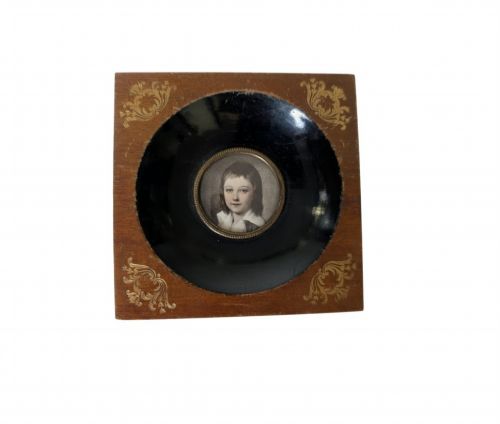


Papier Mache Frame
These papier mache frame pieces are silhouette and portrait miniature mountings that bring miniature portraiture and early wall art into focus.
Papier Mache Frame
A papier mache frame is typically encountered housing portrait miniatures, silhouettes, and painted wall plaques from the Georgian, Regency, and Victorian eras. These items serve to showcase small-scale likenesses on paper, glass, and card with distinctive dark surrounds.
Most examples found on this page date from the nineteenth century, encompassing Regency and Victorian stylistic influences. They frequently surround profiles painted in black or full-colour miniatures, protecting delicate paper and glass works.
Buyers seeking a papier mache frame will find pieces that range from simple circular wall mounts to pairs designed for portrait miniatures. These mountings often incorporate brass hangers or ebonised wood elements to complement the inner artwork.
How they were made
Makers constructed these frames using layered paper pulped and bound with adhesive to form a sturdy, lightweight material capable of taking fine mouldings. This papier-mache base was then shaped into round, oval, or rectangular profiles.
Surfaces were typically finished with dark paint or ebonising to create a deep, polished sheen that contrasted with the central portrait. Many examples incorporate brass fixtures, such as acorn hangers and leaf clasps, secured to the top of the frame.
Papier Mache Frame Retail Price Guide 2026
Typical asking prices for papier mache frame among the pieces listed under this phrase on Sellingantiques today, from the lower quarter to the upper quarter. They describe what is for sale here now, not the wider market.
Several profiles immortalise stern ancestors peering steadfastly into the middle distance through the exact same paper pulp their descendants now dust with a feather brush.
What varies in quality
Quality in these mountings rests on the crispness of the moulded edge and the depth of the original finish. Finer examples retain their deep black surface polish without extensive flaking or overpainting.
The sophistication of the integrated brass hardware distinguishes standard production from superior work. Cast brass hanging rings and detailed bezels indicate a higher tier of manufacture.
George Atkinson·Thomas London·J Deacon·Samuel Metford
The Papier Mache Frame Glossary
- Papier-mache
- A composite material made from paper pulp or reinforced paper layers mixed with glue and pressed into moulds. It provides a durable and smooth surface for dark finishes.
- Silhouette
- A portrait profile cut from black paper or painted on card, glass, or plaster. These likenesses are the primary contents mounted within these frames.
- Portrait Miniature
- A small, highly detailed painting on ivory, vellum, or card. These works often share housing with silhouettes in nineteenth-century wall art.
- Ebonised Wood
- Timber treated to resemble ebony, frequently used alongside papier-mache components. It offers a dense, black decorative border.
Papier Mache Frame: Frequently Asked Questions
How were these frames used?
They were hung in domestic interiors as wall art, often displaying silhouettes of family members or portrait miniatures of notable individuals. Their lightweight construction made them well-suited for grouping together in small clusters on parlour walls.
Many retain original brass hanging loops at the top, showing how they were suspended from picture rails or wall hooks.
How do I date a frame?
Dating relies on the overall profile, the style of the silhouette or miniature inside, and the materials used in construction. Regency and early nineteenth-century examples often feature convex circular or ovoid shapes with distinct brass acorn hangers.
Later Victorian versions may display broader mouldings or incorporate painted plaques rather than paper silhouettes.
How do I care for papier-mache?
These items require a stable indoor environment away from direct sunlight and excessive moisture to prevent warping of the paper composite base. Dust them gently with a dry, soft cloth without applying liquid cleaners or polishes.
Preserving the original surface finish maintains the historic character of the piece.