

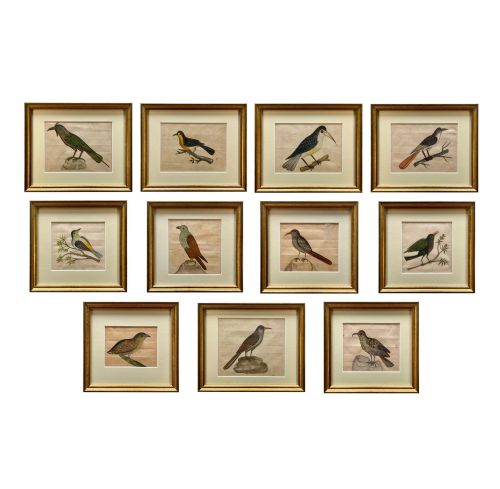
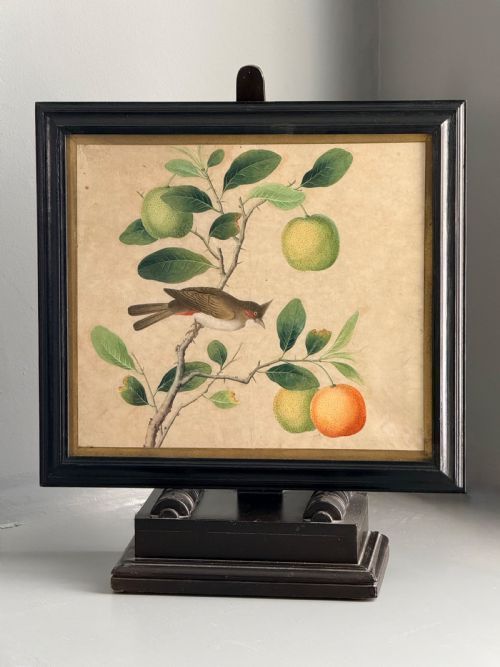


Paper Watercolour Botanical Study
These paper watercolour botanical study works are delicate floral paintings on paper, prized for their fine detail and historical charm.
Paper Watercolour Botanical Study
A paper watercolour botanical study brings historical plant and flower depictions into modern interiors, capturing natural forms with careful observation. When searching for a paper watercolour botanical study, buyers encounter works ranging from formal Victorian compositions to mid-century floral still lifes.
The pieces listed on this page span several distinct periods, notably the eighteenth century, nineteenth century, and mid-twentieth century. Victorian examples and later British still lifes dominate the selection, alongside Chinese export pith paper works.
Most items take the form of framed wall art or paintings on paper, often preserved behind glass within wood or ebonised wood frames. Subject matter varies from individual blooms like azaleas and wallflowers to gathered baskets and jugs of garden flowers.
Materials and techniques
These works rely primarily on watercolour pigment and gouache applied directly to paper or pith paper surfaces. Pith paper provides a delicate, fibrous ground that absorbs water-based media with a unique textural depth.
Framing materials such as wood and ebonised wood, often paired with protective glass, safeguard these fragile works from moisture and light damage over the decades.
Paper Watercolour Botanical Study Retail Price Guide 2026
Typical asking prices for paper watercolour botanical study among the pieces listed under this phrase on Sellingantiques today, from the lower quarter to the upper quarter. They describe what is for sale here now, not the wider market.
Listings feature works spanning the eighteenth century to the mid-twentieth century, utilising paper, pith paper, watercolour, and gouache.
Judging quality in botanical works
Quality rests upon the precision of the brushwork and the vibrancy of the remaining pigment, as inferior works suffer from fading or stiff, uninspired composition. The finest examples display a lively sensitivity to light and shadow, capturing the natural translucency of petals.
Condition also plays a significant role, where clean paper free from heavy foxing and original framing in good order distinguish superior pieces from lesser examples.
Edith Barrow·Grace Hastie·Phyllis I Hibbert·Marian Chase·Charlotte Isa James·Alice Macallan Swan·Marion Broom·John Sherrin·Minnie Smythe
The Paper Watercolour Botanical Study Glossary
- Gouache
- An opaque water-based paint that provides solid areas of colour and dense highlights. It is frequently combined with watercolour to create contrast in botanical studies.
- Pith paper
- A delicate material cut from the pith of the Tetrapanax papyrifer plant, common in nineteenth-century Chinese export art. It has a velvety texture that takes watercolour pigment exceptionally well.
- Ebonised wood
- Timber treated to resemble ebony, producing a dark, uniform finish. This framing style is typical of Victorian and later periods.
- Still life
- An artwork depicting inanimate subject matter, typically featuring gathered natural objects such as fruit or cut flowers in a container.
Paper Watercolour Botanical Study: Frequently Asked Questions
How should I hang these watercolours?
Keep them away from direct sunlight to prevent the watercolour pigments from fading over time. Indirect light in a stable environment is best for preserving the paper.
Ensure they are framed securely behind glass with adequate spacing between the paper and the glass to avoid moisture damage.
What periods do these paintings come from?
The available selection spans from the eighteenth century through the Victorian era and into the mid-twentieth century. Each period brings distinct framing choices and painting styles.
Victorian and early twentieth-century British works are particularly common among these listings.
Are pith paper paintings fragile?
Pith paper is naturally delicate and requires careful handling due to its fibrous, sponge-like structure. These pieces are best left undisturbed in their protective frames.
Professional framing behind glass is essential to prevent physical contact and environmental degradation.
What subjects are most common?
Floral studies dominate the selection, featuring specific blooms such as azaleas, wallflowers, roses, and pansies. Some works also incorporate fruit arrangements like apples and grapes.
Artists frequently arranged these botanical specimens in baskets, jugs, or simple still-life compositions.