




Paper Street Scene Artwork
Paper street scene artwork captures urban and village life through delicate watercolours, pastels and ink on paper.
Paper Street Scene Artwork
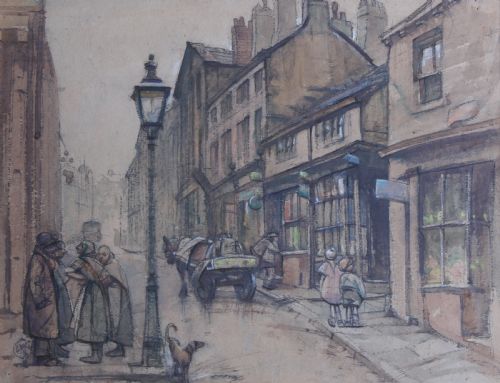
Paper street scene artwork depicts bustling markets, quiet village thoroughfares, and urban squares across changing periods and locations. Buyers searching this phrase encounter framed watercolours, pastels, and ink drawings capturing historic cityscapes and local street life. The works range from domestic English towns to continental European vistas in Italy, France, and the Netherlands.
The selections span the nineteenth century through the mid-twentieth century, including Victorian, Edwardian, and mid-century realisms. Many pieces focus on specific named locations such as London, Paris, Venice, and Rome, alongside regional English high streets and coastal villages. These watercolours and pastel drawings bring historic public spaces into domestic interiors through direct observation by period artists.
Materials and technique
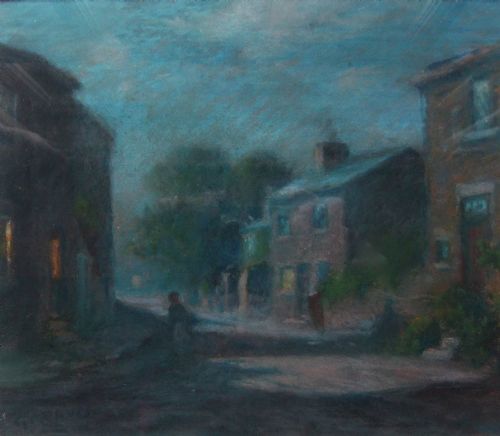
Artists create these street scenes primarily on paper supports using watercolour, pastel, ink, and pencil. Watercolour applications utilise fluid washes for atmospheric effects like evening twilight, moonlight, or snow, while pastel allows for textured depictions of crowds and buildings. Pencil and ink provide underlying structure and sharp architectural definition to street facades and figures.
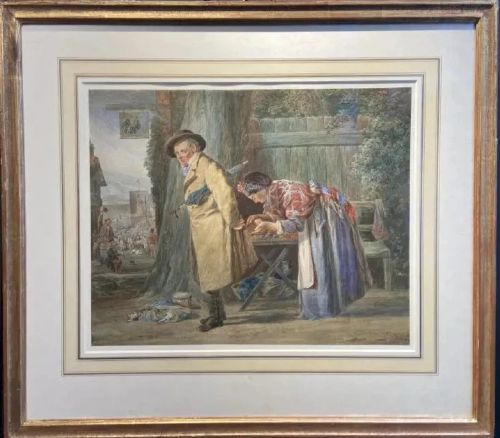
Many works incorporate protective glass and wooden framing to preserve the delicate paper medium from atmospheric damage. Gold leaf occasionally appears in framing or decorative accents to complement the painted compositions. The combination of water-soluble pigments and dry media on paper requires careful mounting to maintain stability over decades.
The inventory records urban and rural subjects ranging from Italian piazzas and London stations to Yorkshire market towns.
Assessing quality and execution
Quality in these works rests upon the artist's handling of light, atmospheric perspective, and bustling movement within urban spaces. Finer examples capture convincing depth in architectural rendering and lively interaction among figures without heavy reliance on stiff outlines. The skillful modulation of watercolour washes or pastel pigments determines the visual impact of weather conditions like snow, moonlight, or evening gloom.
The precision of spatial composition and the preservation of the original paper surface distinguish superior examples from simpler topographical records. Works that successfully convey the specific atmosphere of a named street or market place demonstrate greater artistic mastery. The integration of period wooden framing and conservation under glass further maintains the integrity of the piece.
Thomas Ellison·Joseph H Barnes·Albert Ludovici Jnr·William Greaves·William Manners·Charles James Lauder·Louie Stanley Maurice Prince·John Smith Atherton·Robert Hollands Walker·Charles H Poingdestre·Rowland Henry Hill·Donald Mcintyre·Angus Rands·Ettore Ascenzi·Annie L Lee·Cuthbert Crossley·Matthew Hale·Henry J Neave
The Paper Street Scene Artwork Glossary
- Watercolour
- A painting method where fine pigment is suspended in a water-based solution and applied to paper. This medium allows for transparent washes that capture shifting light and weather effects.
- Pastel
- A dry drawing medium composed of powdered pigment and a binder, shaped into sticks. It produces velvety surfaces with rich colour saturation well suited for atmospheric street views.
- Genre realism
- Artistic representation of subjects from everyday life, such as street sellers and market crowds. This style focuses on truthful observation of ordinary people in public spaces.
- British Impressionism
- A painting approach developed in the late nineteenth and early twentieth centuries focusing on spontaneous brushwork and natural light. Artists working in this manner prioritized outdoor observation of urban and rural scenes.
- Belle Epoque
- A period of European history lasting from the late nineteenth century to the First World War. Art from this era often reflects urban prosperity, leisure, and lively street culture.
Paper Street Scene Artwork: Frequently Asked Questions
What periods do these artworks cover?
The available selection spans from the nineteenth century through the mid-twentieth century, encompassing Victorian, Edwardian, and mid-century periods. Artists working during these decades recorded changing urban environments and rural streetscapes.
Each period brings distinct stylistic approaches, ranging from nineteenth-century realism to British impressionism and mid-century interpretations of town life.
How should I frame and display works on paper?
Artworks executed on paper require protection behind glass to prevent atmospheric damage and fading from light exposure. Proper framing with acid-free mounts ensures the paper remains separated from the glass surface.
Display these pieces away from direct sunlight and high humidity to preserve the watercolour pigments, pastels, and inks over time.
How do I identify the location in a street scene?
Many works feature descriptive titles inscribed by the artist or recorded on the framing that name specific cities, squares, or buildings. Landmarks such as railway stations, named inns, and historic bridges help anchor the scene geographically.
Architectural styles and local costume within the composition also offer clues to the regional origin, whether depicting London, Paris, Venice, or rural Yorkshire.
What is the difference between watercolour and pastel street scenes?
Watercolour relies on translucent washes of pigment that allow the white of the paper to illuminate the composition, creating effects of light and weather. Pastel uses dry coloured chalks that provide opaque, textured coverage with soft blending.
Watercolours often emphasise fluid atmospheric conditions like rain or twilight, while pastels capture the dense atmosphere of bustling crowds and solid masonry.