





Panelled Wood Settle
A panelled wood settle brings robust seating and hidden storage into a room, forged from centuries of domestic craft.
Panelled Wood Settle
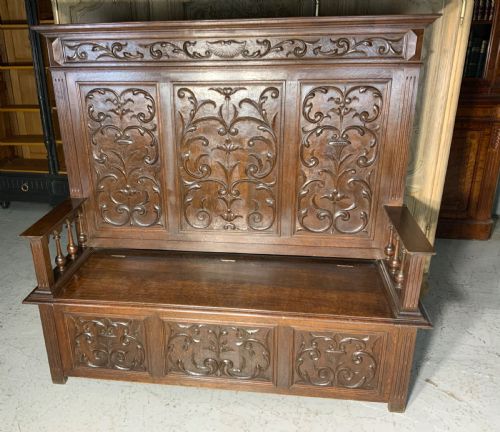
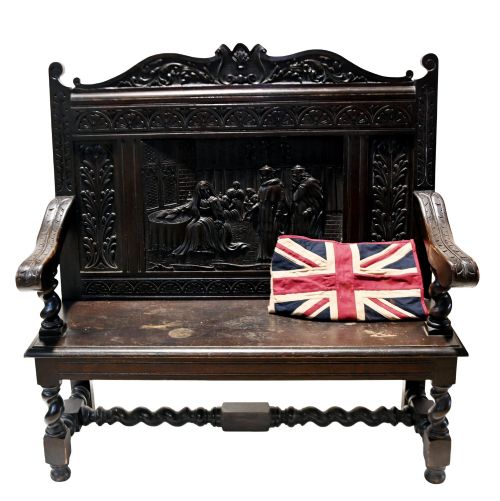
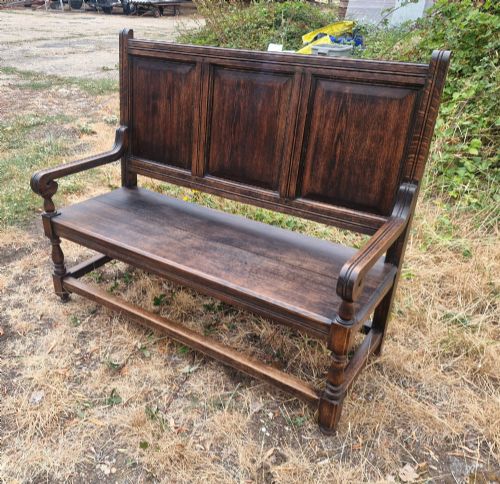
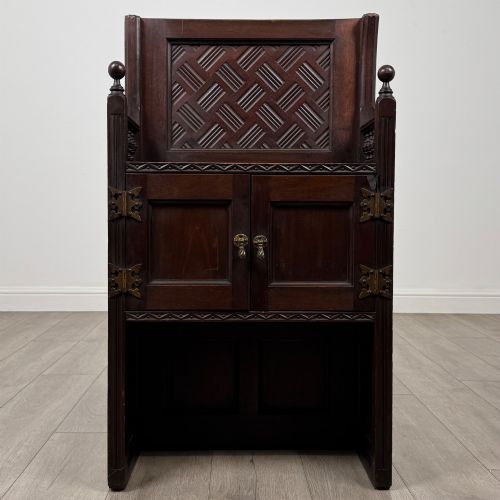
A panelled wood settle serves as a high-backed seat designed to block draughts in older homes. The forms range from simple rural pine benches to elaborate carved oak examples.
Most pieces encountered on this page date from the eighteenth and nineteenth centuries, alongside revival pieces from later periods. These seating items appear under descriptions such as hall benches, storage benches, and box settles.
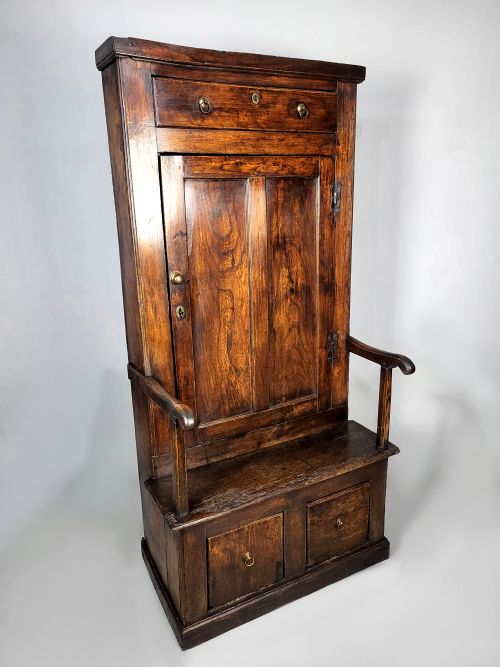
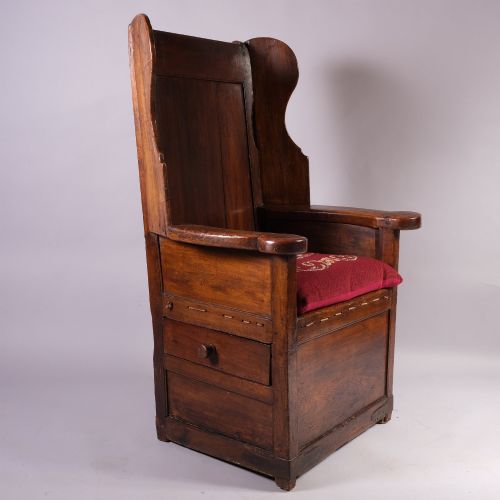
Regional variants include bacon settles with integrated drying cupboards, lambing chairs, and low-backed rustic country forms. Each style reflects the local timber available to the maker.
Materials and construction
Carpenters relied primarily on native oak, elm, and pine, joined using traditional pegged mortise and tenon techniques. Hardwoods like mahogany and walnut appear in later revival iterations.
Panel construction allowed timber to expand and contract naturally without splitting the high backs. Iron hinges, brass mounts, and fabric elements were added to storage compartments and seats.
Panelled Wood Settle Retail Price Guide 2026
Typical asking prices for panelled wood settle among the pieces listed under this phrase on Sellingantiques today, from the lower quarter to the upper quarter. They describe what is for sale here now, not the wider market.
Listings span from the seventeenth century through to the nineteen-thirties, featuring woods including oak, elm, pine, mahogany, and hardwood.
Assessing craftsmanship
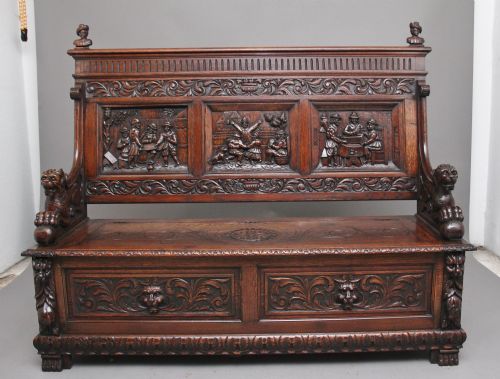
The integrity of the frame and the thickness of the original timber define the durability of the piece. Heavy carving and sophisticated joinery distinguish formal regional pieces from utilitarian workshop variants.
Surviving original hardware and untouched timber patination elevate the standing of a settle. Altered panels or replaced seats alter the structural cohesion of the item.
The Panelled Wood Settle Glossary
- Settle
- A wooden bench with a high back, solid arms, and frequently a box seat for storage. They were positioned near hearths to shield occupants from cold air.
- Bacon settle
- A specialised variant featuring a high back incorporating tall cupboards used for curing and storing meat. These large forms are typically constructed from solid elm or oak.
- Wainscot
- A style of wooden panelling utilising pegged frame and panel construction. Early examples display dense grain and hand-riven boards.
- Box settle
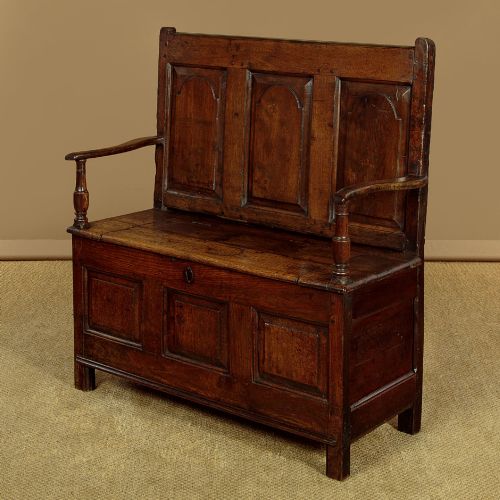
- A bench featuring a hinged seat opening to a storage well beneath. This design maximised utility in smaller domestic spaces.
Panelled Wood Settle: Frequently Asked Questions
What is a panelled wood settle?
A panelled wood settle is a traditional high-backed wooden bench designed to provide seating while keeping cold draughts away from the user. Many designs include integrated storage compartments beneath the hinged seat.
Historically placed near the hearth in large halls and farmhouses, these benches served as the primary communal seat for the household.
How do I date an old settle?
Dating relies on observing the construction methods, timber species, and stylistic motifs present in the woodwork. Seventeenth and eighteenth-century pieces often feature hand-planed boards and pegged joints.
Revival pieces from the nineteenth and twentieth centuries frequently incorporate machine-cut elements and distinct Victorian or Edwardian carving styles.
Where should I place a settle?
These long benches suit large hallways, entrance passages, or living rooms where their high panelled backs can anchor a seating arrangement. Their solid proportions require ample wall space to sit comfortably.
Box settles also provide practical storage for blankets, shoes, or hall accessories inside the seat compartment.
Are all settles made from oak?
While oak remains the predominant timber, settles were also constructed from elm, pine, fruitwood, mahogany, walnut, and regional hardwoods. Material choice often depended on the local woods available to the carpenter.
Pine and fruitwood appear frequently in rustic country pieces, whereas mahogany and walnut are found in later revival items.