

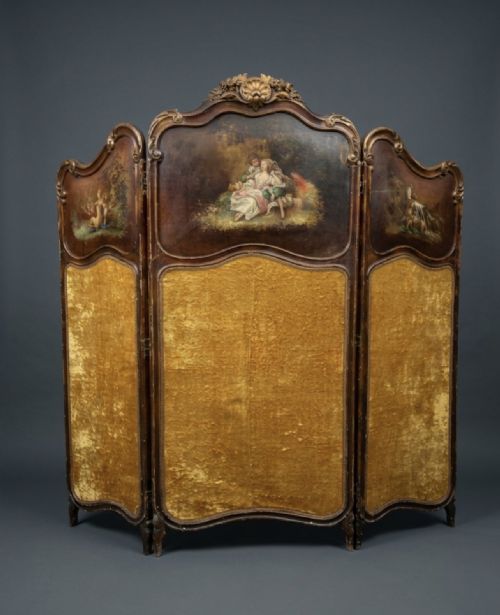

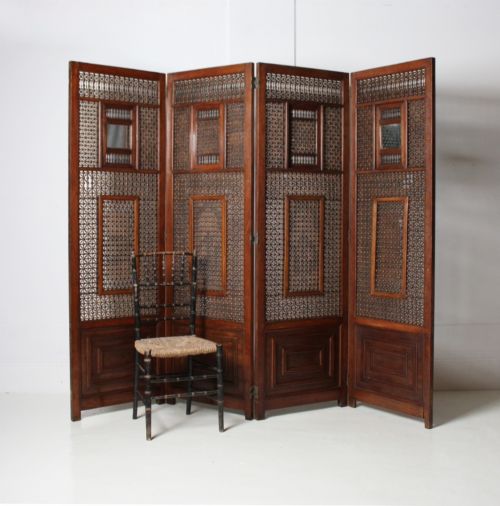
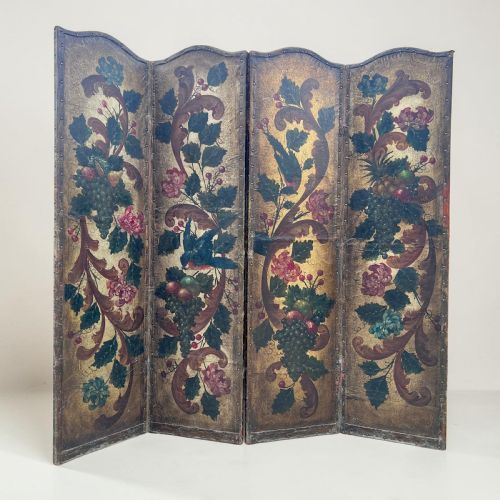


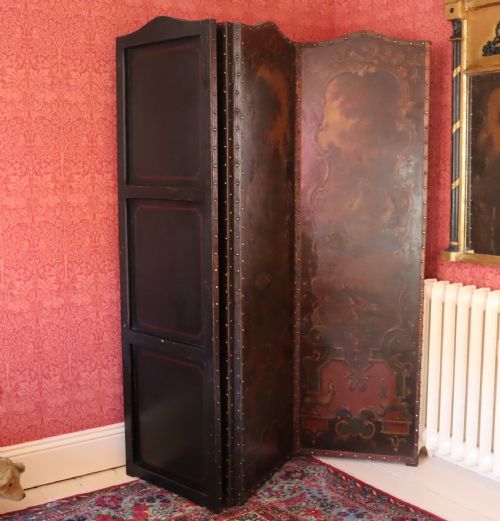


Panelled Privacy Screen
A panelled privacy screen creates division in a room using hinged sections of wood, leather or fabric.
Panelled Privacy Screen
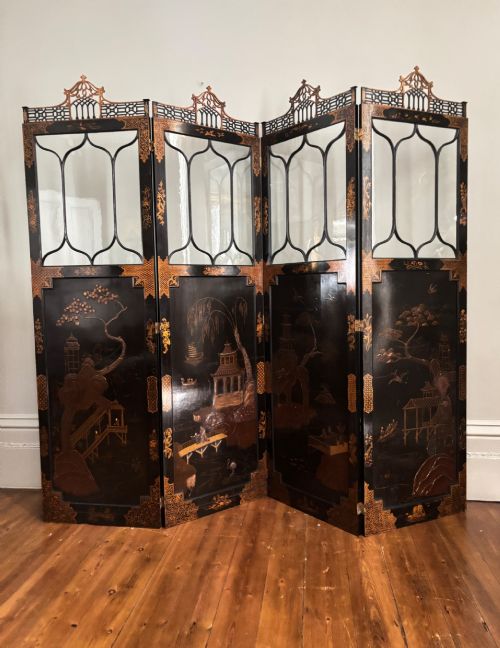
A panelled privacy screen divides interior spaces or shields sections of a room from view using multiple hinged panels. These pieces take forms such as folding screens, room dividers, dressing screens and modesty screens originating from nineteenth-century and early twentieth-century workshops.
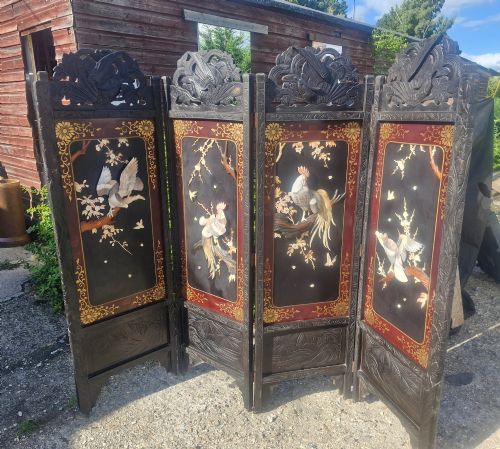
Examples on this page draw from diverse traditions including Victorian English woodwork, French walnut designs, Chinese and Japanese lacquerwork, Burmese carving and Indian fretwork. Makers constructed these items in configurations ranging from three folds up to eight folds.
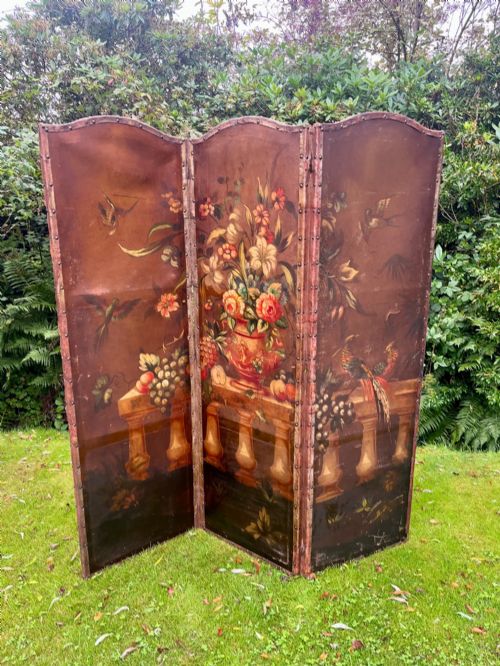
Buyers select a panelled privacy screen to segment larger spaces, alter room layouts or introduce decorative surfaces painted with pastoral scenes, needlepoint, canvas panels or tooled leather.
How they were made
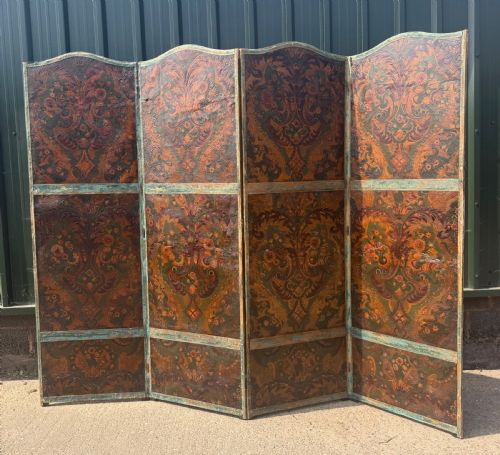
Carpenters built the supporting structures using timbers such as mahogany, oak, walnut and various hardwoods, often joining them with brass hinges to allow multi-directional folding. Frames held inserts of canvas, leather, paper mâché, glass or silk cotton.
Surface decoration involved hand-painting, oil paint, polychrome detailing, gilt embossing and lacquering. Certain pieces incorporate deep-carved bone figures, hardstone mounts, fretwork or needlepoint fabric stretched across the panels.
Listings feature items spanning the eighteenth, nineteenth and twentieth centuries, utilising brass, lacquer, mahogany, needlepoint and oil paint.
What varies in quality
Execution of the painted or carved panels distinguishes standard production from finer examples, particularly where artists employed detailed brushwork on leather, canvas or lacquer surfaces. The complexity of the joinery and the integrity of the hinges determine how smoothly a multi-fold frame operates.
Selection of materials dictates durability and weight, with dense hardwoods and robust leather outlasting simpler fabric or paper constructions. The depth and precision of carving, such as bone figures or pierced fretwork, show the hand of a skilled artisan.
The Panelled Privacy Screen Glossary
- Modesty screen
- A low folding screen originally used to shield a person while dressing or washing. These items typically feature painted or fabric panels set within wooden frames.
- Chinoiserie
- European decorative style reflecting Chinese artistic motifs, popular in lacquerwork and painted screens. Artisans used gold and black finishes to depict landscapes and figures.
- Mashrabiya
- An architectural element adapted into screens featuring intricate wooden lattice or pierced work. This technique permits ventilation while obscuring vision.
- Cordoban leather
- Heavy leather decorated with embossed and gilt patterns originating from Spain. Makers utilised this material for durable, ornate panel inserts.
- Fretwork
- Ornamental design created by cutting patterns through thin boards of wood. This technique appears on Indian and English frames to lighten the visual weight of the panels.
Panelled Privacy Screen: Frequently Asked Questions
How do I place a screen in a small room?
Position the screen across a corner to soften harsh angles or use a three-fold design near an entryway to create a subtle separation without blocking light.
Keep the outer folds angled inward so the structure remains stable on floorboards or carpet without requiring wall fastenings.
Can these screens support weight?
Most panelled privacy screens are designed purely to divide space or act as visual backdrops rather than load-bearing partitions. Placing items against them or hanging heavy objects from the frames can strain the brass hinges and warp the wood.
Fold the sections slightly when setting up the piece to distribute its own weight evenly across the hinges.
How do I clean painted leather panels?
Dust leather surfaces gently with a dry, soft cloth to remove surface particles without disturbing older paint layers. Avoid water or solvent-based cleaners which can lift oil paint or crack aged leather.
Consult a conservator if the finish shows signs of flaking or if the leather requires conditioning.
What indicates a nineteenth century date?
Nineteenth-century pieces often display hand-tooled leather, heavy mahogany framing or traditional giltwood finishes associated with Victorian and Regency workshops. The construction of the hinges and hand-mixed oil paints provide further clues to the period.
Examine the back of the panels for tool marks and timber shrinkage that match nineteenth-century cabinet-making methods.