
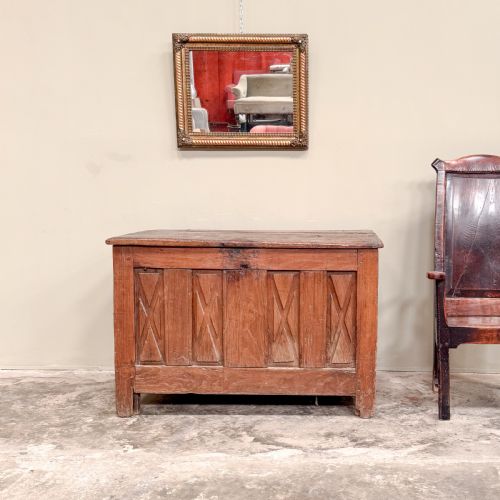
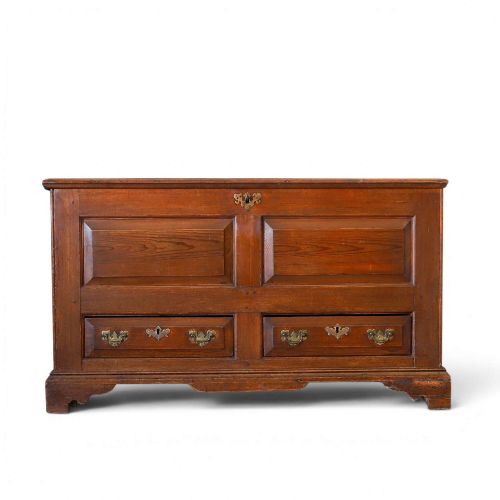


Panelled Pine Storage Box
These panelled pine storage boxes offer honest utility and rustic character, shaped by centuries of practical household use.
Panelled Pine Storage Box
A panelled pine storage box provides robust household containment, appearing in forms such as blanket chests, mule chests, coffers, log boxes, and settle benches. These pieces originate across diverse regional traditions, including English, French Provincial, Welsh, Hungarian, and Georgian country workshops.
The versions most commonly met span the eighteenth and nineteenth centuries, taking the form of panelled blanket chests or coffers fitted with hinged lids. Some examples integrate lower drawers or high-backed seating to serve multiple domestic functions in a single item of furniture.
Buyers seek out these storage boxes for their straightforward construction and warm, patinated timber surfaces. They suit modern interiors seeking practical storage with a distinct historical pedigree.
Materials and construction methods
Makers built these pieces primarily from solid pine timber, frequently reinforced with iron or brass hardware for hinges and locks. Surfaces were often finished simply with wax or left with traces of historical paint layers.
Joinery relied on traditional panelled construction techniques to accommodate the natural movement of softwood over long periods of use. This construction method gave the boxes structural stability while keeping the walls relatively lightweight.
Listings span the eighteenth and nineteenth centuries, featuring materials such as pine, oak, iron, brass, paint, and wax across various regional styles.
Distinguishing quality across examples
Quality rests in the integrity of the original construction and the survival of early timber surfaces. Boxes retaining untouched wax finishes or original paintwork carry greater historical interest than stripped or heavily altered examples.
The Panelled Pine Storage Box Glossary
- Coffer
- A heavy chest traditionally used for storing valuables or textiles. Early examples often feature robust panelled lids and sturdy iron hinges.
- Mule chest
- A storage chest fitted with one or more drawers beneath the main compartment. This form bridges the gap between the simple chest and the modern chest of drawers.
- Settle
- A wooden bench with a high back and solid arms, often incorporating a box seat for storage beneath. It was designed to keep draughts away from the sitter in older homes.
- Patina
- The surface sheen and colour developed by timber and paint over decades of handling and exposure to light. It serves as a visual indicator of age and authenticity.
Panelled Pine Storage Box: Frequently Asked Questions
What were these pine boxes used for originally?
These boxes served as secure containers for household textiles, blankets, and dry goods in domestic settings. Some iterations doubled as seating benches or log containers beside the hearth.
Their sturdy construction allowed them to withstand heavy daily use across generations in farmhouses and provincial homes.
How do I date an old pine storage box?
Dating relies on examining the construction methods, tool marks, hardware, and timber characteristics. Eighteenth-century pieces often display hand-planed boards and forged iron hinges.
Later Victorian versions tend to feature more uniform machine-sawn timber and standard brass fittings.
Can I use a pine chest as a coffee table?
Many people place low chests or log boxes in living rooms to function as coffee tables with hidden storage. The flat top surface accommodates books and everyday items.
Ensure the height matches your seating and check that the lid remains stable and level.
How should I care for a waxed pine surface?
Maintain waxed pine by dusting it regularly with a dry cloth and applying a quality beeswax periodically to nourish the wood. Avoid placing the box near direct heat sources or strong sunlight.
This preserves the natural moisture of the timber and protects the historic finish.