


Panelled Oak Side Cabinet
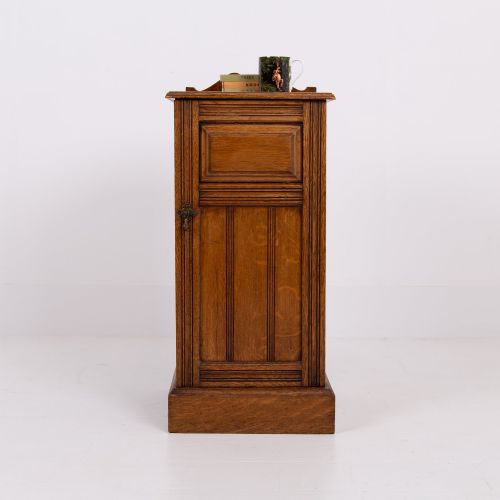
A panelled oak side cabinet brings timber grain and sturdy joinery into a room, offering practical storage with genuine period character.
Panelled Oak Side Cabinet
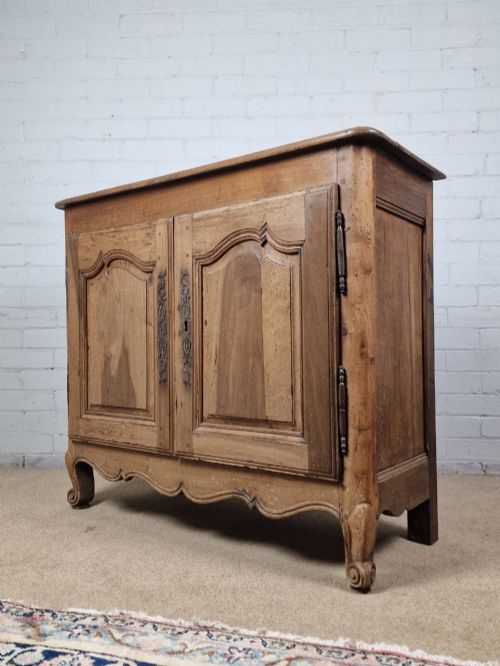
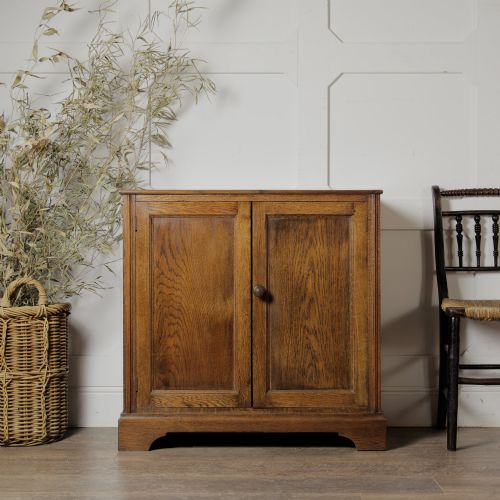
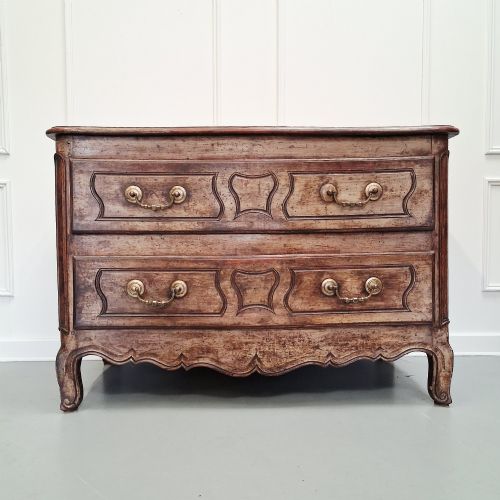
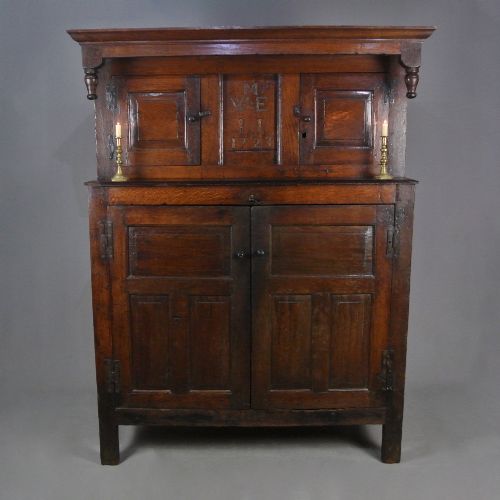
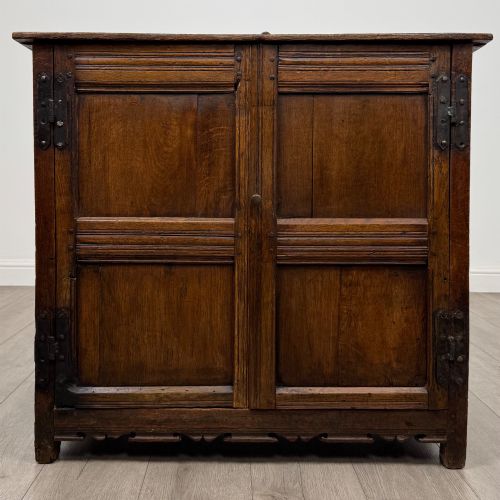
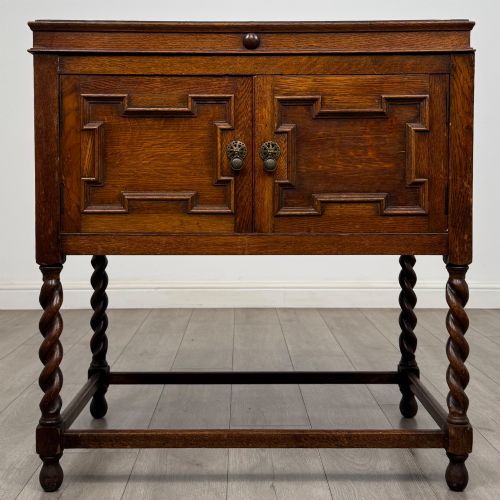
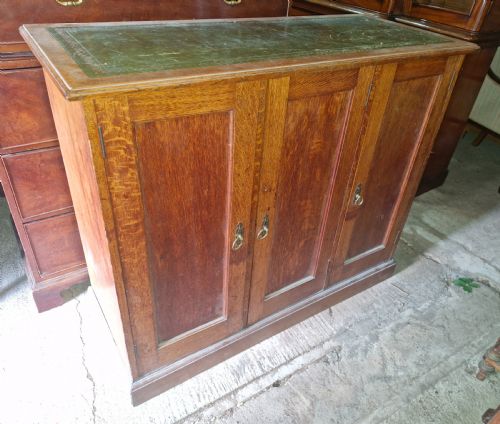
A panelled oak side cabinet provides enclosed storage through timber construction featuring frame and panel assembly. These pieces serve primarily as sideboards, cupboards, or commodes within living spaces and dining areas.
The selection ranges widely across centuries, from pieces dated around seventeen-hundred to examples from the nineteen-twenties. Buyers frequently encounter nineteenth-century interpretations alongside early twentieth-century revival pieces influenced by earlier centuries.
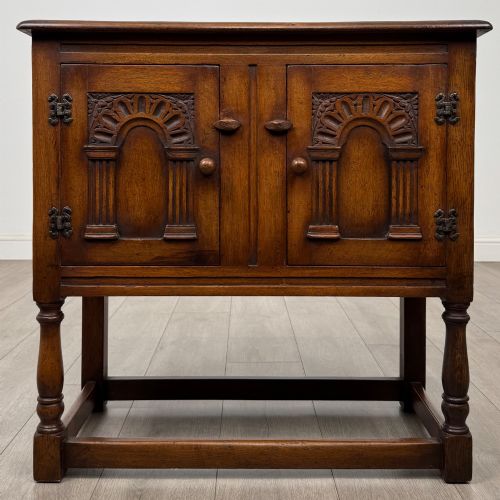
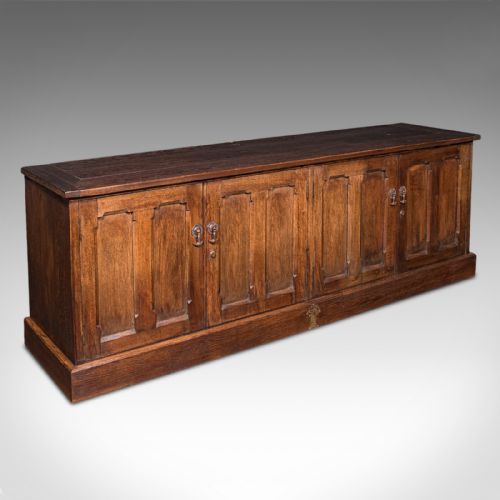
Forms vary from low cupboards and court cupboards to bedside cabinets and larger buffets. Many incorporate geometric panelling or linenfold designs set within solid timber frameworks.
How they were made
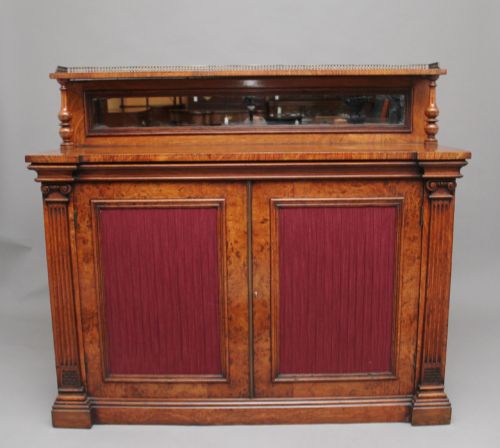
Construction relies heavily on solid oak timbers, occasionally incorporating pollard oak for decorative contrast on surfaces. Iron and brass hardware, including hinges and handles, fasten doors and drawers securely to the wooden frames.
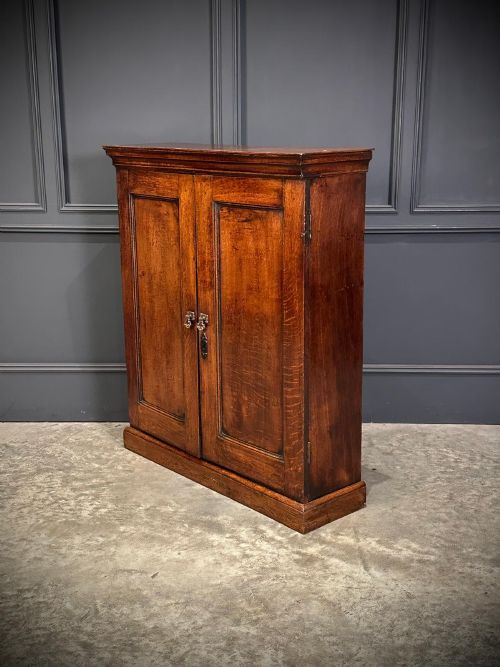
Cabinet makers utilised traditional framing techniques where floating panels sit within grooved stiles and rails to accommodate seasonal wood movement. Carving and geometric mouldings were often worked directly into the solid timber surfaces by hand.
Some oak cabinets double as window seats, proving that centuries ago, sitting by the window required a sturdy wooden box.
What varies in quality
Quality rests upon the selection of timber and the precision of the joinery within the panel frames. Thick, figured oak boards and crisp, deep hand-carving distinguish finer pieces from simpler utilitarian storage.
The integrity of the original hinges, brass fittings, and locks alters the standing of a piece considerably. Uniformity in the colour and grain of the oak across the top and sides marks out superior cabinet making.
The Panelled Oak Side Cabinet Glossary
- Panelled
- Construction method utilising a flat board fitted securely within a surrounding frame of stiles and rails. This technique allows the wood to expand and contract without splitting.
- Court cupboard
- A traditional enclosed piece of furniture featuring multiple tiers, often supported on short columns or posts. These early forms provide substantial storage within a compact footprint.
- Commode
- A low piece of furniture containing drawers or doors, originating in France. They function well as decorative side storage units in modern settings.
- Pollard oak
- Timber taken from trees that have been pruned close to the trunk to produce dense, highly figured growth rings. This wood provides striking decorative surfaces on cabinets.
- Linenfold
- A style of wood carving that mimics folded fabric, commonly seen on panels from earlier periods. It adds texture and architectural detail to cabinet doors.
Panelled Oak Side Cabinet: Frequently Asked Questions
Where should I place a panelled oak side cabinet?
These cabinets suit dining rooms, hallways, and living spaces where sturdy surface area and enclosed storage are both required.
Their robust timber construction allows them to anchor a room while holding tableware, books, or everyday household items.
How do I care for antique oak furniture?
Keep the timber away from direct heat sources and sudden temperature shifts to prevent the oak from drying out or splitting.
Apply a traditional beeswax polish occasionally to nourish the grain and maintain a natural protective sheen on the surface.
Are these cabinets suitable for modern homes?
The neutral tones of oak and straightforward geometric lines allow these pieces to sit comfortably alongside contemporary interior schemes.
Smaller low cupboards and bedside formats fit easily into apartments while providing discreet storage for modern belongings.
How can I tell the age of an oak cabinet?
Look closely at the construction methods, tool marks on the timber interior, and the style of the panel mouldings.
Earlier pieces from the seventeenth and eighteenth centuries often display hand-pegged joinery and distinct patination acquired through centuries of use.