

Panelled Oak Press
A panelled oak press is a substantial storage furniture piece valued for its deep timber grain and historic utility.
Panelled Oak Press
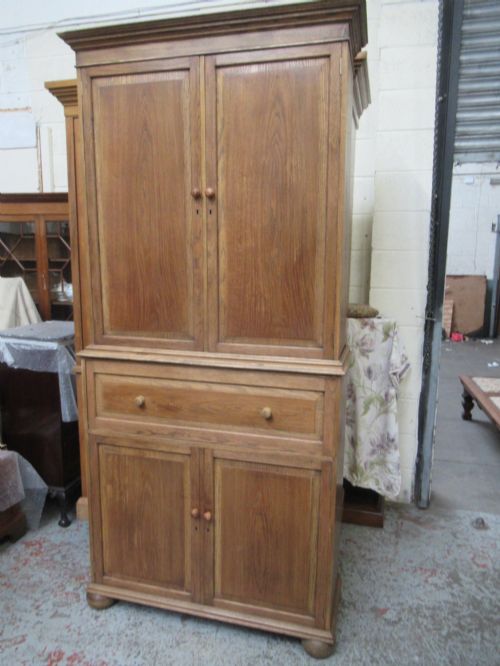
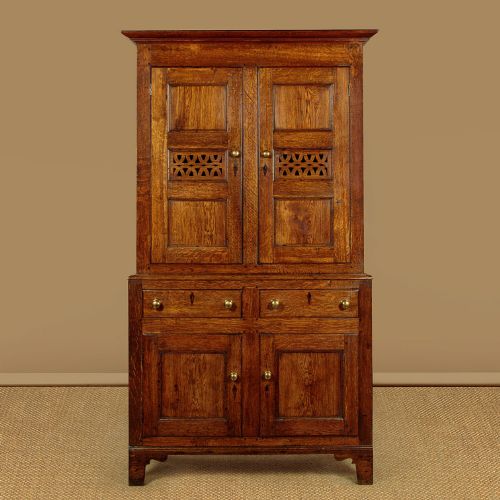
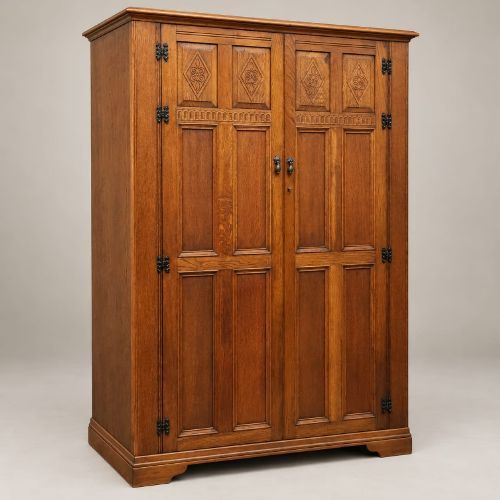
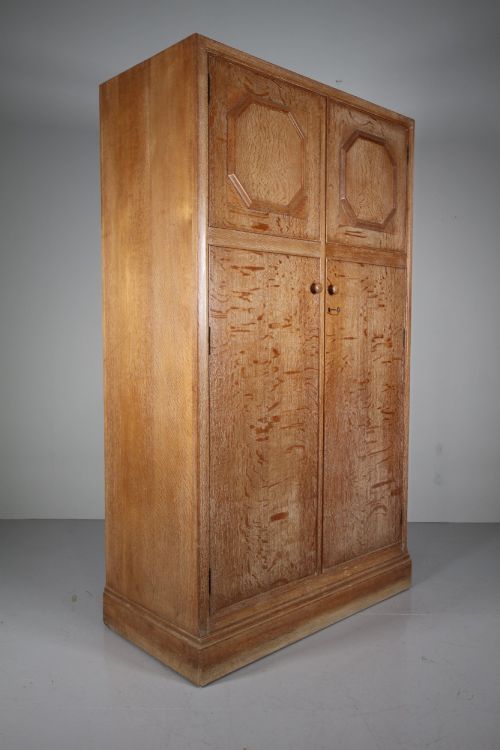
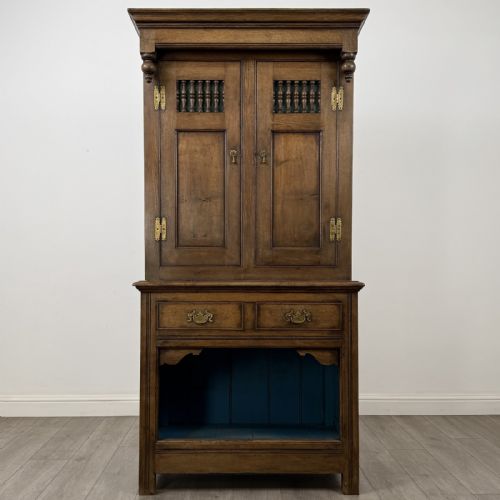
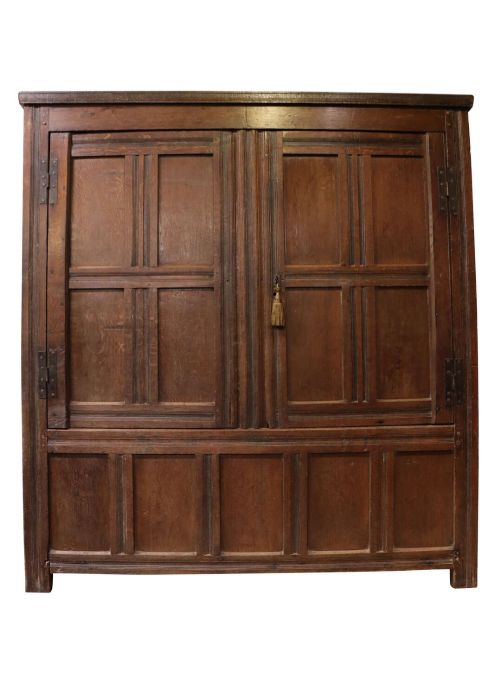
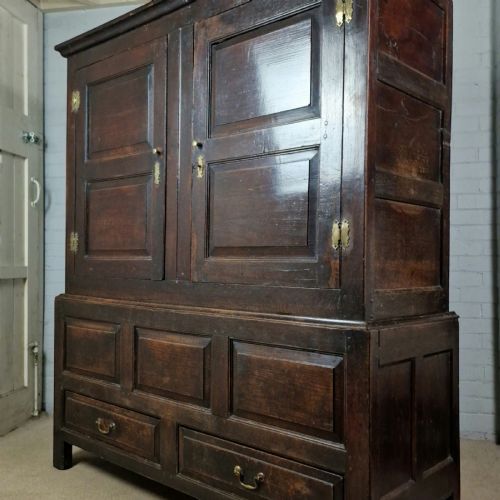
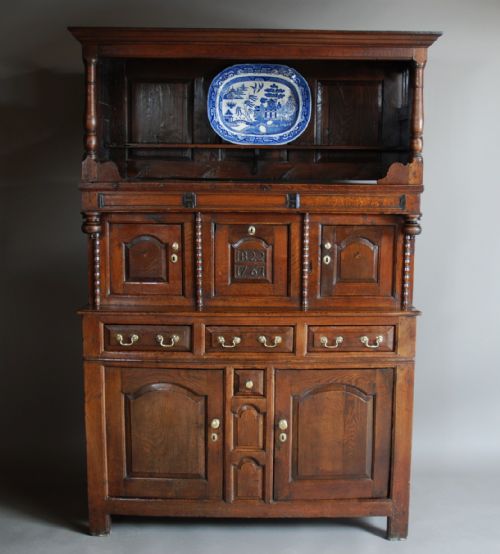
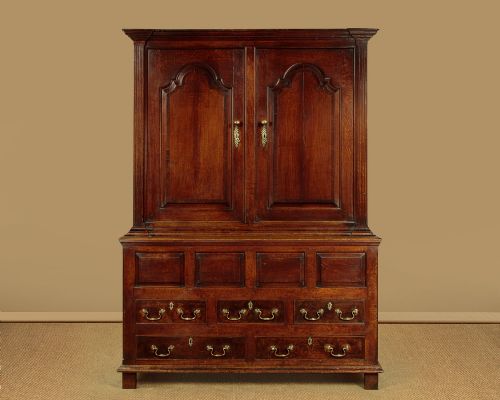
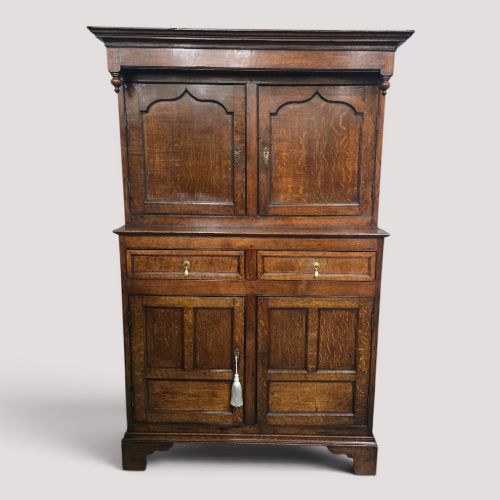
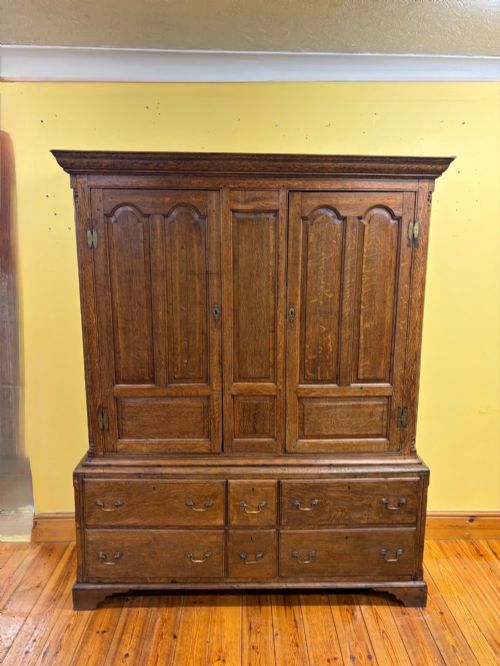
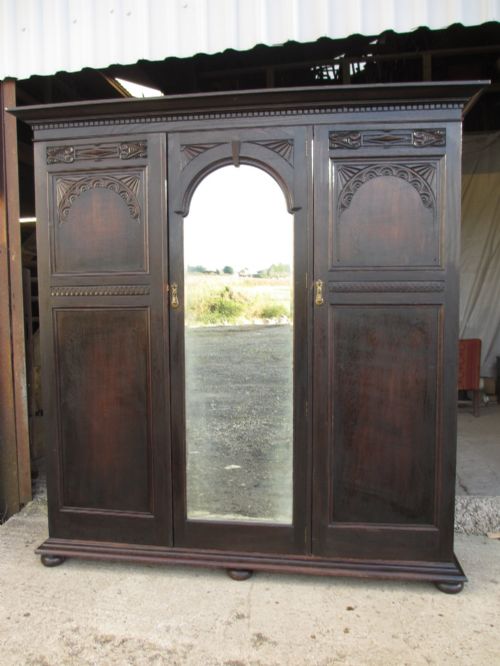
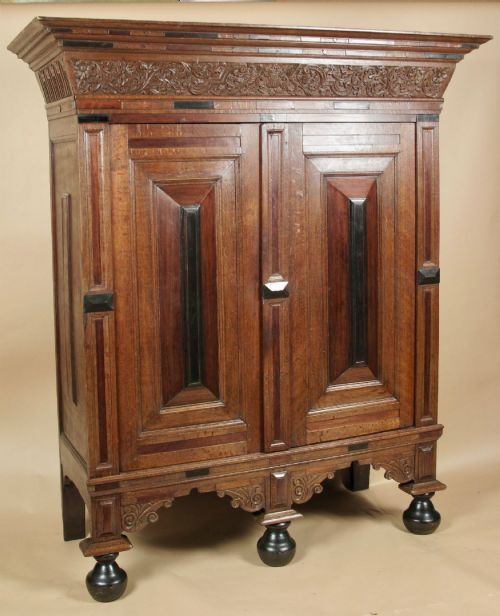
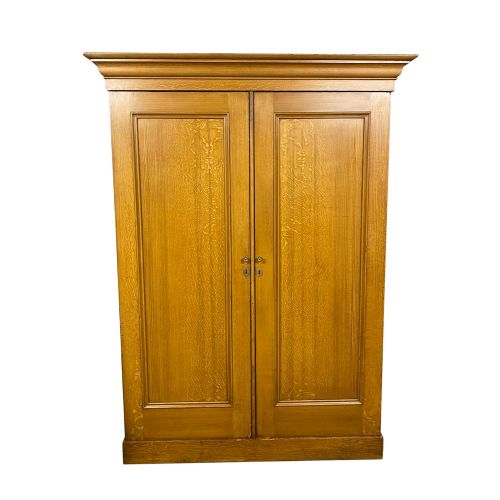
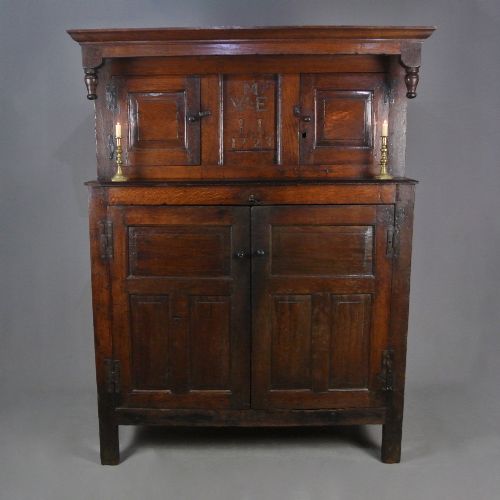
When you search for a panelled oak press, you encounter large storage furniture designed for textiles, household provisions, and garments. These forms range from seventeenth-century court cupboards and vestment cupboards to Georgian housekeepers cupboards and nineteenth-century wardrobes.
The pieces you meet most frequently on this page span the seventeenth, eighteenth, and nineteenth centuries, with notable regional examples from Wales and England. Vernacular furniture such as the cwpwrdd tridarn, tack cupboards, and linen presses appear alongside revival and Edwardian wardrobe adaptations.
Makers and regional joiners utilised sturdy native timber to construct these functional pieces, incorporating pegged frames, panelled doors, and interior shelving or hanging space. Their enduring appeal lies in their robust construction and the rich patination accumulated over centuries of domestic use.
Materials and construction methods
The primary material across these listings is solid oak, frequently supplemented by secondary woods such as pine, elm, walnut, and fruitwood. Detail elements incorporate brass for hinges and escutcheons, iron hardware, bone inlay, and occasional contrasting stringing in ebony and rosewood.
Joinery relies on traditional frame-and-panel construction with pegged mortise and tenon joints to accommodate seasonal wood movement. Surfaces are hand-planed and finished with natural wax or oil, though select nineteenth-century examples display original scumble faux paintwork.
Panelled Oak Press Retail Price Guide 2026
Typical asking prices for panelled oak press among the pieces listed under this phrase on Sellingantiques today, from the lower quarter to the upper quarter. They describe what is for sale here now, not the wider market.
Regional styles include Welsh vernacular, English country, and Jacobean revival forms alongside standard Georgian and Victorian layouts.
Factors that define quality
Quality rests upon the integrity of the original timber and the depth of the natural patina developed across generations. Pieces retaining their original hardware, uncompromised panelled doors, and unaltered interior configurations command greater appreciation.
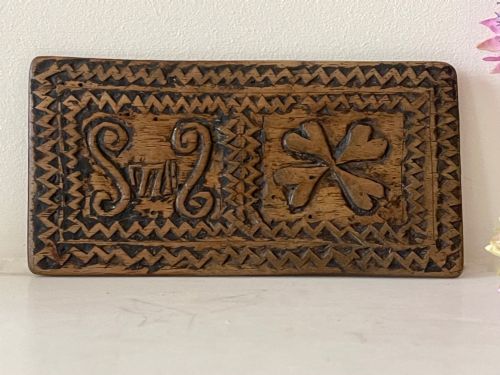
Regional vernacular craftsmanship and skilled hand-carved detail, such as geometric pillar panels or distinct regional architectural motifs, elevate certain examples above standard utility pieces. The balance of proportions and the precision of traditional jointing further distinguish finer workshop output.
Heals Of London
The Panelled Oak Press Glossary
- Panel
- A flat piece of wood set within a surrounding frame to allow for natural wood expansion and contraction without splitting. This construction method forms the primary visual and structural element of the doors and sides.
- Press Cupboard
- A traditional tall storage piece featuring enclosed shelving or hanging compartments, historically used for linen and garments. The form evolved through various regional styles in both England and Wales.
- Court Cupboard
- An early form of buffet or enclosed cupboard, often featuring an upper recessed section supported by turned pillars. These seventeenth-century pieces served both display and secure storage purposes in wealthy homes.
- Patina
- The surface sheen and mellow colour developed by timber over long periods through handling, waxing, and ageing. A desirable finish shows gradual changes in tone without modern chemical stripping.
- Scumble
- A decorative paint technique used to imitate the grain and figure of more expensive woods such as oak. Applied over a base coat, it creates a textured illusion of natural timber figuring.
Panelled Oak Press: Frequently Asked Questions
What is a panelled oak press used for?
These large storage pieces were historically used to store household textiles, linen, clothing, and provisions. In modern interiors, they function effectively as wardrobes, linen cupboards, or general storage furniture.
The deep internal shelving and hanging space accommodate bulky items while offering a striking architectural presence in a bedroom or hallway.
How do I date an antique oak press?
Dating relies on examining the construction techniques, tool marks, joinery methods, and hardware. Seventeenth-century examples often display pegged frame-and-panel construction with hand-carved details, whereas eighteenth and nineteenth-century pieces show subtle shifts in proportion and moulding profiles.
Secondary woods used in the interior linings and the character of the surface patina also provide reliable chronological indicators.
What is the difference between a press cupboard and a wardrobe?
A press cupboard traditionally incorporates internal shelving or sliding trays designed for folded linens and provisions, often enclosed by panelled doors. Wardrobes are specifically configured with hanging space for garments.
Over time, many older press cupboards and housekeeper cupboards have been adapted internally to serve modern hanging requirements.
Are these pieces made of solid oak?
The primary structural timbers and visible panels on these items are constructed from solid oak. Secondary woods such as pine or elm may occasionally be found on internal shelving, backboards, or drawer linings.
Traditional pieces rely entirely on solid timber framing rather than modern veneers or manufactured wood products.