
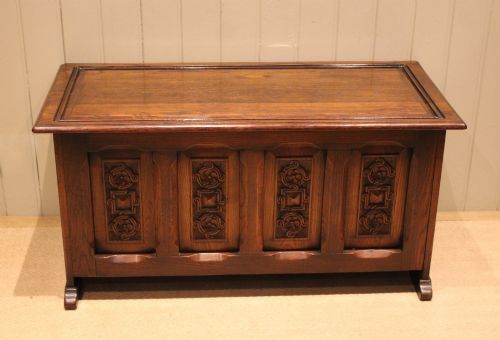
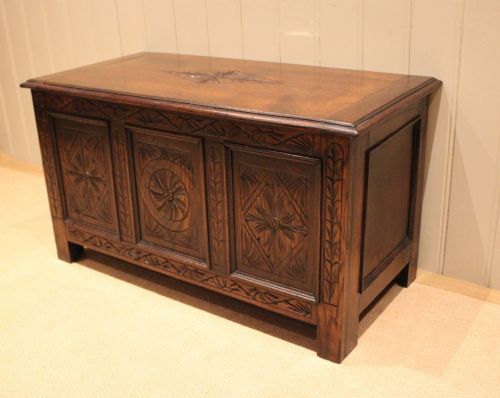
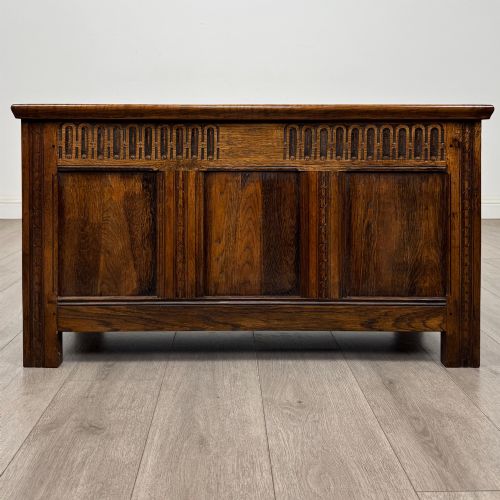
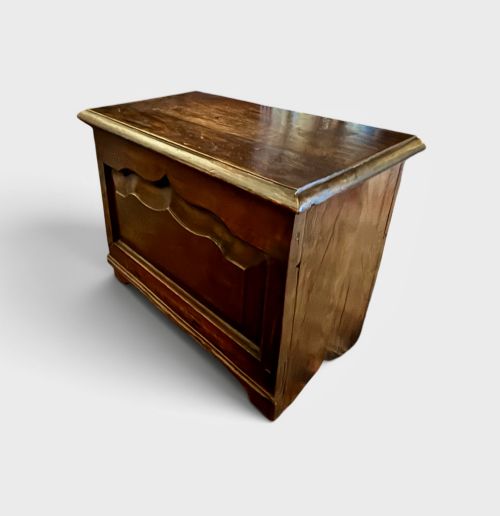
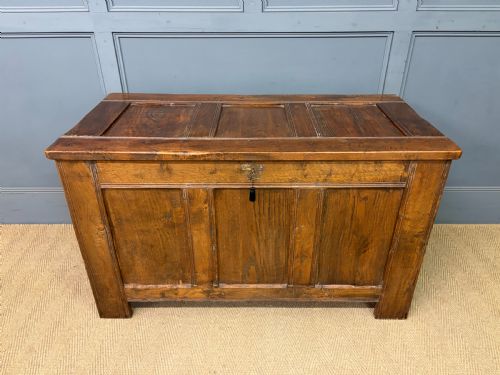
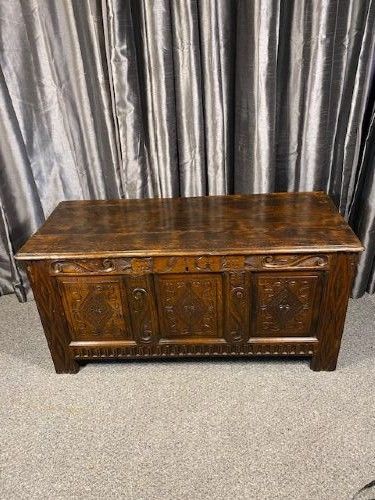
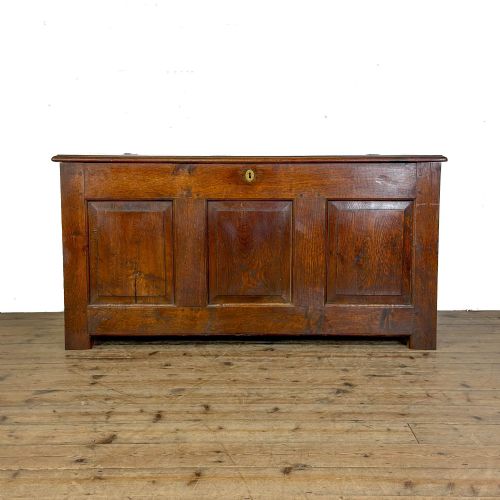
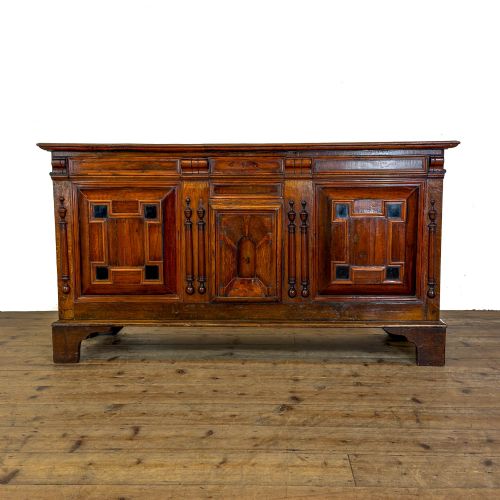
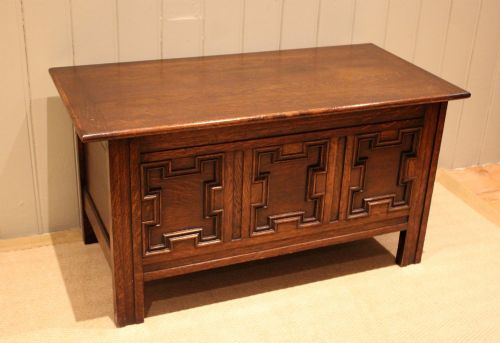
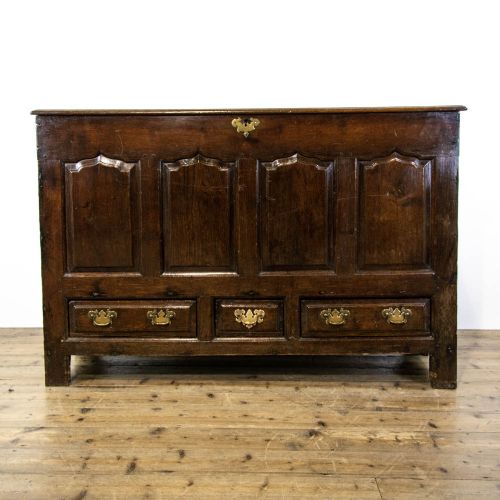
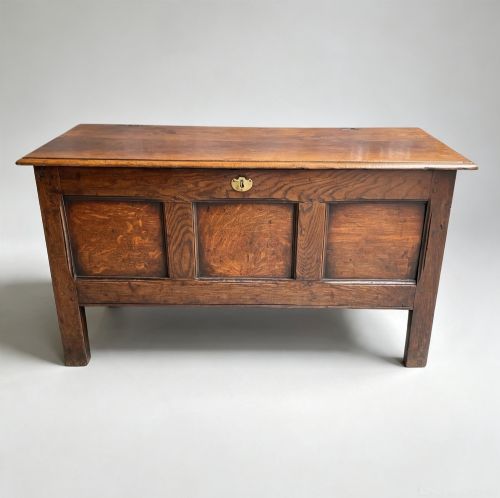
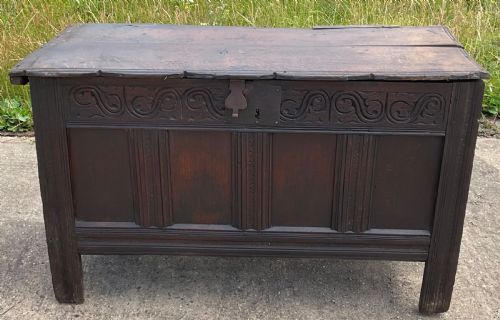
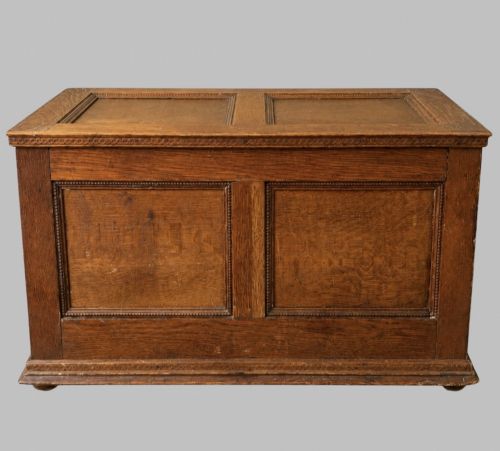
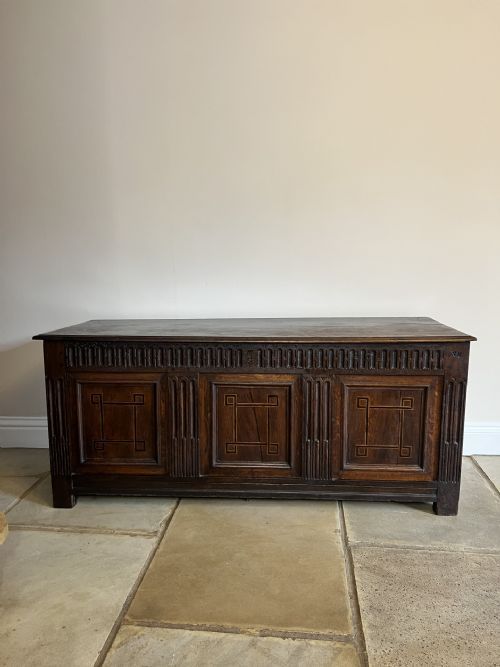
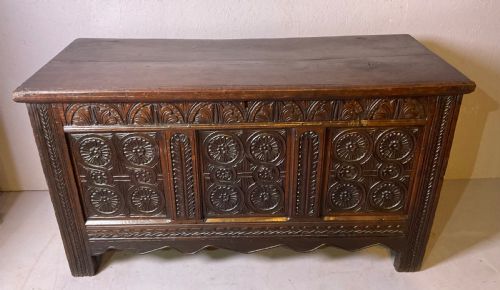

Panelled Oak Bedding Box
A panelled oak bedding box is a sturdy timber storage chest built to house textiles, appearing here in regional forms from the seventeenth to the twentieth century.

Panelled Oak Bedding Box
When you search for a panelled oak bedding box, you encounter heavy storage chests and mule chests designed for household linens and garments. These objects span periods from the seventeenth century through to early twentieth-century revivals.
The selection ranges from simple boarded coffers to complex mule chests fitted with drawers beneath the main compartment. Regional examples, including Welsh pieces, sit alongside continental French items and English country house variants.
Makers utilised sturdy construction methods to build storage that endured centuries of domestic use. You find both authentic period pieces dating back to the seventeen-hundreds and later revival interpretations made in nineteen-ten and nineteen-thirty.
Materials and construction
These chests rely primarily on solid oak, selected for its strength and durability in domestic furniture. Joiners built the body using frame and panel construction to allow the timber to expand and contract naturally with seasonal humidity changes.
Metalwork played a functional role in holding the heavy lids and locking mechanisms together. Blacksmiths forged iron hinges and latches, whilst brass occasionally appeared on later or more decorative hardware.
Surface decoration involved carving, ebonising, and occasional wood inlay or marquetry work. Craftsmen carved floral motifs, geometric patterns, and arcading directly into the oak panels of earlier seventeenth-century pieces.
Listings span multiple eras, including seventeenth-century pieces, Georgian mule chests, and early twentieth-century Jacobean revivals.
Judging the standard
The degree of original surface patination and timber selection dictates the overall quality of a chest. Pieces retain superior character when the oak has darkened naturally over centuries rather than through modern chemical staining.
The crispness and depth of hand-carved panels distinguish superior examples from plain or mechanically reproduced later copies. Original ironwork and untouched hinges contribute significantly to the integrity of an antique piece.
The Panelled Oak Bedding Box Glossary
- Panelled oak bedding box
- A sturdy timber chest constructed with frame and panel joints, designed for storing household textiles and bedding.
- Mule chest
- A storage chest featuring one or more working drawers built beneath the main lidded compartment.
- Kist
- A regional term for a traditional wooden storage chest or box used across northern Britain.
- Marquetry
- The art of applying decorative veneer pieces in wood to form intricate patterns and pictures on a surface.
- Ebonised wood
- Timber treated with a chemical stain or finish to imitate the dark, dense appearance of genuine ebony.
Panelled Oak Bedding Box: Frequently Asked Questions
What is a panelled oak bedding box used for?
These chests served primarily to store heavy woolen blankets, household linens, and personal garments in domestic chambers.
Today, they function as practical storage furniture that can double as seating or coffee tables in living spaces.
How do I tell a seventeenth-century piece from a revival?
Seventeenth-century examples display authentic tool marks, hand-split oak panels, and centuries of natural wear on the timber.
Revival pieces made around nineteen-ten or nineteen-three often use machine-cut components and uniform surface finishes.
What is the difference between a coffer and a mule chest?
A standard coffer consists of a simple lidded box accessed entirely from the top.
A mule chest incorporates one or more drawers at the base, bridging the gap between a traditional chest and a chest of drawers.
How should I care for antique oak furniture?
Keep wooden chests away from direct heat sources and drastic humidity shifts to prevent the oak panels from splitting.
Apply a traditional beeswax polish occasionally to nourish the dry timber and maintain the natural lustre.